
为什么要在检测文本之前重塑MSER轮廓?
为什么要在检测文本之前重塑MSER轮廓?
提问于 2019-08-27 11:40:37
我使用来自opencv的MSER来使用这个stackoverflow question的代码来检测文本。有人能帮我理解为什么在计算物体的凸壳之前,轮廓p被重塑为(-1,1,2)吗?
守则如下:
import cv2
import numpy as np

#Create MSER object
mser = cv2.MSER_create()

#Your image path i-e receipt path
img = cv2.imread('/home/rafiullah/PycharmProjects/python-ocr-master/receipts/73.jpg')

#Convert to gray scale
gray = cv2.cvtColor(img, cv2.COLOR_BGR2GRAY)

vis = img.copy()

#detect regions in gray scale image
regions, _ = mser.detectRegions(gray)

hulls = [cv2.convexHull(p.reshape(-1, 1, 2)) for p in regions]

cv2.polylines(vis, hulls, 1, (0, 255, 0))

cv2.imshow('img', vis)

cv2.waitKey(0)

mask = np.zeros((img.shape[0], img.shape[1], 1), dtype=np.uint8)

for contour in hulls:

    cv2.drawContours(mask, [contour], -1, (255, 255, 255), -1)

#this is used to find only text regions, remaining are ignored
text_only = cv2.bitwise_and(img, img, mask=mask)

cv2.imshow("text only", text_only)

cv2.waitKey(0)回答 1
Stack Overflow用户
回答已采纳
发布于 2019-08-27 17:01:58
--不管你是否重塑了。--
重塑是没有必要的。cv2.convexHull()可以采用任何一种输入格式。以下图像表明,无论contours中的regions是否被重塑,结果都是相同的。
hulls = [cv2.convexHull(p.reshape(-1, 1, 2)) for p in regions]
hulls1 = [cv2.convexHull(p) for p in regions]
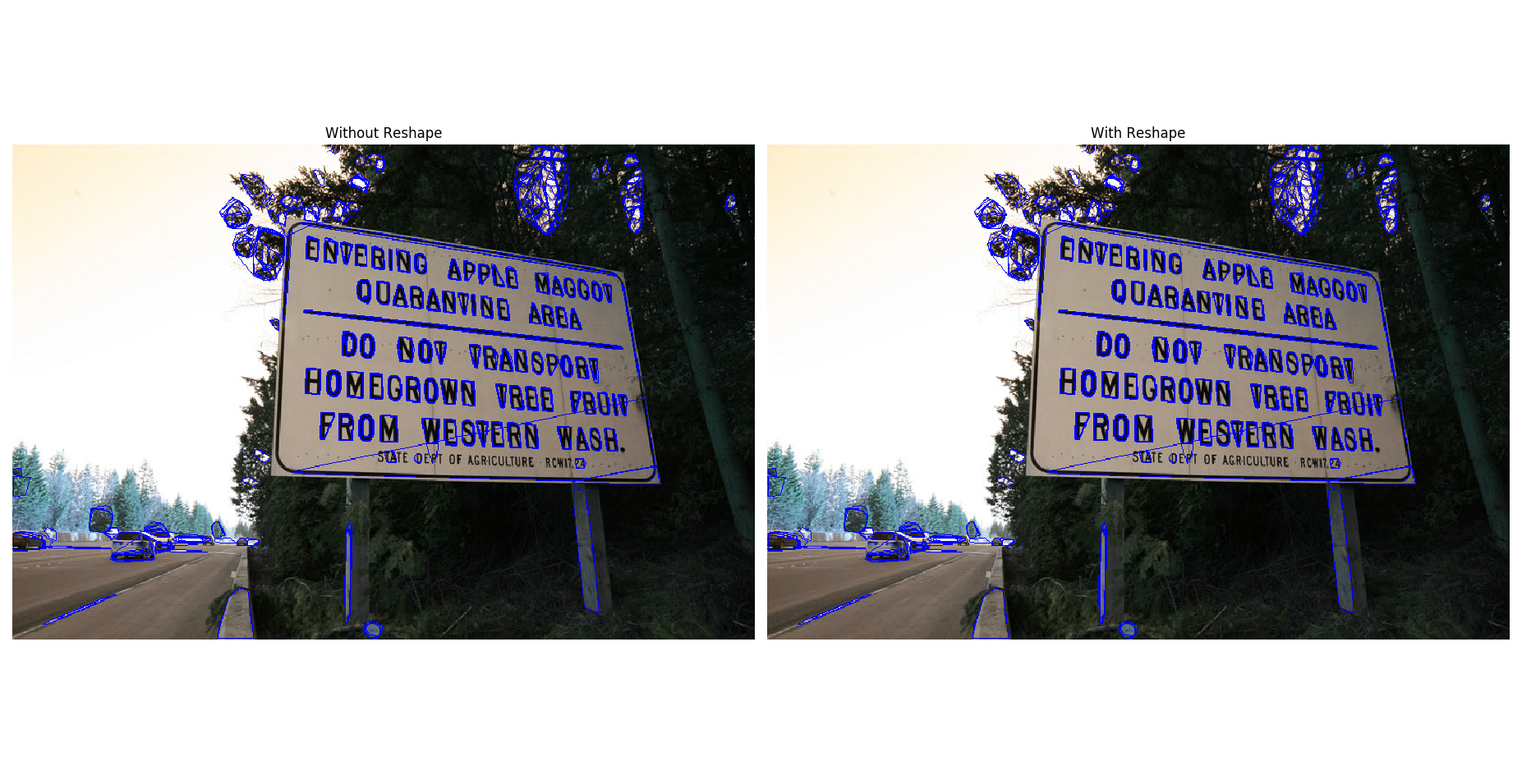
这就是p轮廓在重塑时的变化方式:
>>> p
array([[305, 382],
       [306, 382],
       [308, 380],
       [309, 380]...


>>> p.reshape(-1, 1, 2)
array([[[305, 382]],
       [[306, 382]],
       [[308, 380]],
[[309, 380]]...页面原文内容由Stack Overflow提供。腾讯云小微IT领域专用引擎提供翻译支持
原文链接:
https://stackoverflow.com/questions/57673903
复制相关文章
相似问题
腾讯云开发者

Copyright © 2013 - 2026 Tencent Cloud. All Rights Reserved. 腾讯云 版权所有
深圳市腾讯计算机系统有限公司 ICP备案/许可证号:粤B2-20090059  粤公网安备44030502008569号
腾讯云计算(北京)有限责任公司 京ICP证150476号 | 京ICP备11018762号