
国际象棋:静态搜索主导运行时
我已经实现了一个α-β搜索与安静搜索我的象棋引擎。然而,在大多数位置,静态搜索占用了总执行时间的80-90%,正如我的分析器所指出的。我修剪的时候有虫子吗?
我包括了α-β程序和静态例程。
我的静态搜索直接基于这个伪码。
// Perform the alpha-beta search.
func ab(b *dragontoothmg.Board, alpha int16, beta int16, depth int8, halt chan bool, stop *bool) (int16, dragontoothmg.Move) {
    nodeCount++

    if *stop {
        return alpha, 0
    }

    found, tableMove, tableEval, tableDepth, tableNodeType := transtable.Get(b)
    if found && tableDepth >= depth {
        if tableNodeType == transtable.Exact {
            return tableEval, tableMove
        } else if tableNodeType == transtable.LowerBound {
            alpha = max(alpha, tableEval)
        } else { // upperbound
            beta = min(beta, tableEval)
        }
        if alpha >= beta {
            return tableEval, tableMove
        }
    }
    if depth == 0 {
        //return eval.Evaluate(b), 0
        return quiesce(b, alpha, beta, stop), 0
    }

    alpha0 := alpha
    bestVal := int16(negInf)
    moves := b.GenerateLegalMoves()
    var bestMove dragontoothmg.Move
    if len(moves) > 0 {
        bestMove = moves[0] // randomly pick some move
    }
    for _, move := range moves {
        unapply := b.Apply(move)
        var score int16
        score, _ = ab(b, -beta, -alpha, depth-1, halt, stop)
        score = -score
        unapply()
        if score > bestVal {
            bestMove = move
            bestVal = score
        }
        alpha = max(alpha, score)
        if alpha >= beta {
            break
        }
    }

    if *stop {
        return bestVal, bestMove
    }

    var nodeType uint8
    if bestVal <= alpha0 {
        nodeType = transtable.UpperBound
    } else if bestVal >= beta {
        nodeType = transtable.LowerBound
    } else {
        nodeType = transtable.Exact
    }
    transtable.Put(b, bestMove, bestVal, depth, nodeType)
    return bestVal, bestMove
}

func quiesce(b *dragontoothmg.Board, alpha int16, beta int16, stop *bool) int16 {
    nodeCount++
    if *stop {
        return alpha
    }
    var standPat int16
    found, _, evalresult, _, ntype := transtable.Get(b)
    if found && ntype == transtable.Exact {
        standPat = evalresult
    } else {
        standPat = eval.Evaluate(b)
        transtable.Put(b, 0, standPat, 0, transtable.Exact)
    }
    if standPat >= beta {
        return beta
    }
    if alpha < standPat {
        alpha = standPat
    }
    moves := b.GenerateLegalMoves()
    if len(moves) == 0 { // TODO(dylhunn): What about stalemate?
        return negInf
    }
    for _, move := range moves {
        if !isCapture(move, b) {
            continue
        }
        unapply := b.Apply(move)
        score := -quiesce(b, -beta, -alpha, stop)
        unapply()
        if score >= beta {
            return beta
        }
        if score > alpha {
            alpha = score
        }
    }
    return alpha
}

func isCapture(m dragontoothmg.Move, b *dragontoothmg.Board) bool {
    toBitboard := (uint64(1) << m.To())
    return (toBitboard&b.White.All != 0) || (toBitboard&b.Black.All != 0)
}回答 1
Stack Overflow用户
发布于 2017-06-07 20:39:26
如果我正确地阅读了您的代码,您将搜索所有捕获。为了节省工作,你能做的是修剪无望的抓捕动作。事实证明,移动非常糟糕,跳过它们是安全的,所以这种技术是相当安全的。
例如,看看这个职位:
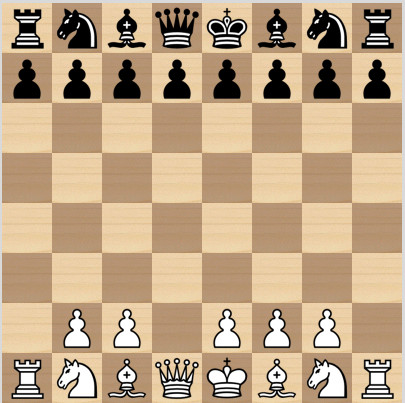
FEN:rnbqkbnr/pppppppp/8/8/8/8/1PP1PPP1/RNBQKBNR w KQkq - 0 1
有三条截图:
- Rxa7
- Qxd7+
- Rxh7
让我们假设引擎首先尝试与女王的捕捉移动。黑色有四种方法来捕获回来,但任何这些动作都可能导致截止符。
例如,黑色播放Bxd7。现在white在结果位置有两个捕获,Rxa7或Rxh7。
在这里,大多数引擎将认识到,白色已经倒退的材料(相较于测试版),即使捕获一个棋子也不会有帮助。因此,这两个车捕获不太可能导致一个截止。
在这里,您当前的搜索仍将继续搜索这些移动。发现这样的情况并跳过这些动作将节省大量的工作。
还有进一步的优化。例如,强大的引擎与静态交换评价将立即看到Qxd7将赢得一个棋子,但将失去女王。由于这是一个糟糕的交易,引擎可以立即跳过这一步。另外两辆车的捕获也是如此。
不过,和往常一样,我们也有一种权衡。如果你修剪的太积极,你最终也会修剪好的动作。一般来说,我建议花更多的时间在正常的搜索,而不是在安静的搜索,所以积极的修剪应该是好的。
https://stackoverflow.com/questions/44036416
复制相似问题
腾讯云开发者

Copyright © 2013 - 2026 Tencent Cloud. All Rights Reserved. 腾讯云 版权所有
深圳市腾讯计算机系统有限公司 ICP备案/许可证号:粤B2-20090059  粤公网安备44030502008569号
腾讯云计算(北京)有限责任公司 京ICP证150476号 | 京ICP备11018762号