
如何连接边缘的末端,以关闭它们之间的孔?
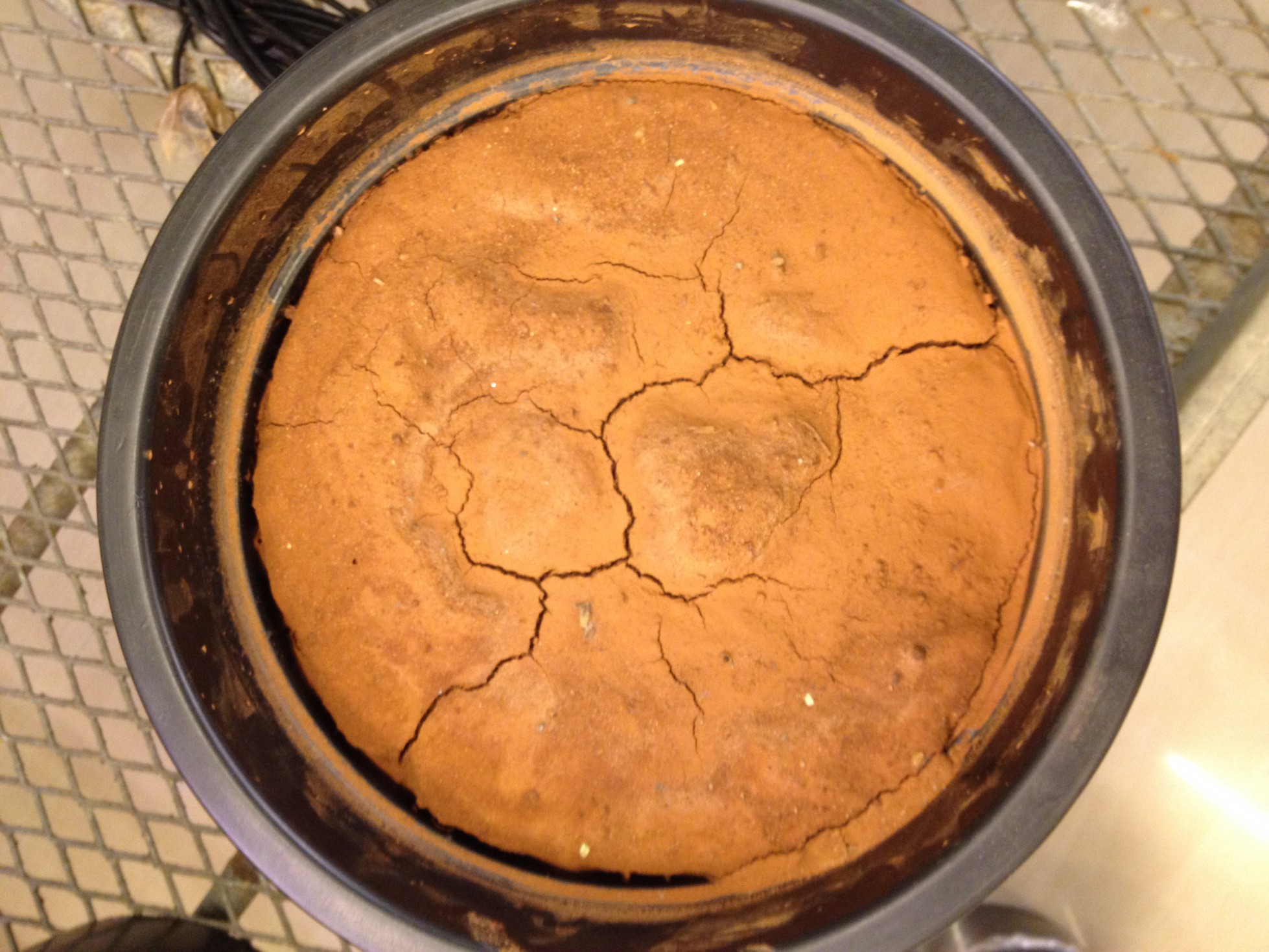
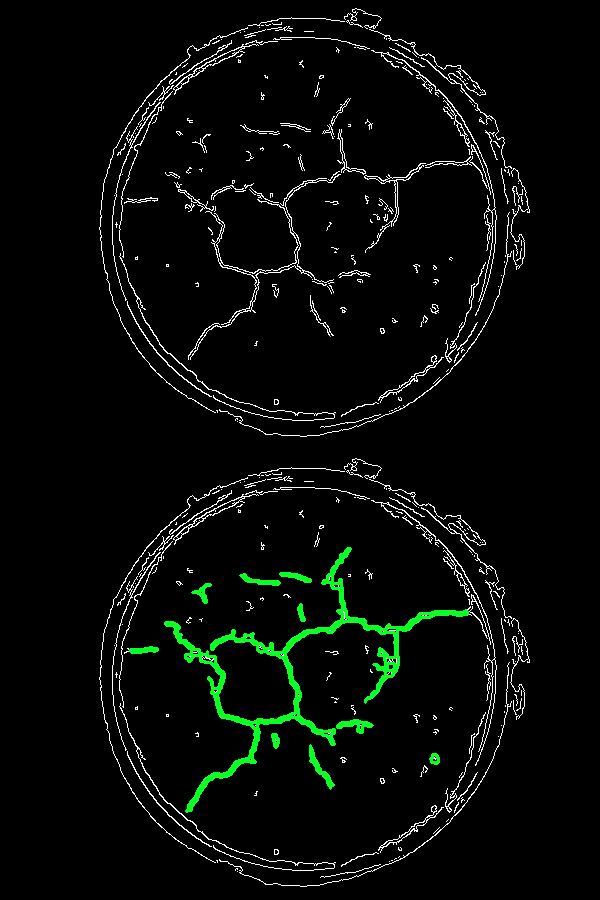
我的任务是检测土体表面的裂缝,并计算裂缝的总面积。为此,我使用了Canny边缘检测。
输入图像
结果
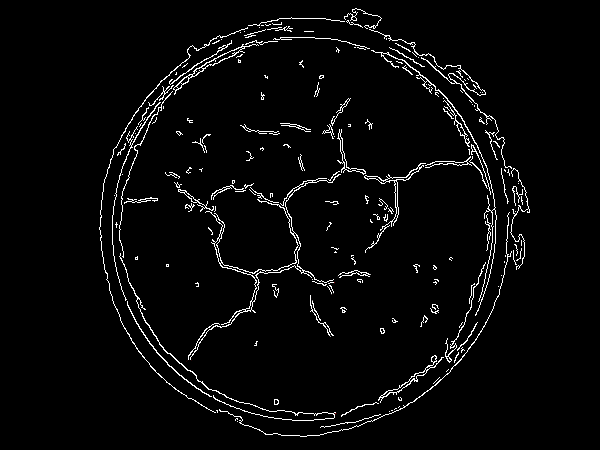
我的下一步是将精明的边缘转换成等高线,因为我想使用cv2.mean过滤裂缝,并使用cv2.contourArea函数计算它们的面积。在这一步中,我面临着这个问题。当我用:
canny_cracks = cv2.Canny(gray, 100, 200)
contours, _ = cv2.findContours(canny_cracks, cv2.RETR_EXTERNAL, cv2.CHAIN_APPROX_SIMPLE)
由于边缘末端的孔,它不能正确地转换。见这里的问题
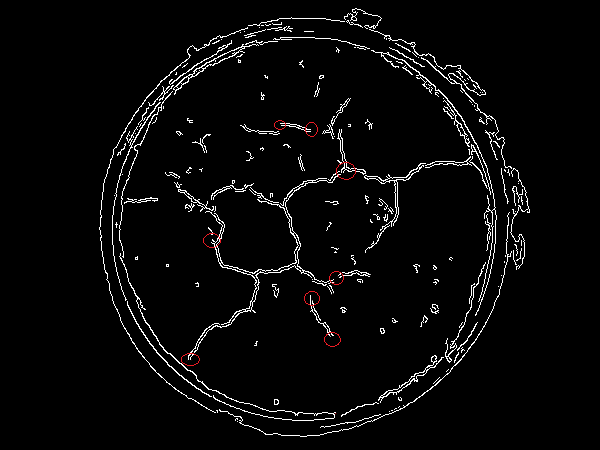
我的问题是,我如何连接边缘的末端,以关闭它们之间的洞?
备注:我使用轮廓检测而不应用Canny边缘。问题是轮廓检测会产生很大的噪声,而且不能很好地检测出所有的裂纹。或者我不知道如何像精明的边缘那样找到轮廓。
回答 2
Stack Overflow用户
发布于 2019-06-25 22:17:25
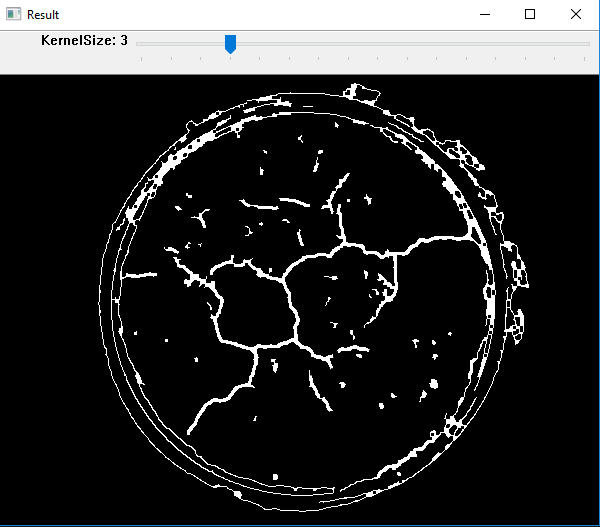
您可以使用形态闭合。这将缩小白色像素之间的空白。如果您在下面的脚本中输入您的Canny图像,您可以自己尝试。
结果:
代码:
    import cv2
    import numpy as np

    # function that handles trackbar changes
    def doClose(val):
            # create a kernel based on trackbar input
            kernel = np.ones((val,val))
            # do a morphologic close
            res = cv2.morphologyEx(img,cv2.MORPH_CLOSE, kernel)
            # display result
            cv2.imshow("Result", res)

    #load image as grayscale
    img = cv2.imread("KbMHp.png",0)

    # create window and add trackbar
    cv2.namedWindow('Result')
    cv2.createTrackbar('KernelSize','Result',0,15,doClose)

    # display image
    cv2.imshow("Result", img)
    cv2.waitKey(0)
cv2.destroyAllWindows() Stack Overflow用户
发布于 2019-06-25 23:53:47
从你提供的第二张图片开始,下面是我解决这个问题的方法:
- 高斯模糊图像的灰度转换
- 从盆栽中分离土壤
- 创造圆圈掩蔽的只是土壤
- 提取土壤ROI
- 执行形态转换以关闭孔洞
- 求等高线并按等高线区域过滤
- 求和面积
我们从高斯模糊开始,将图像转换为灰度。
image = cv2.imread('5.png')
original = image.copy()

blur = cv2.GaussianBlur(image, (3,3), 0)
gray = cv2.cvtColor(blur, cv2.COLOR_BGR2GRAY)
kernel = cv2.getStructuringElement(cv2.MORPH_RECT, (5,5))目的是将土壤边缘与盆栽边缘隔离开来。为此,我们使用cv2.HoughCircles()找到盆栽的外圆,缩小圆圈以抓取土壤区域,并利用原始图像的形状创建一个掩膜。
circle_mask = np.zeros(original.shape, dtype=np.uint8)
circles = cv2.HoughCircles(gray, cv2.HOUGH_GRADIENT, 1.5, 200)

# Convert the (x, y) coordinates and radius of the circles to integers
circles = np.round(circles[0, :]).astype("int")
circle_ratio = 0.85

# Loop over the (x, y) coordinates and radius of the circles
for (x, y, r) in circles:
    # Draw the circle, create mask, and obtain soil ROI
    cv2.circle(image, (x, y), int(r * circle_ratio), (0, 255, 0), 2)
    cv2.circle(circle_mask, (x, y), int(r * circle_ratio), (255, 255, 255), -1)
    soil_ROI = cv2.bitwise_and(original, circle_mask)
我们在坐标上循环以求圆的半径。从这里我们画出最大的外圆。
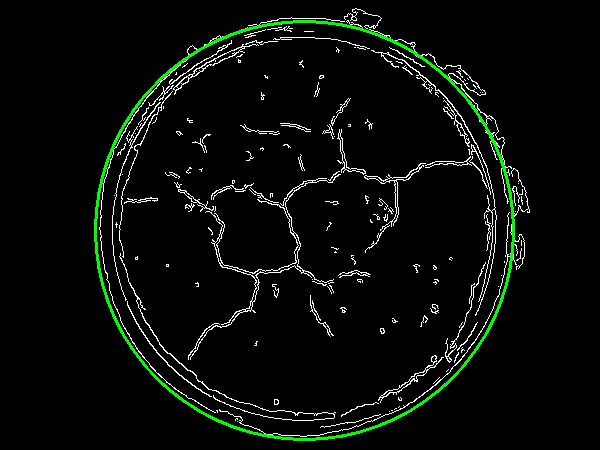
现在,为了隔离土壤和盆栽,我们使用了一个定标因子来获得
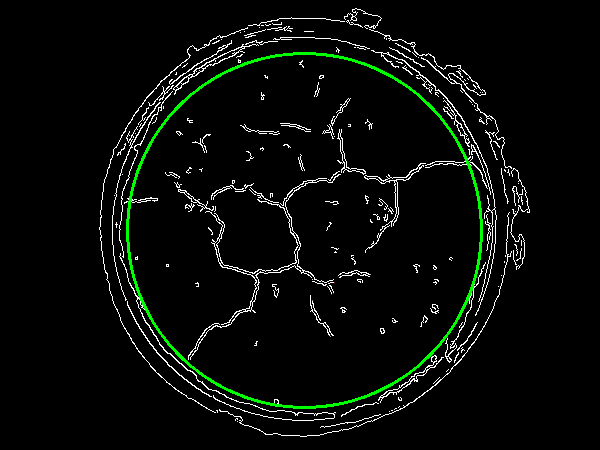
然后,我们填充圆圈,得到一个掩码,然后将它应用到原始图像上,以获得土壤ROI。
土壤掩模
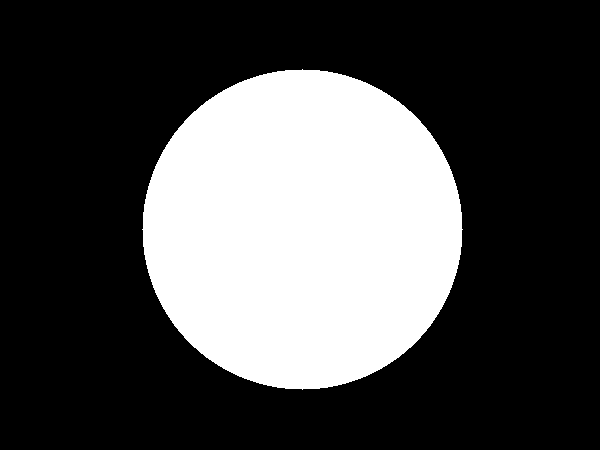
土壤ROI
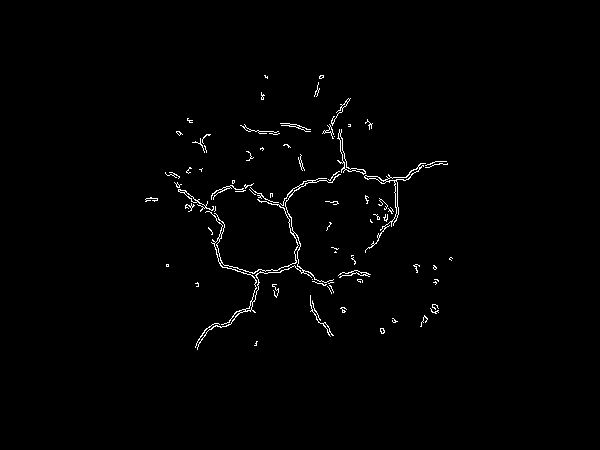
你的问题是
我如何连接边缘的末端,以关闭它们之间的孔?
要做到这一点,您可以使用morphological transformation使用cv2.morphologyEx()来关闭漏洞,从而导致
gray_soil_ROI = cv2.cvtColor(soil_ROI, cv2.COLOR_BGR2GRAY)
close = cv2.morphologyEx(gray_soil_ROI, cv2.MORPH_CLOSE, kernel)
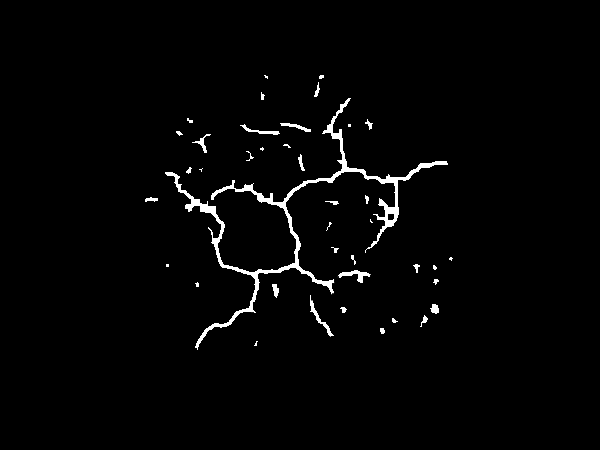
现在我们用cv2.findContours()找到轮廓,用最小阈值面积的cv2.contourArea()进行滤波,以去除岩石等小噪声。您可以调整最小面积,以控制过滤器的强度。
cnts = cv2.findContours(close, cv2.RETR_TREE, cv2.CHAIN_APPROX_SIMPLE)
cnts = cnts[0] if len(cnts) == 2 else cnts[1]

crack_area = 0
minumum_area = 25
for c in cnts:
    area = cv2.contourArea(c)
    if area > minumum_area:
        cv2.drawContours(original,[c], 0, (36,255,12), 2)
        crack_area += area
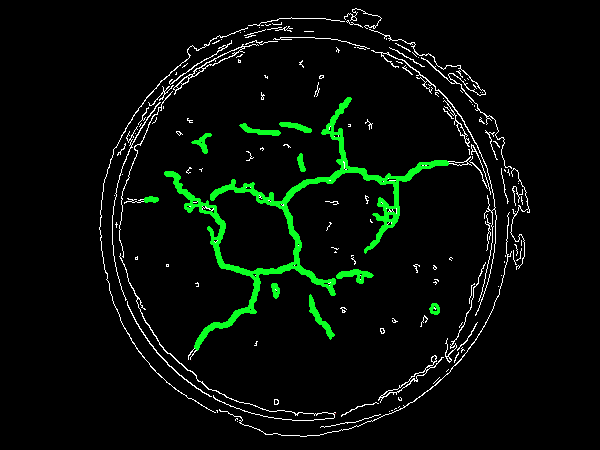
最后,我们总结出裂缝的总面积
3483.5
import cv2
import numpy as np

image = cv2.imread('5.png')
original = image.copy()

blur = cv2.GaussianBlur(image, (3,3), 0)
gray = cv2.cvtColor(blur, cv2.COLOR_BGR2GRAY)
kernel = cv2.getStructuringElement(cv2.MORPH_RECT, (5,5))

circle_mask = np.zeros(original.shape, dtype=np.uint8)
circles = cv2.HoughCircles(gray, cv2.HOUGH_GRADIENT, 1.5, 200)

# Convert the (x, y) coordinates and radius of the circles to integers
circles = np.round(circles[0, :]).astype("int")
circle_ratio = 0.85

# Loop over the (x, y) coordinates and radius of the circles
for (x, y, r) in circles:
    # Draw the circle, create mask, and obtain soil ROI
    cv2.circle(image, (x, y), int(r * circle_ratio), (0, 255, 0), 2)
    cv2.circle(circle_mask, (x, y), int(r * circle_ratio), (255, 255, 255), -1)
    soil_ROI = cv2.bitwise_and(original, circle_mask)

gray_soil_ROI = cv2.cvtColor(soil_ROI, cv2.COLOR_BGR2GRAY)
close = cv2.morphologyEx(gray_soil_ROI, cv2.MORPH_CLOSE, kernel)

cnts = cv2.findContours(close, cv2.RETR_TREE, cv2.CHAIN_APPROX_SIMPLE)
cnts = cnts[0] if len(cnts) == 2 else cnts[1]

crack_area = 0
minumum_area = 25
for c in cnts:
    area = cv2.contourArea(c)
    if area > minumum_area:
        cv2.drawContours(original,[c], 0, (36,255,12), 2)
        crack_area += area

print(crack_area)
cv2.imshow('close', close)
cv2.imshow('circle_mask', circle_mask)
cv2.imshow('soil_ROI', soil_ROI)
cv2.imshow('original', original)
cv2.waitKey(0)https://stackoverflow.com/questions/56754451
复制相似问题
腾讯云开发者

Copyright © 2013 - 2026 Tencent Cloud. All Rights Reserved. 腾讯云 版权所有
深圳市腾讯计算机系统有限公司 ICP备案/许可证号:粤B2-20090059  粤公网安备44030502008569号
腾讯云计算(北京)有限责任公司 京ICP证150476号 | 京ICP备11018762号