
Python中基于印象的n-图分析
Python中基于印象的n-图分析
提问于 2017-04-20 19:29:14
我的示例数据集是这样的:
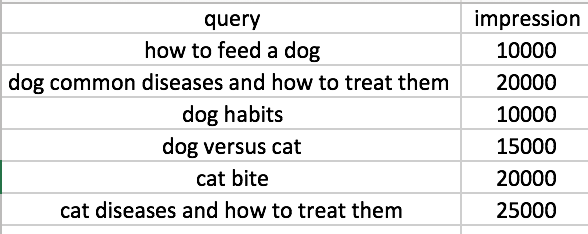
我的目标是了解一个单词、两个单词、三个单词、四个单词、五个单词和六个单词有多少印象。我以前运行N-g算法,但它只返回计数。这是我现在的n克密码。
def find_ngrams(text, n):
    word_vectorizer = CountVectorizer(ngram_range=(n,n), analyzer='word')
    sparse_matrix = word_vectorizer.fit_transform(text)
    frequencies = sum(sparse_matrix).toarray()[0]
    ngram =

pd.DataFrame(frequencies,index=word_vectorizer.get_feature_names(),columns=
['frequency'])
ngram = ngram.sort_values(by=['frequency'], ascending=[False])
return ngram

one = find_ngrams(df['query'],1)
bi = find_ngrams(df['query'],2)
tri = find_ngrams(df['query'],3)
quad = find_ngrams(df['query'],4)
pent = find_ngrams(df['query'],5)
hexx = find_ngrams(df['query'],6)
我想我需要做的是: 1.将查询拆分成一个单词到6个单词。2.把印象附加到分词上。3.重组所有的分词,并对印象进行总结。
以第二个查询“狗常见疾病及如何治疗”为例。
(1) 1-gram: dog, common, diseases, and, how, to, treat, them;
(2) 2-gram: dog common, common diseases, diseases and, and how, how to, to treat, treat them;
(3) 3-gram: dog common diseases, common diseases and, diseases and how, and how to, how to treat, to treat them;
(4) 4-gram: dog common diseases and, common diseases and how, diseases and how to, and how to treat, how to treat them;
(5) 5-gram: dog common diseases and how, the queries into one word, diseases and how to treat, and how to treat them;
(6) 6-gram: dog common diseases and how to, common diseases and how to treat, diseases and how to treat them;回答 2
Stack Overflow用户
回答已采纳
发布于 2017-04-20 20:28:10
这是一种方法!不是最有效的,但是,我们不要过早地进行优化。其思想是使用apply获得一个新的pd.DataFrame,为所有的ngram提供新的列,将其与旧的dataframe连接起来,并进行一些叠加和分组。
import pandas as pd

df = pd.DataFrame({
    "squery": ["how to feed a dog", "dog habits", "to cat or not to cat", "dog owners"],
    "count": [1000, 200, 100, 150]
})

def n_grams(txt):
    grams = list()
    words = txt.split(' ')
    for i in range(len(words)):
        for k in range(1, len(words) - i + 1):
            grams.append(" ".join(words[i:i+k]))
    return pd.Series(grams)

counts = df.squery.apply(n_grams).join(df)

counts.drop("squery", axis=1).set_index("count").unstack()\
    .rename("ngram").dropna().reset_index()\
.drop("level_0", axis=1).groupby("ngram")["count"].sum()最后一个表达式将返回一个pd.Series,如下所示。
    ngram
a                       1000
a dog                   1000
cat                      200
cat or                   100
cat or not               100
cat or not to            100
cat or not to cat        100
dog                     1350
dog habits               200
dog owners               150
feed                    1000
feed a                  1000
feed a dog              1000
habits                   200
how                     1000
how to                  1000
how to feed             1000
how to feed a           1000
how to feed a dog       1000
not                      100
not to                   100
not to cat               100
or                       100
or not                   100
or not to                100
or not to cat            100
owners                   150
to                      1200
to cat                   200
to cat or                100
to cat or not            100
to cat or not to         100
to cat or not to cat     100
to feed                 1000
to feed a               1000
to feed a dog           1000
Spiffy方法
这个可能会更有效一些,但它仍然可以实现CountVectorizer中的密集的n-g向量。它将每列上的一个与印象数相乘,然后在各列上相加,得到每克印象的总数。它给出了与上面相同的结果。需要注意的一点是,具有重复ngram的查询也计算双倍。
import numpy as np
from sklearn.feature_extraction.text import CountVectorizer

cv = CountVectorizer(ngram_range=(1, 5))
ngrams = cv.fit_transform(df.squery)
mask = np.repeat(df['count'].values.reshape(-1, 1), repeats = len(cv.vocabulary_), axis = 1)
index = list(map(lambda x: x[0], sorted(cv.vocabulary_.items(), key = lambda x: x[1])))
pd.Series(np.multiply(mask, ngrams.toarray()).sum(axis = 0), name = "counts", index = index)Stack Overflow用户
发布于 2017-04-20 20:50:30
像这样的事怎么样:
def find_ngrams(input, n):
    # from http://locallyoptimal.com/blog/2013/01/20/elegant-n-gram-generation-in-python/
    return zip(*[input[i:] for i in range(n)])

def impressions_by_ngrams(data, ngram_max):
    from collections import defaultdict
    result = [defaultdict(int) for n in range(ngram_max)]
    for query, impressions in data:
        words = query.split()
        for n in range(ngram_max):
           for ngram in find_ngrams(words, n + 1):
                result[n][ngram] += impressions
    return result
示例:
>>> data = [('how to feed a dog', 10000),
...         ('see a dog run',     20000)]
>>> ngrams = impressions_by_ngrams(data, 3)
>>> ngrams[0]   # unigrams
defaultdict(<type 'int'>, {('a',): 30000, ('how',): 10000, ('run',): 20000, ('feed',): 10000, ('to',): 10000, ('see',): 20000, ('dog',): 30000})
>>> ngrams[1][('a', 'dog')]  # impressions for bigram 'a dog'
30000页面原文内容由Stack Overflow提供。腾讯云小微IT领域专用引擎提供翻译支持
原文链接:
https://stackoverflow.com/questions/43528296
复制相关文章
相似问题
腾讯云开发者

Copyright © 2013 - 2026 Tencent Cloud. All Rights Reserved. 腾讯云 版权所有
深圳市腾讯计算机系统有限公司 ICP备案/许可证号:粤B2-20090059  粤公网安备44030502008569号
腾讯云计算(北京)有限责任公司 京ICP证150476号 | 京ICP备11018762号