
Perlin噪声算法似乎不产生梯度噪声。
我试图在c++中实现Perlin噪声。
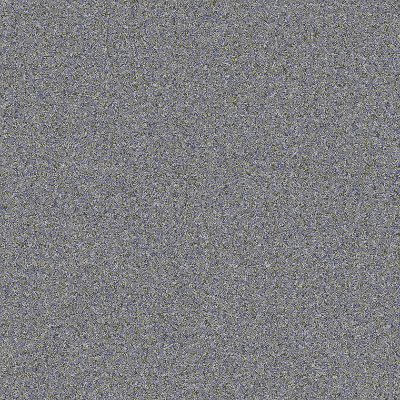
首先,问题(我认为)是产出不是我所期望的。目前,我只在灰度图像中使用生成的Perlin噪声值,这是我得到的结果:
然而,根据我的理解,它看起来更像是:
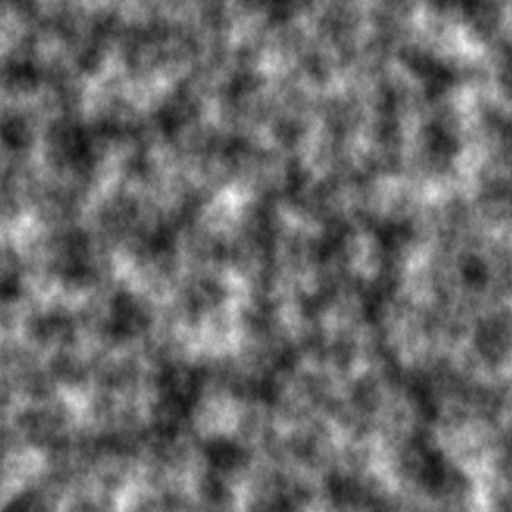
也就是说,我现时所产生的噪音,似乎更接近“标准”不规则噪音。
这是我到目前为止实现的Perlin噪声算法:
float perlinNoise2D(float x, float y)
{
    // Find grid cell coordinates
    int x0 = (x > 0.0f ? static_cast<int>(x) : (static_cast<int>(x) - 1));
    int x1 = x0 + 1;
    int y0 = (y > 0.0f ? static_cast<int>(y) : (static_cast<int>(y) - 1));
    int y1 = y0 + 1;

    float s = calculateInfluence(x0, y0, x, y);
    float t = calculateInfluence(x1, y0, x, y);
    float u = calculateInfluence(x0, y1, x, y);
    float v = calculateInfluence(x1, y1, x, y);

    // Local position in the grid cell
    float localPosX = 3 * ((x - (float)x0) * (x - (float)x0)) - 2 * ((x - (float)x0) * (x - (float)x0) * (x - (float)x0));
    float localPosY = 3 * ((y - (float)y0) * (y - (float)y0)) - 2 * ((y - (float)y0) * (y - (float)y0) * (y - (float)y0));

    float a = s + localPosX * (t - s);
    float b = u + localPosX * (v - u);

    return lerp(a, b, localPosY);
}
函数calculateInfluence为当前网格单元的一个角点生成随机梯度矢量和距离向量,并返回这些点的点积。它的实施方式是:
float calculateInfluence(int xGrid, int yGrid, float x, float y)
{
    // Calculate gradient vector
    float gradientXComponent = dist(rdEngine);
    float gradientYComponent = dist(rdEngine);

    // Normalize gradient vector
    float magnitude = sqrt( pow(gradientXComponent, 2) + pow(gradientYComponent, 2) );
    gradientXComponent = gradientXComponent / magnitude;
    gradientYComponent = gradientYComponent / magnitude;
    magnitude = sqrt(pow(gradientXComponent, 2) + pow(gradientYComponent, 2));

    // Calculate distance vectors
    float dx = x - (float)xGrid;
    float dy = y - (float)yGrid;

    // Compute dot product
    return (dx * gradientXComponent + dy * gradientYComponent);
}
在这里,dist是来自C++11的随机数生成器:
std::mt19937 rdEngine(1);
std::normal_distribution<float> dist(0.0f, 1.0f);
lerp被简单地实现为:
float lerp(float v0, float v1, float t)
{
    return ( 1.0f - t ) * v0 + t * v1;
}
为了实现该算法,我主要使用了以下两个资源:
Perlin噪声常见问题 Perlin噪声伪码
我很难准确地指出我似乎在搞砸的地方。这可能是我不正确地生成梯度向量,因为我不太确定它们应该有什么样的分布。我尝试了一个统一的分布,但是这似乎会在纹理中产生重复的模式!
同样,我可能是不正确地将影响值平均化。从Perlin噪声FAQ的文章中,很难准确地看出它应该如何做。
有人对代码可能有什么问题有任何提示吗?:)
回答 1
Stack Overflow用户
发布于 2016-05-29 11:44:03
似乎你只产生一个八度的佩林噪音。要获得如图所示的结果,需要生成多重八度并将它们相加在一起。在一系列的八度音阶中,每个八度的网格单元尺寸应该是最后一个的两倍。
要产生多倍频程噪声,请使用类似的方法:
float multiOctavePerlinNoise2D(float x, float y, int octaves)
{
    float v = 0.0f;
    float scale = 1.0f;
    float weight = 1.0f;
    float weightTotal = 0.0f;
    for(int i = 0; i < octaves; i++)
    {
        v += perlinNoise2D(x * scale, y * scale) * weight;
        weightTotal += weight;
        // "ever-increasing frequencies and ever-decreasing amplitudes"
        // (or conversely decreasing freqs and increasing amplitudes)
        scale *= 0.5f;
        weight *= 2.0f;
    }
    return v / weightTotal;
}对于额外的随机性,您可以使用一个不同的种子随机发生器为每个八度。此外,给每个八度的权重可以改变,以调整噪音的审美品质。如果权重变量没有在每次迭代中进行调整,那么上面的例子就是“粉红噪音” (频率的每一倍都具有相同的权重)。
另外,您需要使用一个随机数生成器,它每次为给定的xGrid,yGrid对返回相同的值。
https://stackoverflow.com/questions/37508938
复制相似问题
腾讯云开发者

Copyright © 2013 - 2026 Tencent Cloud. All Rights Reserved. 腾讯云 版权所有
深圳市腾讯计算机系统有限公司 ICP备案/许可证号:粤B2-20090059  粤公网安备44030502008569号
腾讯云计算(北京)有限责任公司 京ICP证150476号 | 京ICP备11018762号