
Mvc,授权反弹授权用户。
我试图使MVC 5网页中的一部分仅限于某个活动目录组的用户,但是也有登录到用户中的授权属性(on控制器)块。
后面的登录页代码如下所示:
public class AccountController: Controller
{

    [AllowAnonymous]
    public ActionResult Login(string returnUrl)
    {
        ViewBag.ReturnUrl = returnUrl;
        return View();
    }

    // POST: /Account/Login
    [HttpPost]
    [AllowAnonymous]
    [ValidateAntiForgeryToken]
    public ActionResult Login(LoginModel model, string returnUrl)
    {
        if (ModelState.IsValid)
        {
            ActiveDirectoryHelper ad = new ActiveDirectoryHelper();

            if (Membership.ValidateUser(model.UserName, model.Password))
            {
                if (ad.CheckGroupMembership(model.UserName))
                {
                    FormsAuthentication.SetAuthCookie(model.UserName, model.RememberMe);

                    if (Url.IsLocalUrl(returnUrl) && returnUrl.Length > 1 && returnUrl.StartsWith("/")
                        && !returnUrl.StartsWith("//") && !returnUrl.StartsWith("/\\"))
                    {
                        return Redirect(returnUrl);
                    }
                    else
                    {
                        return RedirectToAction("Index", "Home");
                    }
                }
                else
                {
                    ModelState.AddModelError("", "Credentials are correct but you are no authorised \n You Need membership in group: HKF-HIT-FortigateAPI-GS");
                }
            }
            else
            {
                ModelState.AddModelError("", "The user name or password provided is incorrect");
            }
        }
        // if we got this far, something failed, redisplay form
        return View(model);
    }
    // POST: /Account/LogOff
    [HttpPost]
    [ValidateAntiForgeryToken]
    public ActionResult LogOff()
    {
        FormsAuthentication.SignOut();
        return RedirectToAction("Index", "Home");
    }
}
public class ActiveDirectoryHelper
{
    string group = "HKF-HIT-FortigateAPI-GS";
     public bool CheckGroupMembership(string name)
    {
        var context = new PrincipalContext(
                            ContextType.Domain,
                            "AD-Domain", @"Username", "Password");

        var userPrincipal = UserPrincipal.FindByIdentity(
                            context,
                            IdentityType.SamAccountName,
                            name);

        var test = userPrincipal;

        if (userPrincipal.IsMemberOf(context,
             IdentityType.Name,
             group))
        {
            return true;
        }
        return false;
    }
}
用户通过并重定向到家庭控制器中的索引。
但是,此控制器的授权值设置如下:
[Authorize]
public class HomeController : Controller
{
    public ActionResult Index()
    {
        return View();
    }
}
在这里,用户在弹回登录页,好像他没有得到授权。
这也是web.config:
在浏览器中,我可以看到ADAuthCookie。
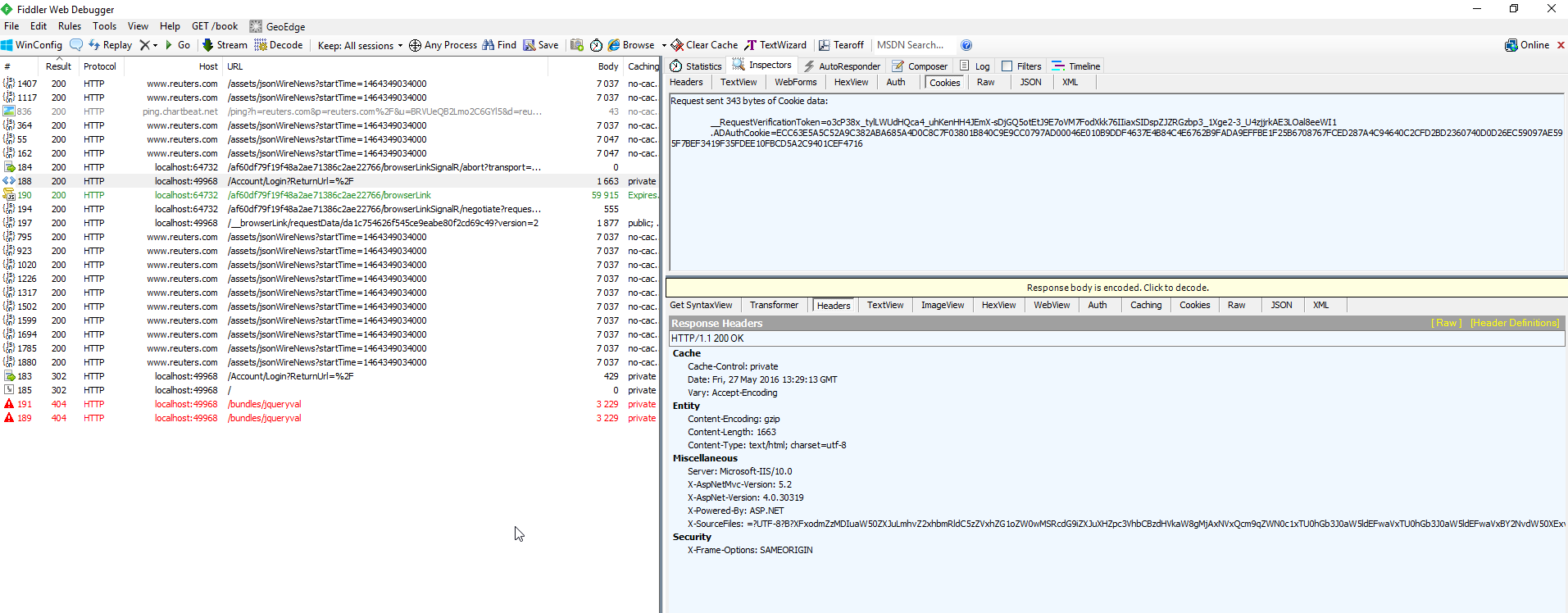
编辑: Ading图片的请求数据:
账户邮政:
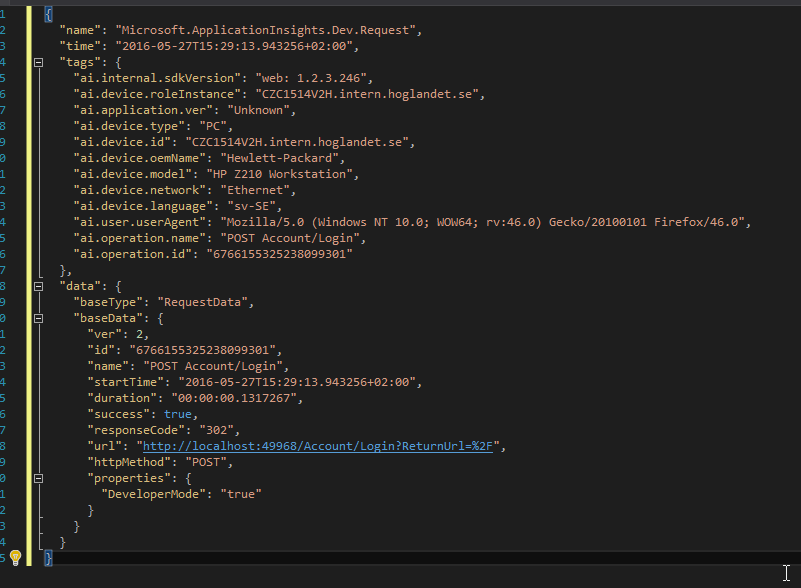
费德勒:

索引获取:
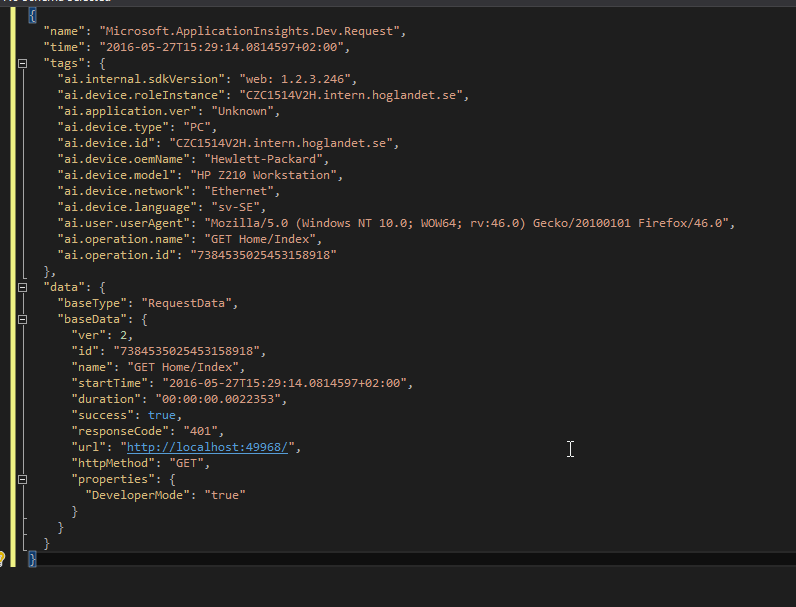
费德勒:
编辑:问题已经解决了,在浏览了由评论链接到的神奇指南之后,我意识到我从来没有在Global.asaz.cs课堂上处理过我的库克。
在Application_PostAuthenticateRequest中添加一个overide解决了我的问题。
我添加的代码最后使用:
protected void Application_PostAuthenticateRequest(Object sender, EventArgs e)
{
    HttpCookie authCookie = Request.Cookies[FormsAuthentication.FormsCookieName];

    if (authCookie != null)
    {
        FormsAuthenticationTicket authTicket = FormsAuthentication.Decrypt(authCookie.Value);

        JavaScriptSerializer serializer = new JavaScriptSerializer();

        CustomPrincipalSerializeModel serializeModel = serializer.Deserialize<CustomPrincipalSerializeModel>(authTicket.UserData);

        CustomPrincipal newUser = new CustomPrincipal(authTicket.Name);
        newUser.Name = serializeModel.Name;
        HttpContext.Current.User = newUser;
    }
}
在global.asax中,我还添加了:
CustomPrincipalSerializeModel serializeModel = new CustomPrincipalSerializeModel();
serializeModel.Name = model.UserName;

JavaScriptSerializer serializer = new JavaScriptSerializer();

string userData = serializer.Serialize(serializeModel);

FormsAuthenticationTicket authTicket = new FormsAuthenticationTicket(
         1,
         model.UserName,
         DateTime.Now,
         DateTime.Now.AddMinutes(15),
         false,
         userData);

string encTicket = FormsAuthentication.Encrypt(authTicket);
HttpCookie faCookie = new HttpCookie(FormsAuthentication.FormsCookieName, encTicket);
Response.Cookies.Add(faCookie);
到我的登录页面。
回答 1
Stack Overflow用户
发布于 2016-05-27 13:28:50
AuthorizeAttribute implementation).
所有安全框架(身份、成员等)微软使用这些接口与MVC/ASP.NET进行通信。如果您使用的是自定义安全框架,则还需要实现这些接口,并在AcquireRequestState (如果使用会话状态)或PostAuthorizeRequest事件中设置它们。
有关后者的示例,请参阅ASP.NET MVC - Set custom IIdentity or IPrincipal,以及自定义IPrincipal和IIdentity实现。
https://stackoverflow.com/questions/37483817
复制相似问题
腾讯云开发者

Copyright © 2013 - 2026 Tencent Cloud. All Rights Reserved. 腾讯云 版权所有
深圳市腾讯计算机系统有限公司 ICP备案/许可证号:粤B2-20090059  粤公网安备44030502008569号
腾讯云计算(北京)有限责任公司 京ICP证150476号 | 京ICP备11018762号