
如何使用DTW算法实现剪枝策略?
如何使用DTW算法实现剪枝策略?
提问于 2015-12-17 14:28:03
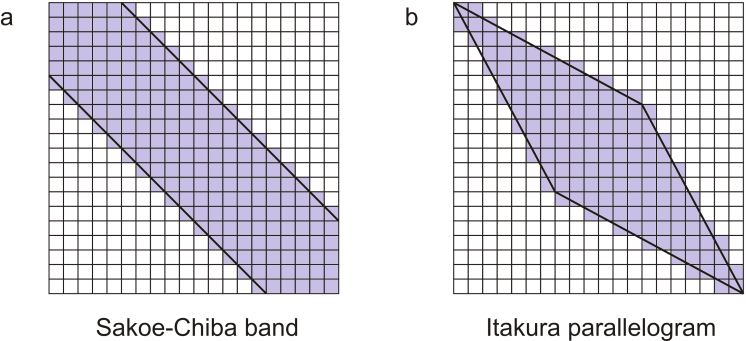
我尝试为语音识别应用程序实现DTW算法,我已经成功地做到了这一点,现在我正在尝试通过剪枝来提高DTW算法的性能。我试图对这个算法进行改进,并发现我应该以某种方式在特定范围内计算2D数组DTW中的值,如Image #1所示,但我似乎不知道如何做到这一点。有人能帮上忙吗?算法的代码包括在内(C#)
/// <summary>
///   Calculates the distance between two audio frames in the form of two MFCCFrame objects as input parameters
///   returns the difference in a double
/// </summary>

double distance(MFCCFrame frame1, MFCCFrame frame2)
{
    double tempSum = 0;
    for (int i = 0; i < 13; i++)
        tempSum += Math.Pow(Math.Abs(frame1.Features[i] - frame2.Features[i]), 2);
    return Math.Sqrt(tempSum);
}

/// <summary>
///   DTW Algorithms
///   Takes input 2 sequences: seq1 and seq2 to calculate the shortest distance between them
///   Uses the function "distance" defined above to calculate distance between two frames
///   2D array -> DTW[,] with dimentions: number of frames in seq 1, number of frames in seq2
///   returns the last element in the 2D array, which is the difference between the two sequences
/// </summary>

double DTWDistance(Sequence seq1, Sequence seq2)
{
    int m = seq1.Frames.Length, n = seq2.Frames.Length;
    double[,] DTW = new double[m, n];
    DTW[0, 0] = 0;
    for (int i = 0; i < m; i++)
    {
        for (int j = 0; j < n; j++)
        {
            double cost = distance(seq1.Frames[i], seq2.Frames[j]);
            if (i == 0 && j == 0)
                DTW[i, j] = cost;
            else if (i == 0)
                DTW[i, j] = cost + DTW[i, j - 1];
            else if (j == 0)
                DTW[i, j] = cost + DTW[i - 1, j];
            else
                DTW[i, j] = (cost + Math.Min(DTW[i - 1, j], Math.Min(DTW[i, j - 1], DTW[i - 1, j - 1])));
        }
    }
}回答 1
Stack Overflow用户
回答已采纳
发布于 2015-12-27 15:01:32
由于没有人回答,我想我应该回答这个问题,以防有人需要帮助--这也是常规的DTW算法:
/// <summary>
///   DTW Algorithms
///   Takes input 2 sequences: input and template to calculate the shortest distance between them
///   Uses the function "distance" defined above to calculate distance between two frames
///   2D array -> DTW[,] with dimentions: number of frames in input, number of frames in template
///   returns the last element in the 2D array, which is the difference between the two sequences
/// </summary>
///
double DTWDistance(Sequence input, Sequence template)
{
    int rows = input.Frames.Length, columns = template.Frames.Length;
    if (rows < (double)(columns / 2) || columns < (double)(rows / 2))
    {
        return double.MaxValue;
    }
        double[,] DTW = new double[rows, columns];
    DTW[0, 0] = 0;
    for (int i = 0; i < rows; i++)
    {
        for (int j = 0; j < columns; j++)
        {
            double cost = distance(input.Frames[i], template.Frames[j]);
            if (i == 0 && j == 0)
                DTW[i, j] = cost;
            else if (i == 0)
                DTW[i, j] = cost + DTW[i, j - 1];
            else if (j == 0)
                DTW[i, j] = cost + DTW[i - 1, j];
            else
                DTW[i, j] = (cost + Math.Min(DTW[i - 1, j], DTW[i - 1, j - 1]));// insert ,match
        }
    }
    return DTW[rows - 1, columns - 1];
}
我还在常规DTW算法上实现了剪枝策略,如下所示:
/// <summary>
/// DTW Algotithm with Pruning
/// Only Sakoe-Chiba band is caluculated and the rest is pruned
/// </summary>
float Pruning_DTWDistance(Sequence input, Sequence output)
{
    int rows = input.Frames.Length, columns = output.Frames.Length;
    if (rows < (double)(columns / 2) || columns < (double)(rows / 2))
    {
        return float.MaxValue;
    }
    float cost;
    float[,] DTW = new float[rows + 1, columns + 1];
    int w = Math.Abs(columns - rows);// window length -> |rows - columns|<= w
    for (int i = 1; i <= rows; i++)
    {
        for (int j = Math.Max(1, i - w); j <= Math.Min(columns, i + w); j++)
        {
            if (DTW[i - 1, j] == 0)
                DTW[i - 1, j] = float.MaxValue;
            if (DTW[i - 1, j - 1] == 0)
                DTW[i - 1, j - 1] = float.MaxValue;
            DTW[0, 0] = 0;
            cost = distance(input.Frames[i - 1], output.Frames[j - 1]);// frames 0 based
            DTW[i, j] = (cost + Math.Min(DTW[i - 1, j], DTW[i - 1, j - 1]));// insert ,match
        }
    }
    return DTW[rows, columns];
}这两个函数都使用帮助函数distance,定义如下:
/// <summary>
///   Calculates the distance between two audio frames in the form of MFCCFrame objects
///   returns the difference in a float
/// </summary>
///
float distance(MFCCFrame frame1, MFCCFrame frame2)
{
    double tempSum = 0;
    for (int i = 0; i < 13; i++)
        tempSum += Math.Pow(Math.Abs(frame1.Features[i] - frame2.Features[i]), 2);
    return (float)Math.Sqrt(tempSum);
}
为了提高DTW algoritm的内存消耗,我只使用了两个数组而不是一个2D矩阵,此更改后的算法如下所示:
    double DTW_improved(Sequence input, Sequence template)
    {
        // Don't compare two sequences if one of their lengths is half the other's
        if (input.Frames.Length <= (0.5 * template.Frames.Length) || template.Frames.Length <= (0.5 * input.Frames.Length))
            return double.PositiveInfinity;
        int rows = template.Frames.Length, columns = input.Frames.Length;

        double[] c1 = new double[rows];
        double[] c2 = new double[rows];
        double[] temp; // To hold address only (use it in swapping address)
        c1[0] = distance(input.Frames[0], template.Frames[0]);
        for (int i = 1; i < rows; i++)
            c1[i] = c1[i - 1] + distance(input.Frames[0], template.Frames[i]);
        for (int i = 1; i < columns; i++)
        {
            c2[0] = distance(input.Frames[i], template.Frames[0]) + c1[0];
            c2[1] = distance(input.Frames[i], template.Frames[1]) + Math.Min(c1[0], c1[1]);
            // Calculating first 2 elements of the array before the loop
            //since they both need special conditions
            for (int j = 2; j < rows; j++)
                c2[j] = Math.Min(c1[j], Math.Min(c1[j - 1], c1[j - 2])) + distance(input.Frames[i], template.Frames[j]);

            if (i != columns - 1) // Swapping addresses of c1 & c2
            {
                temp = c2;
                c2 = c1;
                c1 = temp;
            }
        }
        return c2[rows - 1] / (0.5 * (input.Frames.Length + template.Frames.Length)); // Normalization: Dividing edit distance by average of input length & template length
}页面原文内容由Stack Overflow提供。腾讯云小微IT领域专用引擎提供翻译支持
原文链接:
https://stackoverflow.com/questions/34337005
复制相关文章
相似问题
腾讯云开发者

Copyright © 2013 - 2026 Tencent Cloud. All Rights Reserved. 腾讯云 版权所有
深圳市腾讯计算机系统有限公司 ICP备案/许可证号:粤B2-20090059  粤公网安备44030502008569号
腾讯云计算(北京)有限责任公司 京ICP证150476号 | 京ICP备11018762号