
需要帮助使用宽度优先搜索(Java)到邻接矩阵(图)的第n级。
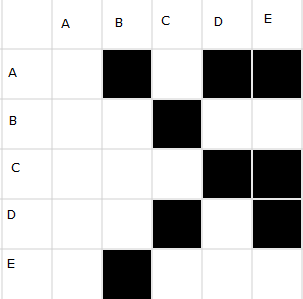
public int bfs(int maxDepth){
        int src = 2;
        int dest = 2;
        int i;
        int depth = 0;
        int countPaths = 0;
        int element;

        queue.add(src);

        while(!queue.isEmpty() && depth <= maxDepth)
        {
            element = queue.remove();
            i = 0;

            while(i < 5)
            {
                if(arr[element][i] > 0)
                {
                    queue.add(i);

                    if(i == dest)
                        countPaths++;
                }
                i++;
            }
        }

        queue.clear();
        return countPaths;
    }
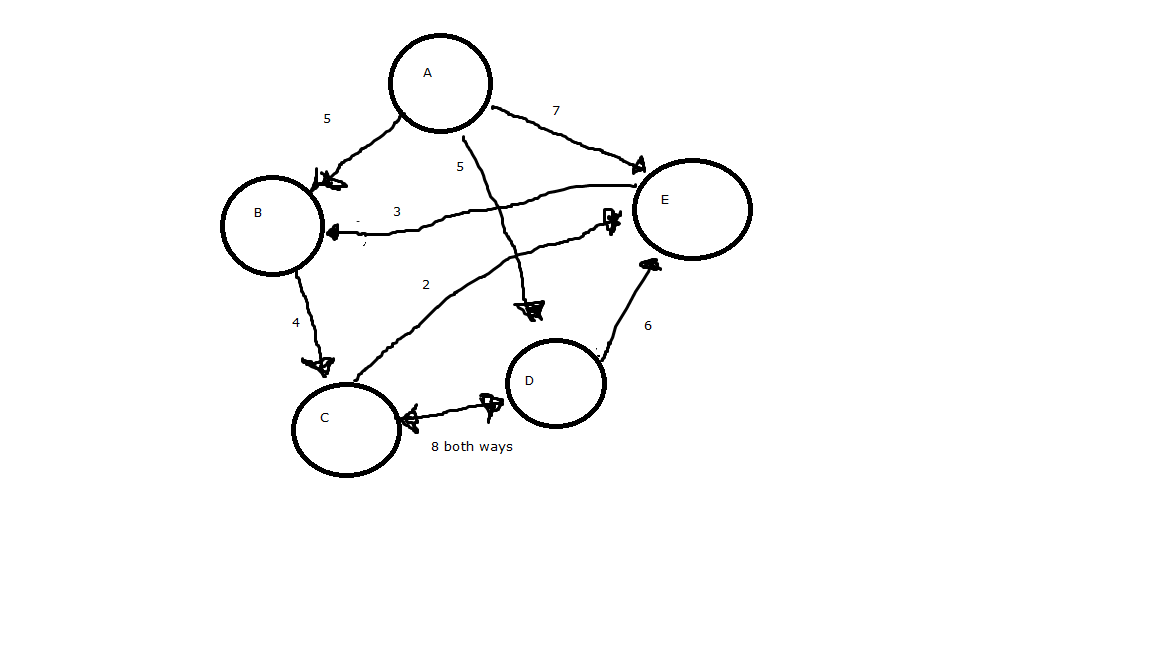
你好!!给定一个源和一个目的地,我需要找到一条路径。我的BFS算法在遍历图时工作得很好。我的问题是当我想让它停下来的时候。我拿出了我在增加深度的地方,这样我看起来就不像个十足的白痴了。我希望有人能帮忙。本质上,我想知道如何跟踪当前的深度。谢谢!
示例:
找到从C到C的路径#,最多3站。答案是两条途径:
C -> D -> C (2站)
C -> E -> B -> C (3站)
示例2:找到从A到C的路径#,最大数目为3次。答案是三条路。
A -> B -> C (2站)
-> D -> C (2站)
A -> E -> B -> C -> (3站)
回答 2
Stack Overflow用户
发布于 2015-09-22 07:08:54
Q:,本质上,我想知道如何跟踪当前深度。
一种解决方案是创建一个包装类,其中包含一个额外的字段,即深度,正如@svs在他的回答中所解释的那样。但是,有一个巧妙的技巧可以避免创建包装类,而且非常简单:
queue.add(src);
while(!queue.isEmpty())
{
     int size = queue.size();
     for(int i=0; i<size; i++)
     {
     .. //do processing for the current depth
     }
}在for循环中,对该级别的节点做任何您想做的事情,包括在队列中放置新元素(即深度等于current_depth +1的节点)。在queue.size()循环中只迭代for次数将保证您只处理当前级别的节点,而while循环将保证所有级别都将被处理(如果扩展停止循环的条件,则只处理其中的一些级别)。
Stack Overflow用户
发布于 2015-09-22 05:31:20
由于每个节点在执行bfs时都应该与其深度相关联,所以可以创建一个类,在该类中存储节点和深度(如果要打印路径,则要打印父节点):
package stackoverflow;

import java.util.ArrayDeque;
import java.util.ArrayList;
import java.util.List;

public class BFSTest {
    public static class BFSNode {
        public int node, depth;
        public BFSNode parent;

        public BFSNode(int node) {
            this.node = node;
            this.depth = 0;
            this.parent = null;
        }

        public BFSNode(int node, BFSNode parent) {
            this.node = node;
            this.depth = parent.depth+1;
            this.parent = parent;
        }
    }

    ArrayDeque<BFSNode> queue;
    int[][] arr;

    public BFSTest() {
        queue = new ArrayDeque<BFSNode>();
        arr = new int[5][5];
        arr[0][1] = arr[0][3] = arr[0][4] = 1;
        arr[1][2] = 1;
        arr[2][3] = arr[2][4] = 1;
        arr[3][2] = arr[3][4] = 1;
        arr[4][1] = 1;
    }

    public int bfs(int src, int dest, int maxDepth){
        int i;
        int countPaths = 0;
        BFSNode element;

        queue.add(new BFSNode(src));

        while(!queue.isEmpty())
        {
            element = queue.poll();
            if (element.depth > maxDepth)
                break;
            i = 0;

            while(i < 5)
            {
                if(arr[element.node][i] > 0)
                {
                    if(i == dest && element.depth +1 <= maxDepth) {
                        BFSNode tmp = element;
                        List<Integer> path = new ArrayList<Integer>();
                        path.add(dest);
                        while (tmp != null) {
                            path.add(tmp.node);
                            tmp = tmp.parent;
                        }
                        for (int j = path.size() - 1; j >= 0; j--) {
                            System.out.print(path.get(j) + " ");
                        }
                        System.out.println();
                        countPaths++;
                    }

                    queue.add(new BFSNode(i, element));

                }
                i++;
            }
        }

        queue.clear();
        return countPaths;
    }

    public static void main(String[] args) {
        BFSTest test = new BFSTest();
        System.out.println(test.bfs(2, 2, 3));
        System.out.println(test.bfs(0, 2, 3));
    }

}
你会得到
//src = 2, dest=2
2 3 2   //path 1
2 4 1 2 //path 2
2       //total
//src=0. dest=2
0 1 2   //path 1
0 3 2   //path 2
0 4 1 2 //path 3
3 //totalhttps://stackoverflow.com/questions/32708490
复制相似问题
腾讯云开发者

Copyright © 2013 - 2026 Tencent Cloud. All Rights Reserved. 腾讯云 版权所有
深圳市腾讯计算机系统有限公司 ICP备案/许可证号:粤B2-20090059  粤公网安备44030502008569号
腾讯云计算(北京)有限责任公司 京ICP证150476号 | 京ICP备11018762号