
需要: facet_grid - facet_wrap混合解决方案
需要: facet_grid - facet_wrap混合解决方案
提问于 2015-06-24 10:05:33
我试图在facet_grid和facet_wrap之间生成一个具有某种“混合”布局的情节:
示例:
library(reshape2)
library(ggplot2)

data(diamonds)

# sample and reshape diamond dataset
diamonds_l <- melt(diamonds[sample(1:nrow(diamonds), 200),
                            c("cut", "depth", "table", "price", "x")],
                   id.vars = c("cut","x"))
这是我想要的地块安排(质量在栏和深度,表,价格作为行)
ggplot( diamonds_l, aes( x = value, y = x, colour= cut))+
  geom_point( ) +
  facet_wrap( variable ~  cut, scales = "free_x", nrow=3)
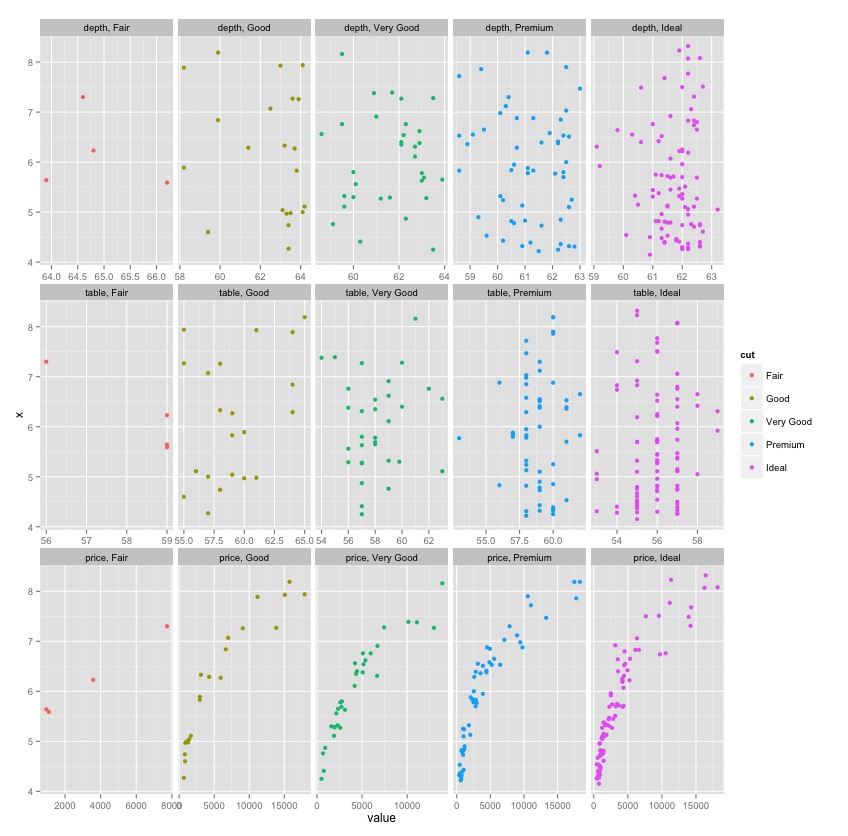
但是,我更喜欢facet_grid设计(每列/行只有一个标头),但是scales = "free_x“在这个布局中不起作用
ggplot( diamonds_l, aes( x = value, y = x, colour= cut))+
  geom_point( ) +
  facet_grid(variable ~  cut, scales = "free_x")
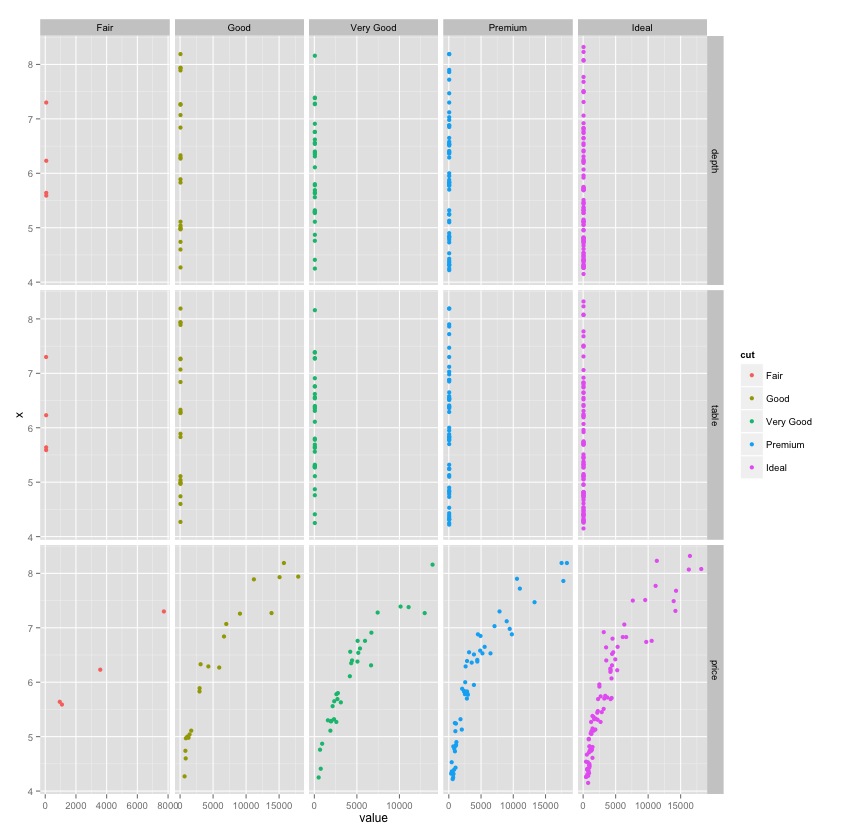
它在这里工作,但这不是我想要的安排(行的质量)。
ggplot( diamonds_l, aes( x = value, y = x, colour= cut))+
  geom_point( ) +
  facet_grid(cut ~ variable, scales = "free_x")
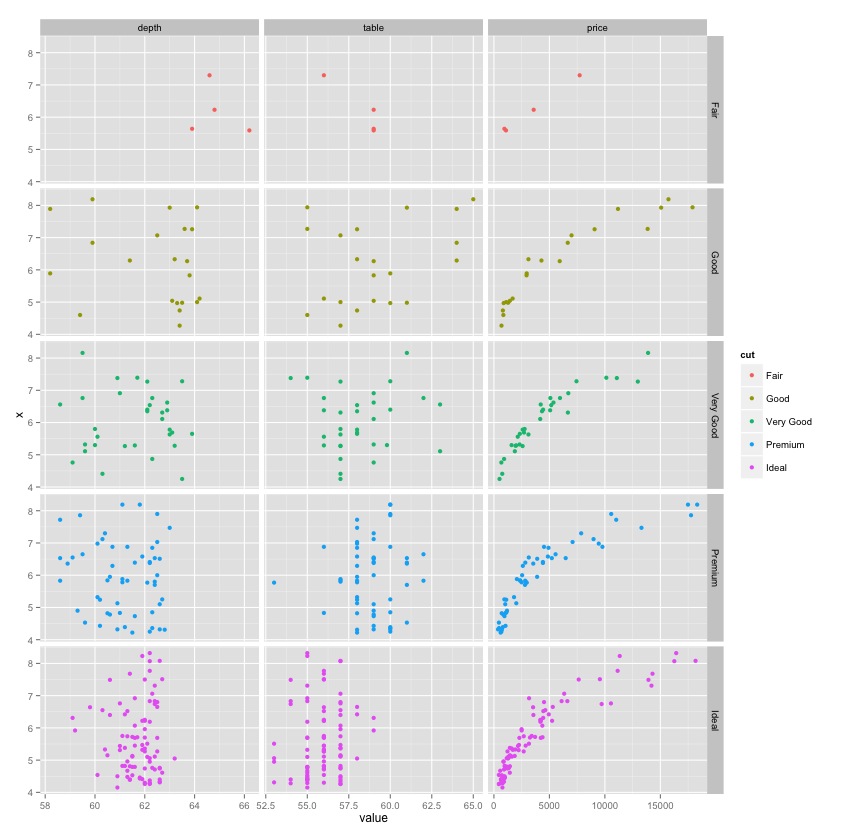
我明白它为什么行不通,但我想知道是否有一个解决办法?
谢谢!
法比安
回答 1
Stack Overflow用户
回答已采纳
发布于 2015-06-24 12:12:29
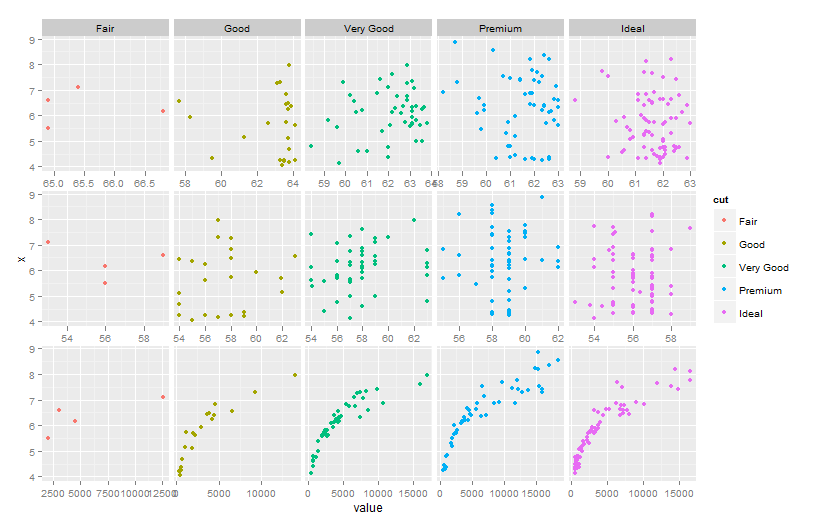
经过一番挖掘,我终于成功了。从here (@巴普蒂斯特,@Roland)和here (@Sandy )借用的代码片段。看起来很可怕,但我基本上是通过低级操作从你的第一个情节中删除/重命名文本条。
p <- ggplot( diamonds_l, aes( x = value, y = x, colour= cut))+
  geom_point( ) +
  facet_wrap( variable ~ cut, scales = "free_x", nrow = 3)

library(gridExtra)
gt <- ggplotGrob(p)
panels <- grep("panel", gt$layout$name)
top <- unique(gt$layout$t[panels])
gt <- gt[-(top[-1]-1), ]

gg <- gt$grobs
strips <- grep("strip_t", names(gg))
labels <- levels(diamonds_l$cut)
for(ii in seq_along(labels))  {
  modgrob <- getGrob(gg[[strips[ii]]], "strip.text",
                     grep=TRUE, global=TRUE)
  gg[[strips[ii]]]$children[[modgrob$name]] <- editGrob(modgrob,label=labels[ii])
}
gt$grobs <- gg
grid.newpage()
grid.draw(gt)
页面原文内容由Stack Overflow提供。腾讯云小微IT领域专用引擎提供翻译支持
原文链接:
https://stackoverflow.com/questions/31023662
复制相关文章
相似问题
腾讯云开发者

Copyright © 2013 - 2026 Tencent Cloud. All Rights Reserved. 腾讯云 版权所有
深圳市腾讯计算机系统有限公司 ICP备案/许可证号:粤B2-20090059  粤公网安备44030502008569号
腾讯云计算(北京)有限责任公司 京ICP证150476号 | 京ICP备11018762号