
如何在MATLAB中选择最大轮廓
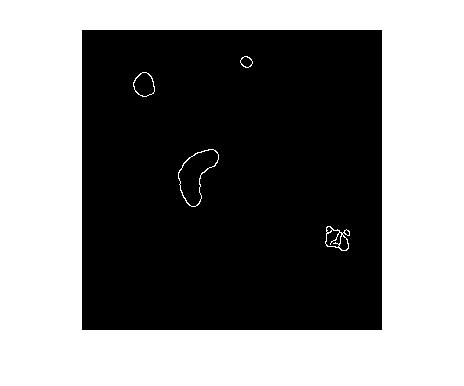
在我的工作过程中,我必须发现一种寄生虫。我用HSV找到了寄生虫,后来把它变成了灰色图像。现在我也做了边缘检测。我需要一些代码,告诉MATLAB找到最大的轮廓(寄生虫),并使其余的区域为黑色像素。
回答 3
Stack Overflow用户
发布于 2015-02-19 18:58:55
你可以选择“最大”的轮廓,通过填充每个轮廓周围的洞,找出哪个形状给你最大的面积,然后使用最大区域的位置,然后复制到最后的图像。正如Benoit_11所建议的那样,使用regionprops --特别是Area和PixelList标志。就像这样:
im = imclearborder(im2bw(imread('http://i.stack.imgur.com/a5Yi7.jpg')));
im_fill = imfill(im, 'holes');
s = regionprops(im_fill, 'Area', 'PixelList');
[~,ind] = max([s.Area]);
pix = sub2ind(size(im), s(ind).PixelList(:,2), s(ind).PixelList(:,1));
out = zeros(size(im));
out(pix) = im(pix);
imshow(out);第一行代码直接从StackOverflow读取图像。由于某些原因,图像也是RGB图像,因此我通过im2bw将其转换为二进制。在图像周围还有一条白色的边框。您很可能在figure中打开了这个图像,并将图像从图形中保存下来。我通过使用imclearborder删除白色边框来消除这个问题。
接下来,我们需要填充等高线环绕的区域,所以使用imfill和holes标志。接下来,使用regionprops分析图像中不同的填充对象--特别是Area,以及哪些像素属于填充图像中的每个对象。一旦我们获得这些属性,找到给出最大面积的填充轮廓,然后访问正确的regionprops元素,提取出属于对象的像素位置,然后使用这些像素并将像素复制到输出图像并显示结果。
我们得到:
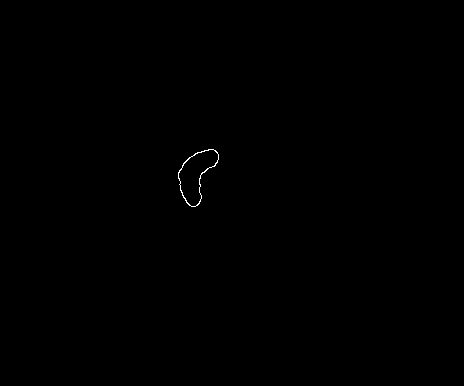
或者,您可以使用Perimeter标志(如Benoit_11建议的那样),只需找到与最大等高线对应的最大周长即可。这还是能给你你想要的。因此,只需在第三行和第四行代码中将Area标志替换为Perimeter,您仍然应该得到相同的结果。
Stack Overflow用户
发布于 2015-02-19 19:07:00
这可能是一种方法-
%// Read in image as binary
im = im2bw(imread('http://i.stack.imgur.com/a5Yi7.jpg'));
im = im(40:320,90:375); %// clear out the whitish border you have
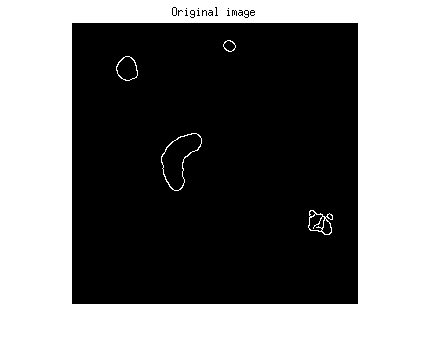
figure, imshow(im), title('Original image')

%// Fill all contours to get us filled blobs and then select the biggest one
outer_blob = imfill(im,'holes');
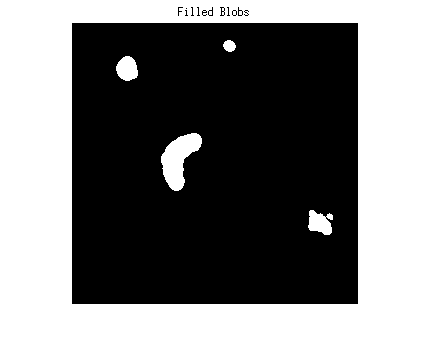
figure, imshow(outer_blob), title('Filled Blobs')

%// Select the biggest blob that will correspond to the biggest contour
outer_blob = biggest_blob(outer_blob);

%// Get the biggest contour from the biggest filled blob
out = outer_blob & im;
figure, imshow(out), title('Final output: Biggest Contour')基于biggest_blob的函数bsxfun可以替代这里发布的其他答案在regionprops中所做的操作。根据我的经验,我发现这种基于bsxfun的技术比regionprops更快。Here are few benchmarks在前面的一个答案上比较了这两种技术的运行时性能。
相关功能-
function out = biggest_blob(BW)

%// Find and labels blobs in the binary image BW
[L, num] = bwlabel(BW, 8);

%// Count of pixels in each blob, basically should give area of each blob
counts = sum(bsxfun(@eq,L(:),1:num));

%// Get the label(ind) cooresponding to blob with the maximum area
%// which would be the biggest blob
[~,ind] = max(counts);

%// Get only the logical mask of the biggest blob by comparing all labels
%// to the label(ind) of the biggest blob
out = (L==ind);

return;
调试图像-
Stack Overflow用户
发布于 2015-02-19 19:11:17
既然我的答案差不多都写好了,我还是会给你的,但是这个想法和@rayryeng的回答很相似。
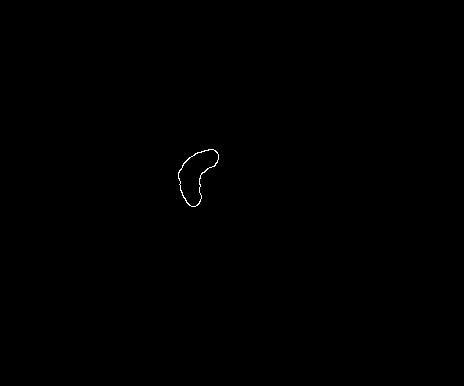
基本上,我在调用Perimeter时使用regionprops和PixelIdxList标志,因此,一旦使用imclearborder删除图像边框,就可以得到构成最大轮廓的像素的线性索引。
以下是代码:
clc
clear


BW = imclearborder(im2bw(imread('http://i.stack.imgur.com/a5Yi7.jpg')));

S= regionprops(BW, 'Perimeter','PixelIdxList');

[~,idx] = max([S.Perimeter]);

Indices = S(idx).PixelIdxList;

NewIm = false(size(BW));

NewIm(Indices) = 1;

imshow(NewIm)
以及产出:
正如你所看到的,有很多方法可以达到同样的效果,哈哈。
https://stackoverflow.com/questions/28614074
复制相似问题
腾讯云开发者

Copyright © 2013 - 2026 Tencent Cloud. All Rights Reserved. 腾讯云 版权所有
深圳市腾讯计算机系统有限公司 ICP备案/许可证号:粤B2-20090059  粤公网安备44030502008569号
腾讯云计算(北京)有限责任公司 京ICP证150476号 | 京ICP备11018762号