
二维阵列(板)得分最高的最短路径
二维阵列(板)得分最高的最短路径
提问于 2014-11-16 10:21:09
我正在开发一个带有2D阵列(棋盘)的新游戏。每个单元格/瓷砖都有一定数量的点数。
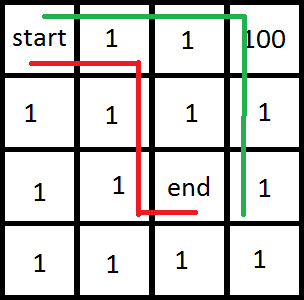
我想要实现的是,一个算法能够找到具有最高核心的最短路径。
因此,我首先实现了Dijkstra算法(下面的源代码),以找到从头到尾的最短路径(红色路由)。这个很好用。
我的问题是:如何扩展我的算法,从而确定最短路径与最高的评分(所以绿色路线)。
提前谢谢你!
class Graph
{
    // Dictionary<Start Point, vertices>
    Dictionary<char, Dictionary<char, int>> vertices = new Dictionary<char, Dictionary<char, int>>();

    public void add_vertex(char name, Dictionary<char, int> edges)
    {
        vertices[name] = edges;
    }

    public List<char> shortest_path(char start, char finish)
    {
        var previous = new Dictionary<char, char>();
        var distances = new Dictionary<char, int>();
        var nodes = new List<char>();

        List<char> path = null;

        foreach (var vertex in vertices)
        {
            if (vertex.Key == start)
            {
                distances[vertex.Key] = 0;
            }
            else
            {
                distances[vertex.Key] = int.MaxValue;
            }

            nodes.Add(vertex.Key);
        }

        while (nodes.Count != 0)
        {
            nodes.Sort((x, y) => distances[x] - distances[y]);

            var smallest = nodes[0];
            nodes.Remove(smallest);

            if (smallest == finish)
            {
                path = new List<char>();
                while (previous.ContainsKey(smallest))
                {
                    path.Add(smallest);
                    smallest = previous[smallest];
                }

                break;
            }

            if (distances[smallest] == int.MaxValue)
            {
                break;
            }

            foreach (var neighbor in vertices[smallest])
            {
                var alt = distances[smallest] + neighbor.Value;
                if (alt < distances[neighbor.Key])
                {
                    distances[neighbor.Key] = alt;
                    previous[neighbor.Key] = smallest;
                }
            }
        }

        return path;
    }
}
更新:
我已经尝试过这样的方法了,但似乎不起作用:
  foreach (var neighbour in _vertices[smallest])
  {
      // The variable alt is the length of the path from the root node to the neighbor node if it were to go through _vertices[smallest].
      var alt = pointInfos[smallest].Distance + neighbour.Value.Distance;
      var altScore = pointInfos[smallest].Points + neighbour.Value.Points;
      if (alt <= pointInfos[neighbour.Key].Distance && altScore > pointInfos[neighbour.Key].Points) // A shorter path with higher points to neighbour has been found
      {
          pointInfos[neighbour.Key] = new PointInfo(alt, altScore);
          previous[neighbour.Key] = smallest;
      }
}回答 1
Stack Overflow用户
回答已采纳
发布于 2014-11-16 11:11:37
我不会在这里给出一个完全强化的答案,但我想我可以给你一个关于如何实现这一点的很好的建议。
你需要做的是使用你在单元格中的分数作为图形上的边缘长度。进入下一个单元将需要1或100步。
这将更容易实现最长路径算法,因为你想要最大的分数。问题是,这样的话,整个董事会就会被淘汰。
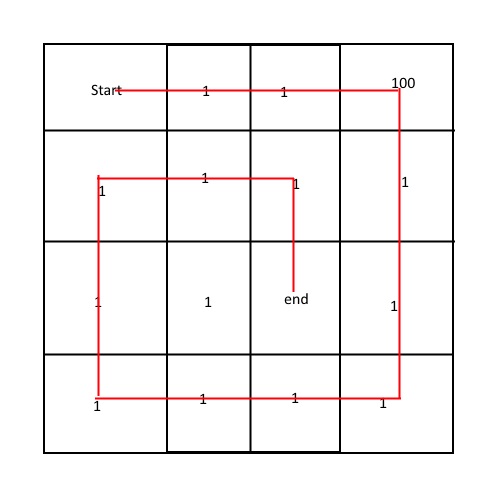
所以,你需要的是一个负成本,通过简单的路线,所以它将尝试超过100,但不是超过其余的负细胞。
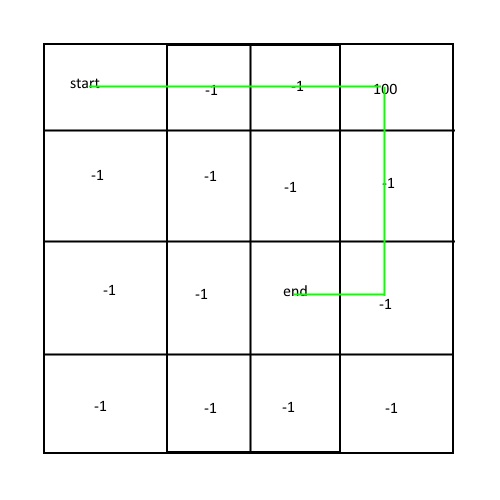
你也可以用最短路径算法来做这件事,但是你需要倒转你的分数,这样它就可以以最低的分数超过最短的路径。
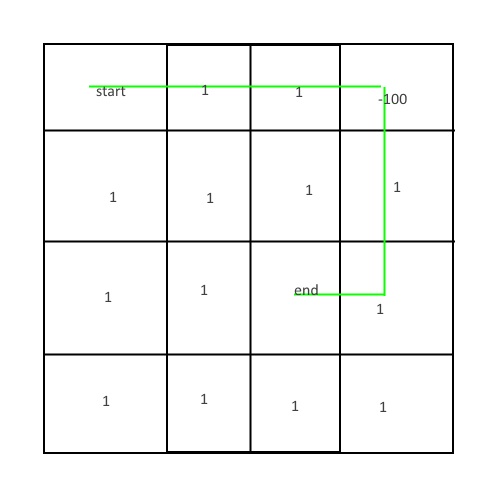
所以,不要看算法的绝对长度,而是使用值作为长度交叉。我希望这对你有帮助,并最终会给你一个很好的算法。
页面原文内容由Stack Overflow提供。腾讯云小微IT领域专用引擎提供翻译支持
原文链接:
https://stackoverflow.com/questions/26955914
复制相关文章
相似问题
腾讯云开发者

Copyright © 2013 - 2026 Tencent Cloud. All Rights Reserved. 腾讯云 版权所有
深圳市腾讯计算机系统有限公司 ICP备案/许可证号:粤B2-20090059  粤公网安备44030502008569号
腾讯云计算(北京)有限责任公司 京ICP证150476号 | 京ICP备11018762号