
ets选择的性能放缓
我对ets表的选择性能做了一些测试,并注意到了奇怪的行为。例如,我们有一个简单的ets表(没有任何特定的选项),它存储键/值-一个随机字符串和一个数字:
:ets.new(:table, [:named_table])

for _i <- 1..2000 do
    :ets.insert(:table, {:crypto.strong_rand_bytes(10)
    |> Base.url_encode64
    |> binary_part(0, 10), 100})
end
还有一个钥匙已知的条目:
:ets.insert(:table, {"test_string", 200})现在有一个简单的愚蠢的基准测试函数,它尝试多次从ets表中选择test_string并度量每个选择的时间:
test_fn = fn() ->
  Enum.map(Enum.to_list(1..10_000), fn(x) ->
    :timer.tc(fn() ->
      :ets.select(:table, [{{:'$1', :'$2'},
                           [{:'==', :'$1', "test_string"}],
                           [:'$_']}])
    end)
  end) |> Enum.unzip
end现在,如果我看一下使用Enum.max(timings)的最大时间,它将返回一个值,这个值大约是所有其他选择的10倍。因此,例如:
iex(1)> {timings, _result} = test_fn.()
....
....
....
iex(2)> Enum.max(timings)
896
iex(3)> Enum.sum(timings) / length(timings)
96.8845
我们可以在这里看到,最大值几乎是平均值的10倍。
这里发生了什么事?它是否与GC、内存分配时间或诸如此类的东西有关?您是否知道为什么从ets表中进行选择有时会造成这样的减速,或者如何对此进行分析。
UPD.
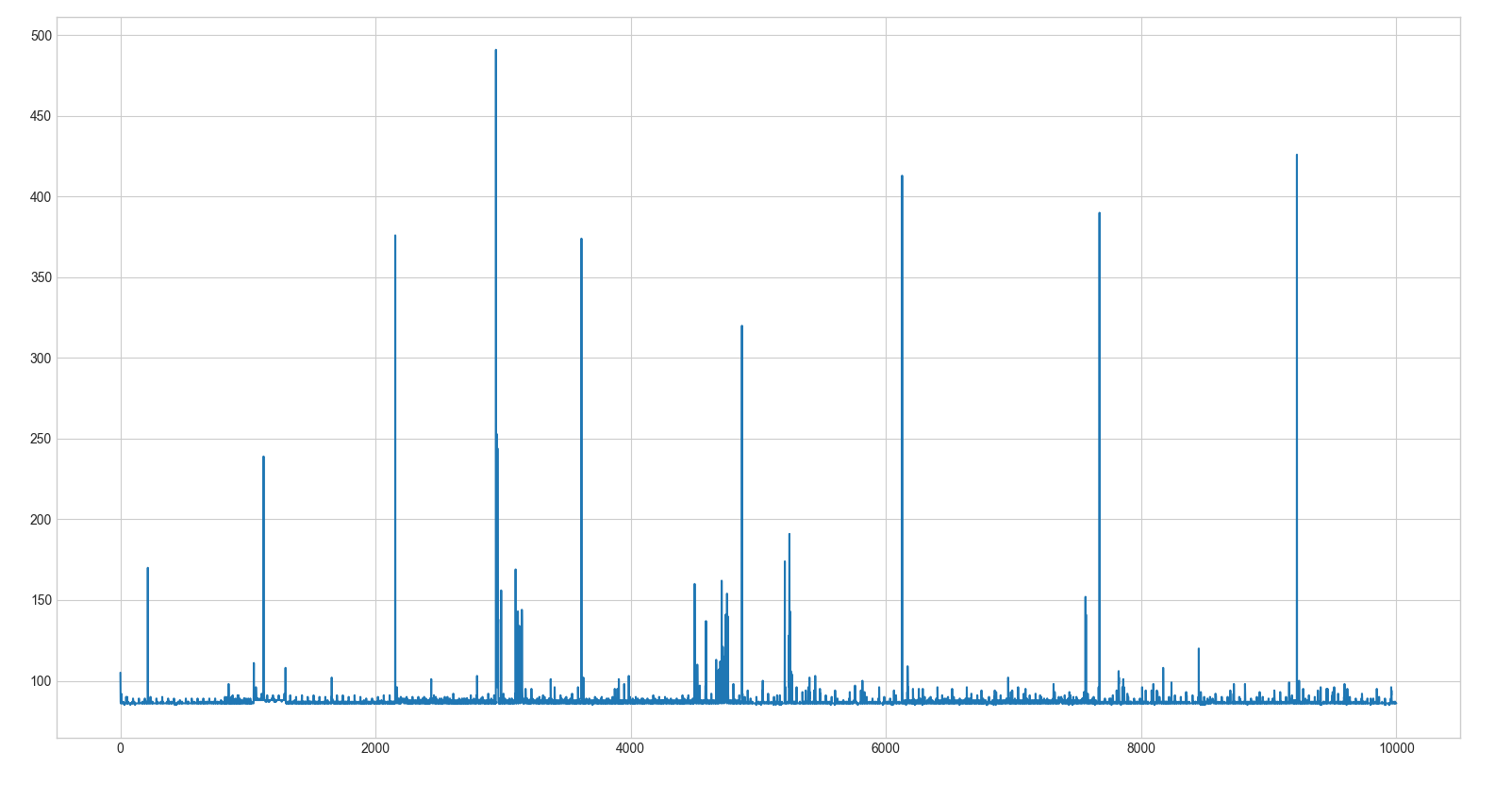
下面是时间分布图:
回答 1
Stack Overflow用户
发布于 2019-11-05 14:03:04
match_spec,select/2的第二个论点使它变慢了。
根据这个问题的答案
Erlang: ets select and match performance
In trivial non-specific use-cases, select is just a lot of work around match.
In non-trivial more common use-cases, select will give you what you really want a lot quicker.另外,如果您使用的是set或ordered_set类型的表,要想根据键获得一个值,可以使用lookup/2,因为它要快得多。
在我的电脑上,下面的代码
  def lookup() do
    {timings, _} = Enum.map(Enum.to_list(1..10_000), fn(_x) ->
      :timer.tc(fn() ->
        :ets.lookup(:table, "test_string")
      end)
    end) |> Enum.unzip
    IO.puts Enum.max(timings)
    IO.puts Enum.sum(timings) / length(timings)
  end
已打印
0
0.0
而你的印刷
16000
157.9
如果您感兴趣,可以在这里找到ets:select的NIF代码。
https://stackoverflow.com/questions/58640319
复制相似问题
腾讯云开发者

Copyright © 2013 - 2026 Tencent Cloud. All Rights Reserved. 腾讯云 版权所有
深圳市腾讯计算机系统有限公司 ICP备案/许可证号:粤B2-20090059  粤公网安备44030502008569号
腾讯云计算(北京)有限责任公司 京ICP证150476号 | 京ICP备11018762号