
SwiftUI -为什么这个拾取器的值变成“x-2”?
SwiftUI -为什么这个拾取器的值变成“x-2”?
提问于 2019-11-12 22:28:44
我有以下选择,以选择一个事件应该重复发生的频率:
struct RecurrenceSelector: View {
@State var interval = 1

var body: some View {
        NavigationView {
            Form {
                Section {
                    Picker("Every", selection: $interval) {
                        Text("1 week").tag(1)
                        ForEach(2 ..< 1000) { weeks in
                            Text("\(weeks) weeks")
                                .tag(weeks)
                        }
                        }.pickerStyle(WheelPickerStyle())
                }
            }
        }
    .onDisappear(perform: updateRruleString)
    }

private func updateRruleString() {
        print("INTERVAL: \(self.interval)")
    }
}
当我关闭视图时,如果我将Picker设置为5周,它将打印间隔: 3。如果我将其设置为20周,它将打印间隔: 18。
我不知道为什么这个价值被两个人扣除了。
(为了简洁起见,我缩短了代码,但当我注释掉所有其他代码时,它的行为也是一样的)。
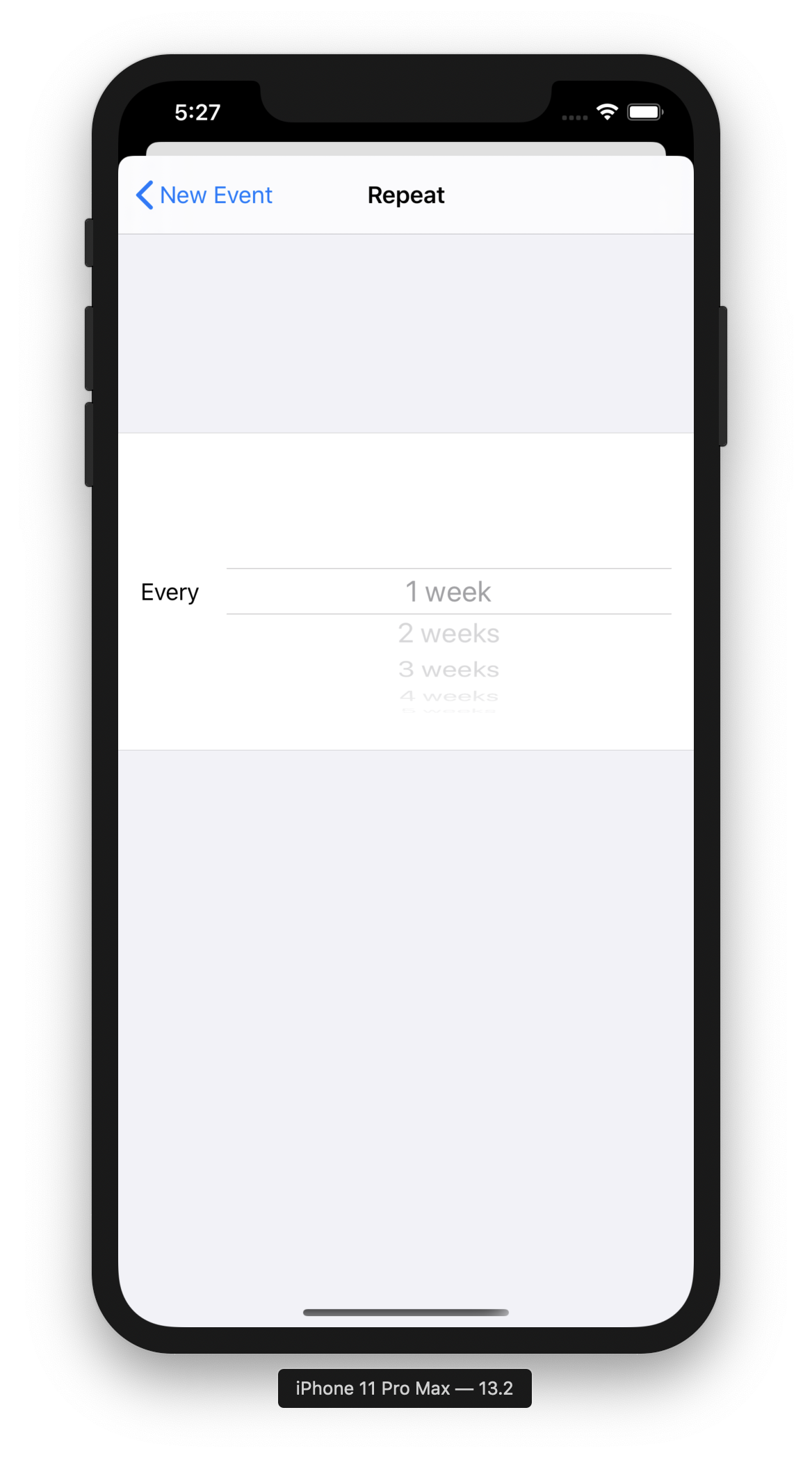
回答 1
Stack Overflow用户
回答已采纳
发布于 2019-11-12 22:54:34
TL;DR
将ForEach(2 ..< 1000)替换为ForEach(2 ..< 1000, id: \.self)
解释
ForEach有几个初始化器。你在用
init(_ data: Range<Int>, @ViewBuilder content: @escaping (Int) -> Content)在这种情况下,选择interval对应于您选择的索引;因为范围从2开始,索引从0开始,所以选择interval总是关闭2。
如果使用带有id参数的初始化程序,
init(_ data: Data, id: KeyPath<Data.Element, ID>, content: @escaping (Data.Element) -> Content)然后,您的选择对应于元素,而不是索引。因此,您的interval属性将对应于显示的值。
页面原文内容由Stack Overflow提供。腾讯云小微IT领域专用引擎提供翻译支持
原文链接:
https://stackoverflow.com/questions/58827647
复制相关文章
相似问题
腾讯云开发者

Copyright © 2013 - 2026 Tencent Cloud. All Rights Reserved. 腾讯云 版权所有
深圳市腾讯计算机系统有限公司 ICP备案/许可证号:粤B2-20090059  粤公网安备44030502008569号
腾讯云计算(北京)有限责任公司 京ICP证150476号 | 京ICP备11018762号