
Python中的高精度字对齐算法
我正在进行一个项目,目的是在句子和其他语言的翻译之间建立一个高精度的词对齐,以衡量翻译质量。我知道Giza++和其他单词对齐工具被用作统计机器翻译管道的一部分,但这不是我想要的。我正在寻找一种算法,可以将单词从源句映射到目标句子中的相应单词,并以透明和准确的方式给出这些限制:
- 这两种语言的语序不一样,顺序也在不断变化。
- 源句中的一些词在目标句中没有对应的词,反之亦然。
- 有时,源中的一个单词对应于目标中的多个单词,反之亦然,并且可以有多到多的映射。
- 在句子中可以使用相同的单词多次,所以对齐需要使用单词及其索引,而不仅仅是单词。
以下是我所做的:
- 从句子对的列表开始,比如英语-德语,每个句子都标记为单词。
- 将每个句子中的所有单词编入索引,并为每个单词创建一个倒排索引(例如,在第5、16、19、26句中出现的单词"world“)。),无论是源词还是目标词
- 现在,这个倒排索引可以预测任何源词和任何目标词之间的相关性,因为这两个词之间的交集除以它们的联合。例如,如果"Welt“这个词出现在句子5、16、26、32中,则(world,Welt)之间的关联是相交(3)中的索引数除以联合(5)中的索引数,因此相关性为0.6。使用联合使用会降低与高频单词(如" the“)和其他语言中相应单词的相关性。
- 再次遍历所有句子对,并使用给定句子对的源词和目标词的索引来创建相关矩阵。
下面是英语和德语句子之间关联矩阵的一个例子。我们可以看到上面讨论的挑战。
在图像中,有一个英语和德语句子对齐的例子,显示单词之间的相关性,绿色单元格是正确的对齐点,应该通过单词对齐算法来识别。
以下是我尝试过的一些内容:
- 在某些情况下,预期的对齐可能只是在其各自的列和行中具有最高相关性的单词对,但在许多情况下并非如此。
- 我尝试过类似Dijkstra的算法来绘制一条连接对齐点的路径,但它似乎并不是这样工作的,因为你似乎可以来回跳到句子中的前几个单词,因为词序的关系,而且没有合理的方法跳过没有对齐的单词。
- 我认为最优的解决方案将涉及像扩展矩形这样的东西,从最有可能的通信开始,跨越多到多个通信,跳过没有对齐的单词,但我不确定实现这一点的好方法是什么。
下面是我使用的代码:
import random
src_words=["I","know","this"]
trg_words=["Ich","kenne","das"]
def match_indexes(word1,word2):
    return random.random() #adjust this to get the actual correlation value

all_pairs_vals=[] #list for all the source (src) and taget (trg) indexes and the corresponding correlation values
for i in range(len(src_words)): #iterate over src  indexes
    src_word=src_words[i] #identify the correponding src word
    for j in range(len(trg_words)): #iterate over trg indexes
        trg_word=trg_words[j] #identify the correponding trg word
        val=match_indexes(src_word,trg_word) #get the matching value from the inverted indexes of     each word (or from the data provided in the speadsheet)
        all_pairs_vals.append((i,j,val)) #add the sentence indexes for scr and trg, and the corresponding val

all_pairs_vals.sort(key=lambda x:-x[-1])  #sort the list in descending order, to get the pairs with the highest correlation first
selected_alignments=[]
used_i,used_j=[],[] #exclude the used rows and column indexes
for i0,j0,val0 in all_pairs_vals:
    if i0 in used_i: continue #if the current column index i0 has been used before, exclude current pair-value
    if j0 in used_j: continue #same if the current row was used before
    selected_alignments.append((i0,j0)) #otherwise, add the current pair to the final alignment point selection
    used_i.append(i0) #and include it in the used row and column indexes so that it will not be used again
    used_j.append(j0)

for a in all_pairs_vals: #list all pairs and indicate which ones were selected
    i0,j0,val0=a
    if (i0,j0) in selected_alignments: print(a, "<<<<")
    else: print(a)
这是有问题的,因为它不包含多对多,甚至是一对到多对齐,而且在开始时很容易出错,因为它选择了一个相关性最高的错误对,不包括它的行和列在未来选择中。一个好的算法将考虑到一个对在其各自的行/列中具有最高的相关性,但也会考虑到与其他具有高度相关性的对的接近性。
以下是一些数据,如果您愿意的话,可以在Google中找到:https://docs.google.com/spreadsheets/d/1-eO47RH6SLwtYxnYygow1mvbqwMWVqSoAhW64aZrubo/edit?usp=sharing
回答 4
Stack Overflow用户
发布于 2021-03-16 19:20:18
我强烈建议测试太棒了-对齐。它依赖于多语言的BERT (mBERT),其结果看起来非常有希望。我甚至用阿拉伯语测试了它,它在一个困难的对齐例子上做了很好的工作,因为阿拉伯语是一种丰富的词法语言,我相信它比德语这样的拉丁语言更具挑战性。
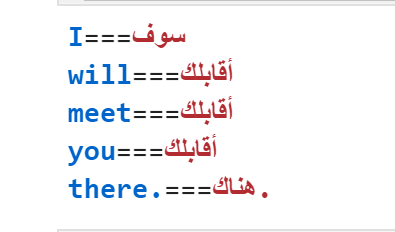
正如你所看到的,阿拉伯语中的一个单词对应于英语中的多个单词,然而,令人惊奇的-对齐在很大程度上成功地处理了多到多的映射。你可以试一试,我相信它能满足你的需要。
在https://colab.research.google.com/drive/1205ubqebM0OsZa1nRgbGJBtitgHqIVv6?usp=sharing#scrollTo=smW6s5JJflCN也有Google Colab的演示
祝好运!
Stack Overflow用户
发布于 2020-01-06 16:51:47
词对齐在一定程度上仍是一个开放的研究课题。Giza++背后的概率模型相当重要,参见:http://www.ee.columbia.edu/~sfchang/course/svia/papers/brown-machine-translate-93.pdf。
您可以采取许多现有的方法,例如:
- 实现Giza++自己使用的"IBM模型“(或者如果您勇敢,可以尝试NLTK实现)
- 实现
fast_alignhttps://www.aclweb.org/anthology/N13-1073/背后的(简单得多的)算法 - 实现某种形式的基于HMM的对齐https://www.aclweb.org/anthology/C96-2141/
- 使用深度学习,有多种可能性;本文似乎包含了https://www.aclweb.org/anthology/P19-1124.pdf方法的一个很好的概述(通常人们试图利用神经MT模型的注意力机制来实现这一点)。
这是一个非常困难的机器学习问题,虽然像您这样的简单方法可以工作并不是不可能的,但是最好先研究现有的工作。尽管如此,我们在这一领域看到了相当多的技术突破,所以谁知道呢?)
https://stackoverflow.com/questions/59615759
复制相似问题
腾讯云开发者

Copyright © 2013 - 2026 Tencent Cloud. All Rights Reserved. 腾讯云 版权所有
深圳市腾讯计算机系统有限公司 ICP备案/许可证号:粤B2-20090059  粤公网安备44030502008569号
腾讯云计算(北京)有限责任公司 京ICP证150476号 | 京ICP备11018762号