
使用HazelCast的弹簧引导自定义缓存解析器和缓存管理器
我有多个与HazelCast内核以及相关的问题。
让我先说明一下情况。
我们有一个监视多个网络基础设施的监控系统。
我有一个Spring应用程序,它可以作为负载平衡器后面的多个节点部署。除此之外,这个应用程序还可以在多个基础设施中运行,只需运行不同的配置文件,如infra-1-prod、infra-2-prod等。
它的水平可伸缩以及多用途。这一特性是通过使用不同配置文件运行应用程序来实现的。
随着其他事情的发生,这个概要文件改变了底层DB连接到一个包含特定基础结构的配置数据的关系数据库。
查看应用程序的相关体系结构。
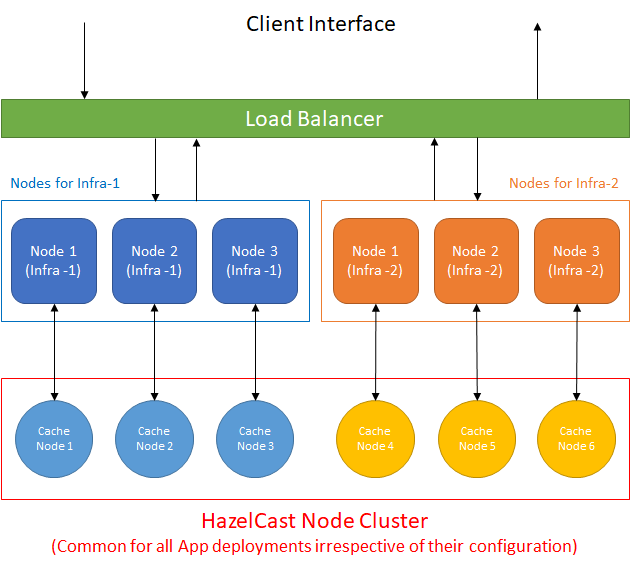
同一个spring引导应用程序可以作为不同基础设施的节点运行,生成自己的HazelCast实例节点。如果应用程序有6个节点,那么HazelCast集群将有6个节点。他们都会同步的。
现在我有了一个名为Repository的RuleRepository,它返回特定规则别名的Rule数据。
@Repository
public interface RuleRepository extends JpaRepository<Rule, Long> {
    @Cacheable(value = Constants.CACHE_ALIAS)
    Optional<Rule> findByAlias(String ruleAlias);

    //some other functions
}现在的问题是,由于规则别名是由DB序列自动生成的,别名R_123指向Infra-1和Infra-2节点的不同数据,但由于所有HazelCast节点都是同步的,因此不正确的数据将被覆盖。
为此,我想为每个基础设施给缓存指定不同的名称,这样缓存的数据就不会乱七八糟。
这样做并不是直截了当的,因为我们不能将属性注入缓存名称。为此,我们需要实现我们自己的自定义CacheResolver和CacheManager。
在我提出第一个问题之前,我将阐述我对HazelCast的理解。
每个HazelCast实例都可以有多个Map配置,这些配置基本上就是不同的缓存。每个CacheManager都可以用一个HazelCast实例链接,该实例内部将包含多个缓存。
问题1:如果CacheManager和HazelCastInstance之间的关系是一对一的,那么我将如何确定将哪个方法数据缓存到哪个缓存中(Map )。
以下是我目前的未完成的实现。
public class CacheableOperations {
    private final CacheManager cacheManager;

    private final CacheManager noOpCacheManager;

    public CacheableOperations(CacheManager cacheManager, CacheManager noOpCacheManager) {
        this.cacheManager = cacheManager;
        this.noOpCacheManager = noOpCacheManager;
    }

    private Map<String, CacheableOperation<?>> opMap;

    public void init() {
        List<CacheableOperation<? extends Class>> ops = new ArrayList<>();
        ops.add(new CacheableOperation.Builder(RuleRepository.class)
                .method("findByAlias")
                .cacheManager(cacheManager)
                .build());
        postProcessOperations(ops);
    }

    public CacheableOperation<?> get(CacheOperationInvocationContext<?> context) {
        final String queryKey = getOperationKey(context.getTarget().getClass().getName(),
                context.getMethod().getName());
        return opMap.get(queryKey);
    }

    private void postProcessOperations(List<CacheableOperation<? extends Class>> ops) {
        Map<String, CacheableOperation<?>> tempMap = new HashMap<>();
        for (CacheableOperation<?> op : ops) {
            for (String methodName : op.getMethodNames()) {
                tempMap.put(getOperationKey(op.getTargetClass().getName(), methodName), op);
            }
        }

        opMap = ImmutableMap.copyOf(tempMap);
    }

    private String getOperationKey(String first, String second) {
        return String.format("%s-%s", first, second);
}下面是CacheConfiguration的类
@Configuration
@AllArgsConstructor
public class CacheConfiguration extends CachingConfigurerSupport {
    private final CacheProperties cacheProperties;
    private SysdiagProperties sysdiagProperties;

    @Bean
    @Override
    public CacheManager cacheManager() {
        return new HazelcastCacheManager(hazelcastInstance());
    }

    @Bean
    @Profile("client")
    HazelcastInstance hazelcastInstance() {
        Config config = new Config();

        config.getNetworkConfig().getJoin().getTcpIpConfig().addMember(sysdiagProperties.getCache().getMemberIps()).setEnabled(true);
        config.getNetworkConfig().getJoin().getMulticastConfig().setEnabled(false);
        config.setInstanceName("restapi-master-cache-" + sysdiagProperties.getServiceName());

        return Hazelcast.newHazelcastInstance(config);
    }

    @Bean
    @Override
    public CacheResolver cacheResolver() {
        return new CustomCacheResolver(cacheProperties, operations(), noOpCacheManager());
    }

    @Bean
    public CacheManager noOpCacheManager() {
        return new NoOpCacheManager();
    }

    @Bean
    public CacheableOperations operations() {
        CacheableOperations operations = new CacheableOperations(cacheManager(), noOpCacheManager());
        operations.init();
        return operations;
}下面是CacheableOperation类
public class CacheableOperation<T> {
    private final Class<T> targetClass;

    private final String[] methodNames;

    private final CacheManager cacheManager;

    private CacheableOperation(Class<T> targetClass, String[] methodNames, CacheManager cacheManager) {
        this.targetClass = targetClass;
        this.methodNames = methodNames;
        this.cacheManager = cacheManager;
    }

    public Class<T> getTargetClass() {
        return targetClass;
    }

    public String[] getMethodNames() {
        return methodNames;
    }

    public CacheManager getCacheManager() {
        return cacheManager;
    }

    public static class Builder<T> {
        private final Class<T> targetClass;

        private String[] methodNames;

        private CacheManager cacheManager;

        private Map<String, Method> methods = new HashMap<>();

        public Builder(Class<T> targetClass) {
            this.targetClass = targetClass;
            Arrays.stream(targetClass.getDeclaredMethods())
                    .forEachOrdered(method -> methods.put(method.getName(), method));
        }

        public Builder<T> method(String... methodNames) {
            this.methodNames = methodNames;
            return this;
        }

        public Builder<T> cacheManager(CacheManager cacheManager) {
            this.cacheManager = cacheManager;
            return this;
        }

        public CacheableOperation<T> build() {
            checkArgument(targetClass != null);
            checkArgument(ArrayUtils.isNotEmpty(methodNames));
            checkArgument(Arrays.stream(methodNames).allMatch(name -> methods.get(name) != null));

            return new CacheableOperation<T>(targetClass, methodNames, cacheManager);
        }
    }
}最后是CacheResolver
public class CustomCacheResolver implements CacheResolver {

    private final CacheableOperations operations;

    private final CacheProperties cacheProperties;

    private final CacheManager noOpCacheManager;

    public CustomCacheResolver(CacheProperties cacheProperties, CacheableOperations operations, CacheManager noOpCacheManager) {
        this.cacheProperties = cacheProperties;
        this.operations = operations;
        this.noOpCacheManager = noOpCacheManager;
    }

    @Override
    public Collection<? extends Cache> resolveCaches(CacheOperationInvocationContext<?> context) {
        if (!cacheProperties.isEnabled()) {
            return getCaches(noOpCacheManager, context);
        }

        Collection<Cache> caches = new ArrayList<>();
        CacheableOperation operation = operations.get(context);
        if (operation != null) {
            CacheManager cacheManager = operation.getCacheManager();
            if (cacheManager != null) {
                caches = getCaches(cacheManager, context);
            }
        }

        return caches;
    }

    private Collection<Cache> getCaches(CacheManager cacheManager, CacheOperationInvocationContext<?> context) {
        return context.getOperation().getCacheNames().stream()
                .map(cacheName -> cacheManager.getCache(cacheName))
                .filter(cache -> cache != null)
                .collect(Collectors.toList());
    }
}
问题2:在整个代码库中,我无法找到缓存名称和方法名称之间的链接,就像我在第一个代码段中所做的那样。我所能看到的就是方法名称和
cacheManager实例之间的链接。我该把它定义在哪里?
在这种情况下,我所读到的关于Spring和HazelCast的所有问题和文档似乎都不够深入。
问题3:有人能直接为我定义
CacheResolver和CacheManager的角色吗?
谢谢你的耐心。即使是一个问题的答案也可能对我有很大帮助。:)
回答 1
Stack Overflow用户
发布于 2020-02-07 08:15:20
可以在@Cacheable注释中指定参数。例如:
@Cacheable("books")
public String getBookNameByIsbn(String isbn) {
    return findBookInSlowSource(isbn);
}
它将决定所使用的内部映射/缓存的名称。
https://stackoverflow.com/questions/60088208
复制相似问题
腾讯云开发者

Copyright © 2013 - 2026 Tencent Cloud. All Rights Reserved. 腾讯云 版权所有
深圳市腾讯计算机系统有限公司 ICP备案/许可证号:粤B2-20090059  粤公网安备44030502008569号
腾讯云计算(北京)有限责任公司 京ICP证150476号 | 京ICP备11018762号