
在OpenCV中使用C++时摄像头中明显的FPS随机下降
我正在编写一个简单的OpenCV示例,在5秒内获得网络摄像头帧(如果摄像头工作在30 cam,则大约有150帧)。
在做了一些测试之后,我发现有时我从150帧中得到140块(我想是可以接受的),但有时是70块。更糟糕的是,有时摄像机似乎会受到这些镜头的影响,并在这种状态下停留数小时。
为了进一步研究这个问题,我删除了我的程序,直到我仍然有这个问题,即使我只读取帧,但不要将它们写到磁盘。我设置了一个cron作业,以便每分钟运行一次5秒的捕获,我已经看到了这样的情况:
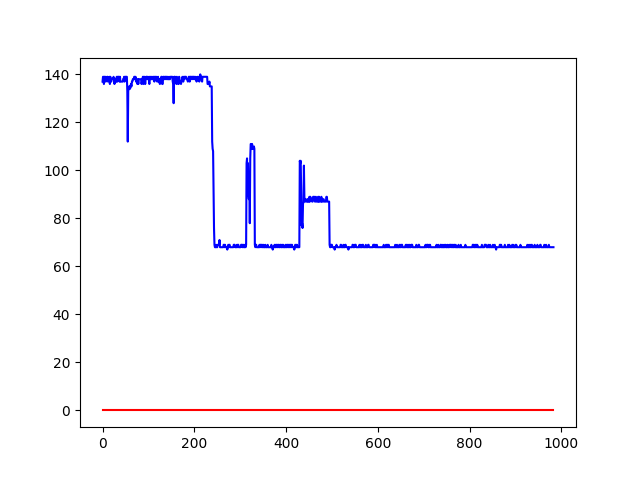
我认为第一个小的下降是由于系统繁忙,但大的,永久的一个发生在半夜。早上,我停止了cron的工作,触摸了代码中的一些内容(我不记得到底是什么),然后再次开始测试,看到一个逐渐恢复的过程,然后在2-3小时后出现新的下降:
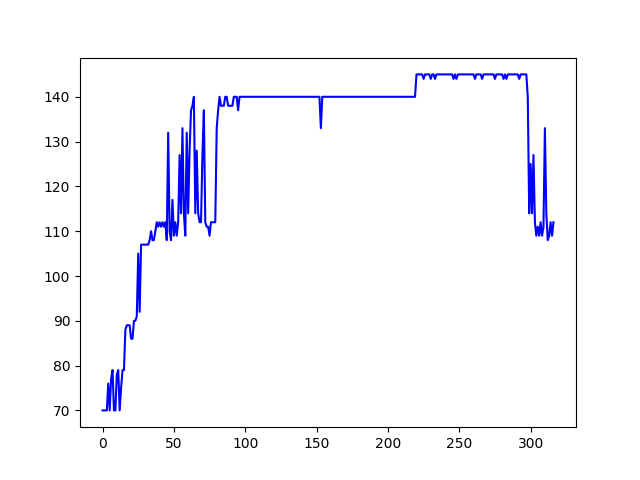
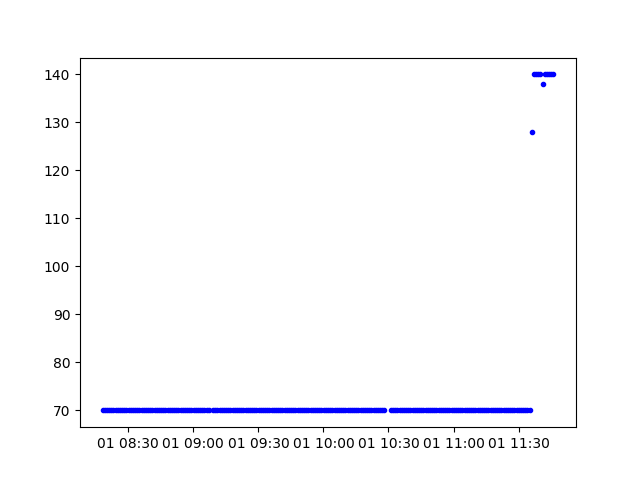
从昨天起,我关闭了电脑几个小时,再次启动它,并覆盖网络摄像头,以确保持续的光照条件,但帧计数仍然很低,并停留在70。而且,非常奇怪的是,下降(150帧中的70帧)正好是我在这台相机中看到的最大帧的一半(150帧中有140帧)。
网络摄像头模型是罗技C525。我还在2016年末的Macbook Pro Facetime时高清摄像头上进行测试,在那里,我看到了150帧中的117帧。我的一个同事也看到他的笔记本电脑里的镜框掉了下来。我的代码有问题吗?它会是线程优先级吗?
// Call the program like this: ./cameraTest pixelWidth pixelHeight fps timeLimit
// timeLimit can be 1 to run a fixed 5-seconds capture, or 0 to wait for 150 frames.

#include "opencv2/opencv.hpp"
#include "iostream"
#include "thread"
#include <unistd.h>
#include <chrono>
#include <ctime>
#include <experimental/filesystem>

using namespace cv;
namespace fs = std::experimental::filesystem;


VideoCapture camera(0);
bool stop = false;
int readFrames = 0;


std::string getTimeStamp()
{
  time_t rawtime;
  struct tm * timeinfo;
  char buffer[80];

  time(&rawtime);
  timeinfo = localtime(&rawtime);

  strftime(buffer,sizeof(buffer),"%Y-%m-%d %H:%M:%S",timeinfo);
  std::string timeStamp(buffer);
  return timeStamp;
}


void getFrame()
{
    Mat frame;
    camera >> frame;
    // camera.read(frame);
    // cv::imwrite("/tmp/frames/frame" + std::to_string(readFrames) + ".jpg", frame);
    readFrames++;
}


void getFrames()
{
    Mat frame;

    while(!stop)
    {
        camera >> frame;
        // cv::imwrite("/tmp/frames/frame" + std::to_string(fc) + ".jpg", frame);
        readFrames++;
    }
}


int main(int argc, char* argv[])
{
    if(argc < 5)
    {
        std::cout << "Usage: width height fps timeLimit" << std::endl;
        return -1;
    }

    if(!camera.isOpened())
    {
        std::cout << "Couldn't open camera " << getTimeStamp() << std::endl;
        return -1;
    }

    if (!fs::is_directory("/tmp/frames"))
    {
        if(system("mkdir -p /tmp/frames") != 0)
        {
            std::cout << "Error creating /tmp/frames/" << std::endl;
        }
    }

    if (!fs::is_empty("/tmp/frames"))
    {
        system("exec rm /tmp/frames/*");
    }

    camera.set(CV_CAP_PROP_FRAME_WIDTH, atoi(argv[1]));
    camera.set(CV_CAP_PROP_FRAME_HEIGHT, atoi(argv[2]));
    camera.set(CV_CAP_PROP_FPS, atoi(argv[3]));
    //camera.set(CV_CAP_PROP_FOURCC, CV_FOURCC('M', 'J', 'P', 'G'));

    bool timeLimit(atoi(argv[4]));

    std::chrono::steady_clock::time_point begin = std::chrono::steady_clock::now();

    int waitSeconds = 5;

    if(timeLimit)
    {
        std::thread tr(getFrames);
        usleep(waitSeconds * 1e6);
        stop = true;
        tr.join();
    }
    else
    {
        while(readFrames < 150)
        {
            getFrame();
        }
    }

    std::chrono::steady_clock::time_point end = std::chrono::steady_clock::now();

    std::cout << getTimeStamp() << " " << readFrames << "/" << atoi(argv[3]) * waitSeconds << " "
            << std::chrono::duration_cast<std::chrono::milliseconds>(end - begin).count() << "ms"
            << " " << atoi(argv[1]) << "," << atoi(argv[2]) << "," << atoi(argv[3])
            << std::endl;

    return 0;
}回答 1
Stack Overflow用户
发布于 2020-04-01 09:48:21
这似乎与光线不足有关。当我发现卡马拉时,我就看到这些框架达到了预期的价值。因此,在光线较差的情况下,相机可能会改变一些设置或进一步处理图像,从而降低其帧率。
https://stackoverflow.com/questions/60967068
复制相似问题
腾讯云开发者

Copyright © 2013 - 2026 Tencent Cloud. All Rights Reserved. 腾讯云 版权所有
深圳市腾讯计算机系统有限公司 ICP备案/许可证号:粤B2-20090059  粤公网安备44030502008569号
腾讯云计算(北京)有限责任公司 京ICP证150476号 | 京ICP备11018762号