
如何避免MultipleBagFetchException
祝大家今天愉快!
在我的Spring项目中,我试图消除一个在我看来相当普遍的错误-- org.hibernate.loader.MultipleBagFetchException。我想实现getOneClothesById(Long id)和getAllClothes()方法。
在@ Service-layer中,我希望从Clothes (size、category、color)获取数据并在屏幕上显示它们,并/或在发送到其他地方之前修改它们。
我读了几本书,甚至去了谷歌的第4页,但我想我还没有找到最好的解决方案。
人们建议采取以下方法来解决这个问题:
- 使用
Set<...>而不是List<...>链接:
- [SO\_Answer(2011)](https://stackoverflow.com/a/5865605/8992586)
- [Hibernate Tips: How to avoid Hibernate’s MultipleBagFetchException (OLD\_POST)](https://thorben-janssen.com/hibernate-tips-how-to-avoid-hibernates-multiplebagfetchexception/)
我的意见是:我相信这不是一个好办法。下面是与解释的链接:
- [The best way to fix the Hibernate MultipleBagFetchException](https://vladmihalcea.com/hibernate-multiplebagfetchexception/)
- 使用
Fetch.Eager而不是Fetch.Lazy,或者添加@LazyCollection(LazyCollectionOption.FALSE)链接:
- 使用
@OrderColumn(在-@IndexColumn之前) 链接:
- [SO\_Answer(2019)](https://stackoverflow.com/a/56753769/8992586)
- [SO\_Answer(2015)](https://stackoverflow.com/a/26393134/8992586) 我的评论是:(部分)问题,但根据文档 -这将排除选项orderBy。
- 使用的方法:链接:
- [Vlad's SO\_answer(2014)](https://stackoverflow.com/a/24676806/8992586)
- [Vlad's SO\_answer(2018)](https://stackoverflow.com/a/51055523/8992586)
- [Vlad's post on his own website](https://vladmihalcea.com/hibernate-multiplebagfetchexception/)我的评论是:我认为这是处理org.hibernate.LazyInitializationException的最好解决方案是他的。但是,我想采用他的方法来实现Spring (2.2.6.RELEASE)的现实。
我想要的:
我想在Spring框架的框架内找到一种更好的解决问题的方法。在描述数据库之后的答案本质上是,这是解决问题的一种解决方案。不过,我有以下问题:
- 我不喜欢使用
@Transactional来消除问题org.hibernate.LazyInitializationException: failed to lazily initialize ... - 如何正确地将这种方法放入一个单独的类中,以便重用它?如果我用注释
ClothesRepositoryFetch创建类@Repository,然后在@Service-layer中调用这个存储库,这将是正确的解决方案。 - 只有JPA才能更好地解决这个问题吗?
我的数据库看起来像:
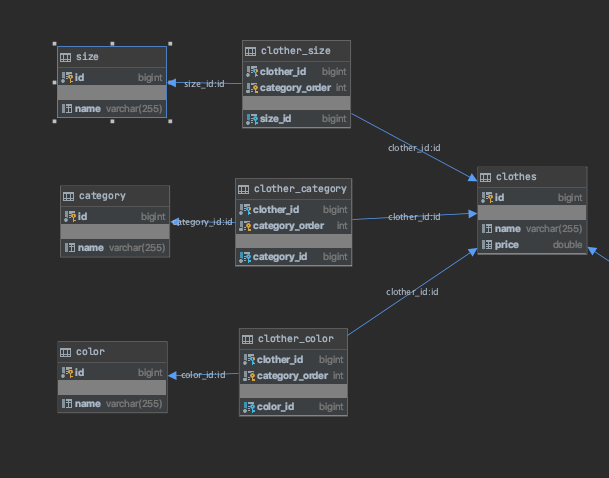
ClothesService.java
    @Transactional
    public ResultDTO getOneClothesById(Long id){

        ResultDTO resultDTO = new ResultDTO();

        //Getting clothes with Category
        Clothes clothes = entityManager
                .createQuery(
                        "select distinct clothes " +
                                "from Clothes clothes " +
                                "left join fetch clothes.categories " +
                                "where clothes.id = :id", Clothes.class)
                .setHint(QueryHints.PASS_DISTINCT_THROUGH, false)
                .setParameter("id", id)
                .getSingleResult();

        //Getting clothes with Color
        clothes = entityManager
                .createQuery(
                        "select distinct clothes " +
                                "from Clothes clothes " +
                                "left join fetch clothes.colors color " +
                                "where clothes = :clothes", Clothes.class)
                .setParameter("clothes", clothes)
                .setHint(QueryHints.PASS_DISTINCT_THROUGH, false)
                .getSingleResult();

        //Getting clothes with Size
        clothes = entityManager
                .createQuery(
                        "select distinct clothes " +
                                "from Clothes clothes " +
                                "left join fetch clothes.sizes size " +
                                "where clothes = :clothes", Clothes.class)
                .setParameter("clothes", clothes)
                .setHint(QueryHints.PASS_DISTINCT_THROUGH, false)
                .getSingleResult();

        System.out.println(clothes.getCategories().size());
        System.out.println(clothes.getColors().size());
        System.out.println(clothes.getSizes().size());

        if (clothes != null){
            resultDTO.setResult(ResultForDTO.SUCCESS);
            resultDTO.addClothesDTO(converterClothesToDTO(clothes));
        } else {
            resultDTO.setResult(ResultForDTO.ERROR);
            resultDTO.setMessage("Невозможно найти одежду по такому ID");
        }

        return resultDTO;
    }
代码
Clothes.java:
@Entity
@Table
@NoArgsConstructor
@Getter
@Setter
@ToString
public class Clothes {

    @Id
    @GeneratedValue(strategy = GenerationType.IDENTITY)
    private Long id;

    @Column
    private String name;

    @Column
    private Double price;


    /*
    Color: ManyToMany
     */
    @ManyToMany(fetch = FetchType.LAZY,
            cascade = {
                    CascadeType.PERSIST,
                    CascadeType.MERGE
            })
    @JoinTable(name = "clother_color",
            joinColumns = { @JoinColumn(name = "clother_id") },
            inverseJoinColumns = { @JoinColumn(name = "color_id") })
    private List<Color> colors = new ArrayList<>();

    public void addColor(Color color) {
        colors.add(color);
        color.getClothes().add(this);
    }

    public void removeColor(Color color) {
        colors.remove(color);
        color.getClothes().remove(this);
    }


    /*
    Size: ManyToMany
     */
    @ManyToMany(fetch = FetchType.LAZY,
            cascade = {
                    CascadeType.PERSIST,
                    CascadeType.MERGE
            })
    @JoinTable(name = "clother_size",
            joinColumns = { @JoinColumn(name = "clother_id") },
            inverseJoinColumns = { @JoinColumn(name = "size_id") })
    private List<Size> sizes = new ArrayList<>();

    public void addSize(Size size) {
        sizes.add(size);
        size.getClothes().add(this);
    }

    public void removeSize(Size size) {
        sizes.remove(size);
        size.getClothes().remove(this);
    }


    /*
    Category: ManyToMany
     */
    @ManyToMany(fetch = FetchType.LAZY,
            cascade = {
                    CascadeType.PERSIST,
                    CascadeType.MERGE
            })
    @JoinTable(name = "clother_category",
            joinColumns = { @JoinColumn(name = "clother_id") },
            inverseJoinColumns = { @JoinColumn(name = "category_id") })
    private List<Category> categories = new ArrayList<>();

    public void addCategory(Category category) {
        categories.add(category);
        category.getClothes().add(this);
    }

    public void removeCategory(Category category) {
        categories.remove(category);
        category.getClothes().remove(this);
    }


    @Override
    public boolean equals(Object o) {
        if (this == o) return true;
        if (o == null || getClass() != o.getClass()) return false;
        Clothes clothes = (Clothes) o;
        return Objects.equals(id, clothes.id);
    }
}
Category.java:
类别,大小,颜色有一个共同的结构,所以我只介绍其中一个
@Entity
@Table
@NoArgsConstructor
@Getter
@Setter
public class Category {

    @Id
    @GeneratedValue(strategy = GenerationType.IDENTITY)
    private Long id;

    @Column
    private String name;

    @ManyToMany(mappedBy="categories")
    private List<Clothes> clothes = new ArrayList<>();

    public void addClothes(Clothes clothes) {
        this.clothes.add(clothes);
        clothes.getCategories().add(this);
    }

    public void removeClothes(Clothes clothes) {
        this.clothes.remove(clothes);
        clothes.getCategories().remove(this);
    }

    @Override
    public boolean equals(Object o) {
        if (this == o) return true;
        if (o == null || getClass() != o.getClass()) return false;
        Category category = (Category) o;
        return Objects.equals(id, category.id);
    }
}回答 1
Stack Overflow用户
发布于 2022-05-20 11:12:34
这似乎是Hibernate的一个基本问题:为了避免笛卡尔产品,他们禁止使用多个List。快速修复是使用Set,但这并不能解决效率问题。解决这一问题的方法是使用实体图,如https://thorben-janssen.com/jpa-21-entity-graph-part-1-named-entity/所描述的。这样,您就可以为每个查询指定急切加载的内容。
https://stackoverflow.com/questions/62102885
复制相似问题
腾讯云开发者

Copyright © 2013 - 2026 Tencent Cloud. All Rights Reserved. 腾讯云 版权所有
深圳市腾讯计算机系统有限公司 ICP备案/许可证号:粤B2-20090059  粤公网安备44030502008569号
腾讯云计算(北京)有限责任公司 京ICP证150476号 | 京ICP备11018762号