
防火墙层次结构安全规则
防火墙层次结构安全规则
提问于 2021-03-23 12:54:22
我有一个限制对象的子对象访问的问题。
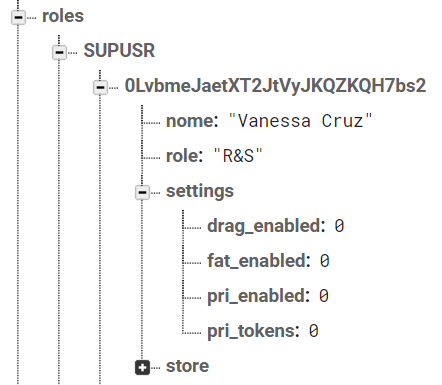
我需要的规则:
roles - read
-- UID
--- SUPUSR
---- settings =  read only
--- store  = write and read
我的规则
      "roles":{
     ".read":"auth != null",
     ".write":"root.child('roles/SUPUSR/').child(auth.uid).child('settings').child('pri_enabled').val() == 1 || root.child('roles/USERS/').child(auth.uid).child('settings').child('pri_enabled').val() == 1",
     "settings":{
        ".read":"auth != null",
        ".write":false
     }
如果我以上面的方式保留它,它继承了写作的“角色”规则。
回答 1
Stack Overflow用户
回答已采纳
发布于 2021-03-23 14:29:25
叶栅,一旦授予权限,就不能撤消它。因此,如果您允许对/roles进行写访问,任何人都可以写入/roles的任何子级,无论是自己的还是其他人的数据。
其他说明:
- 当前的规则会影响
/roles和/roles/settings,这在数据库树中太高了,您应该设置/roles/SUPUSR/someUserId、/roles/SUPUSR/someUserId/settings等规则。 auth != null的使用似乎不合适。任何登录用户应该能够读取任何其他用户的角色吗?这只适用于超级用户吗?- 其中一些数据对于经验证也很有意义。
{
  "rules": {
    "roles": {
      "SUPUSR": {
        "$uid": {
          // any data under /roles/SUPUSR/$uid is readable to logged in users
          ".read": "auth != null",

          "nome": {
            // only this user can update nome, it also must be a string
            ".write": "auth.uid === $uid",
            ".validate": "newData.isString()"
          },
          "role": {
            // only this user can update role, and it must be one of a select number of string values
            ".write": "auth.uid === $uid",
            ".validate": "newData.isString() && newData.val().matches(/^(R&S|Admin|etc)$/)"
          },
          "store": {
            ".write": "root.child('roles/SUPUSR/').child(auth.uid).child('settings').child('pri_enabled').val() == 1 || root.child('roles/USERS/').child(auth.uid).child('settings').child('pri_enabled').val() == 1"
          }
          // any other keys are ".write": false, by default, which includes "settings"
        }
      }, // end /rules/roles/SUPUSR
      "USERS": {
        "$uid": {
          ...
        }
      }, // end /rules/roles/USERS
      ...
    }, // end /rules/roles
    ...
  }
}页面原文内容由Stack Overflow提供。腾讯云小微IT领域专用引擎提供翻译支持
原文链接:
https://stackoverflow.com/questions/66763551
复制相关文章
相似问题
腾讯云开发者

Copyright © 2013 - 2026 Tencent Cloud. All Rights Reserved. 腾讯云 版权所有
深圳市腾讯计算机系统有限公司 ICP备案/许可证号:粤B2-20090059  粤公网安备44030502008569号
腾讯云计算(北京)有限责任公司 京ICP证150476号 | 京ICP备11018762号