
用数据挖掘技术确定肿瘤的良恶性决策树
我必须从.csv文件中读取患者数据,并使用决策树根据每个患者正在读取的数据来确定肿瘤是良性还是恶性。
我真的在为如何开始这件事而挣扎。到目前为止,我已经编写了从.csv文件读取数据并将数据存储到向量中的代码,如下所示,这些代码分布在几个头文件和cpp文件上。
根据我收集的信息,我可以创建一个父决策类,然后我要处理的每个属性都是子类。不确定这是否有意义。请让我知道。
下面,您将找到我要处理的属性以及一个图形树,它显示了如何确定肿瘤是良性的还是恶性的,我需要将其作为代码的基础。我还将包含.csv文件的一个小示例。
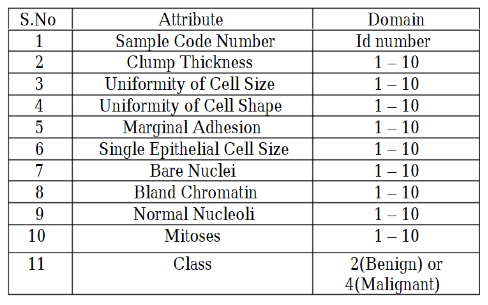
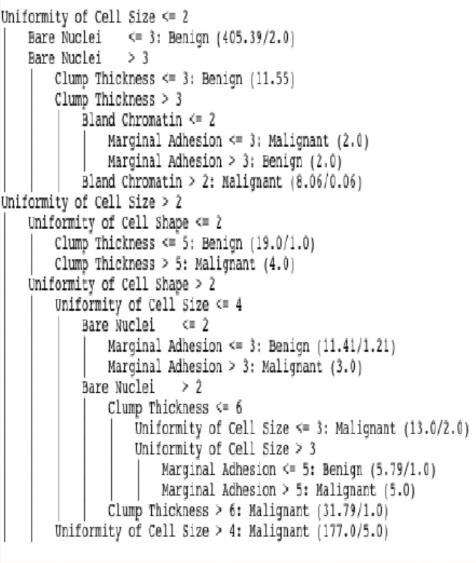
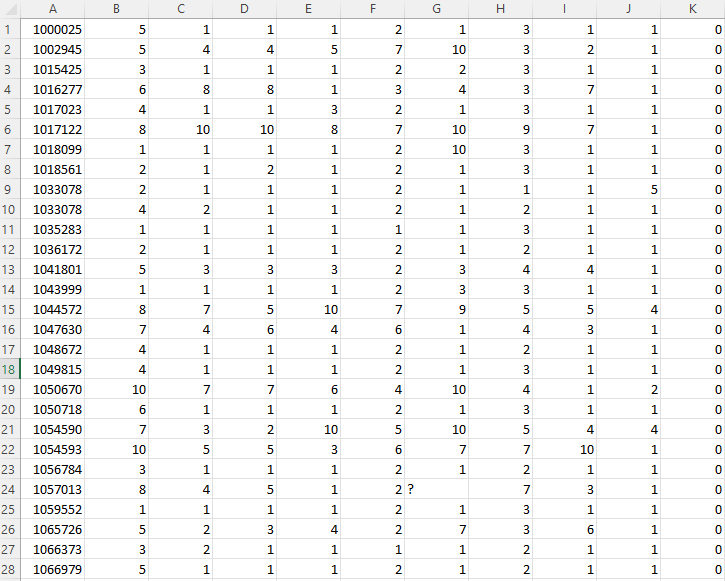
请给我一些指导,作为我如何做这件事。我对指针表示法有很大的困难。如有任何指导,将不胜感激。
CSVLine.h#ifndef CSVLINE_H
#define CSVLINE_H
#include <string>
#include <sstream>
#include <vector>
using namespace std;
class CSVLine
{
private:
vector<string> data;
public:
CSVLine() {}
CSVLine(const CSVLine& other)
{
data = other.data;
}
CSVLine operator = (const CSVLine& other)
{
data = other.data;
}
~CSVLine() {}
void parse(string line, char delimiter = ',');
string getString(int columnNumber);
int getInt(int columnNumber);
};
#endifCSVLine.cpp#include "CSVLine.h"
void CSVLine::parse(string line, char delimiter)
{
stringstream inLine(line);
string tempColumn = "";
while (getline(inLine, tempColumn, delimiter))
{
data.push_back(tempColumn);
}
}
string CSVLine::getString(int columnNumber)
{
return data[columnNumber];
}
int CSVLine::getInt(int columnNumber)
{
return atoi(data[columnNumber].c_str());
}CSVReader.h#ifndef CSVREADER_H
#define CSVREADER_H
#include <vector>
#include <fstream>
#include <iostream>
#include "CSVLine.h"
using namespace std;
class CSVReader
{
public:
CSVReader() {}
vector<CSVLine> read(string fileName);
};
#endifCSVReader.cpp#include "CSVReader.h"
vector<CSVLine> CSVReader::read(string fileName)
{
ifstream inputFile;
vector<CSVLine> lines;
inputFile.open(fileName.c_str());
string line = "";
while (getline(inputFile, line))
{
CSVLine csvLine;
csvLine.parse(line);
lines.push_back(csvLine);
}
return lines;
}回答 1
Stack Overflow用户
发布于 2022-11-25 05:41:45
我会这么做的。
首先,我会将特性表转换为高阶宏
#define FOREACH_FEATURE(OP)                     \
  OP(1, SampleCodeNumber, int, -1)              \
  OP(2, ClumpThickness, int, -1)                \
  OP(3, UniformityOfCellSize, int, -1)
// Fill in the rest of the table of features here yourself
然后,我将使用这个宏生成一个具有像这样的病人所有特征的结构:
struct PatientData {
#define DECL_FEATURE(index, name, type, init) type name = init;
  FOREACH_FEATURE(DECL_FEATURE)
#undef DECL_FEATURE

  PatientData() {}

  PatientData(CSVLine& src) {
#define READ_FEATURE(index, name, type, init) name = src.getInt(index-1);
    FOREACH_FEATURE(READ_FEATURE)
#undef READ_FEATURE
  }
};然后,我将从一个PatientData对象构造一个CSVLine对象。
CSVLine line = ...;
PatientData patientData(line);然后,我将将决策树作为嵌套的if-statements实现在patientData对象上:
if (patientData.UniformityOfCellSize <= 2) {
  // ...
} else {
  // ...
}这将使您开始,但您需要完成和可能扩展FOREACH_FEATURE宏和实现决策树.
节点和指针方法
如果您不想像上面那样实现您的树,那么抛出上面的代码,然后执行以下操作。首先包括我们需要的几个文件,并实现一个Feature类:
#include <memory>
#include <functional>

struct Feature {
  int index1;
  int apply(CSVLine& line) const {return line.getInt(index1-1);}
};并将特性表转换为Feature,如下所示:
Feature SampleCodeNumber{1};
Feature ClumpThickness{2};
Feature UniformityOfCellSize{3};
// Fill in the rest yourself我们将使用一个std::function<bool(CSVLine)>来决定树中的分支:
typedef std::function<bool(CSVLine&)> BranchCondition;重载Feature和double的比较运算符以返回BranchCondition,可以灵活地表示BranchConditions:
#define DEF_FEATURE_OP(op) BranchCondition operator op (Feature f, double x) {return [f, x](CSVLine& line) {return f.apply(line) op x;};}
DEF_FEATURE_OP(<)
DEF_FEATURE_OP(<=)
DEF_FEATURE_OP(>)
DEF_FEATURE_OP(>=)
#undef DEF_FEATURE_OP
我们还需要声明分类的返回值:
enum class Severity {
  Benign, Malign
};
作为决策树的基类,我们声明
class PatientClassifier {
public:
  virtual Severity classify(CSVLine& p) const = 0;
  virtual ~PatientClassifier() {}
};并将其与用于构造常量值的函数severity一起实现:
class ConstantClassifier : public PatientClassifier {
public:
  ConstantClassifier(Severity v) : _value(v) {}
  Severity classify(CSVLine&) const override {return _value;}
private:
  Severity _value;
};

std::shared_ptr<PatientClassifier> severity(Severity v) {
  return std::make_shared<ConstantClassifier>(v);
}对于分支情况和一个函数branch
class BranchingClassifier : public PatientClassifier {
public:
  BranchingClassifier(
    BranchCondition f,
    const std::shared_ptr<PatientClassifier>& onTrue,
    const std::shared_ptr<PatientClassifier>& onFalse)
    : _f(f), _onTrue(onTrue), _onFalse(onFalse) {}

  Severity classify(CSVLine& p) const override {
    return (_f(p)? _onTrue : _onFalse)->classify(p);
  }
private:
  BranchCondition _f;
  std::shared_ptr<PatientClassifier> _onTrue;
  std::shared_ptr<PatientClassifier> _onFalse;
};

std::shared_ptr<PatientClassifier> branch(
  BranchCondition f,
  const std::shared_ptr<PatientClassifier>& onTrue,
  const std::shared_ptr<PatientClassifier>& onFalse) {
  return std::make_shared<BranchingClassifier>(f, onTrue, onFalse);
}
然后我们建造树就像
  auto decisionTree = branch(
    UniformityOfCellSize <= 2.0,
    severity(Severity::Benign),
    severity(Severity::Malign));

  CSVLine line;
auto result = decisionTree->classify(line);注意:您不需要为CSVLine定制复制构造函数和赋值操作符。getInt方法可以标记为const。
https://stackoverflow.com/questions/74568450
复制相似问题
腾讯云开发者

Copyright © 2013 - 2026 Tencent Cloud. All Rights Reserved. 腾讯云 版权所有
深圳市腾讯计算机系统有限公司 ICP备案/许可证号:粤B2-20090059  粤公网安备44030502008569号
腾讯云计算(北京)有限责任公司 京ICP证150476号 | 京ICP备11018762号