
长溢流
长溢流
提问于 2022-09-25 06:05:45
我一直在编写一个将字符串转换为整数的小程序。我启动了这个程序,我首先尝试保存在一个数组中,但是程序不起作用。它只迭代一次,没有错误。我试过了,但我认为当我在array.You中存储字符串时,将字符串减去48,就会出现错误。
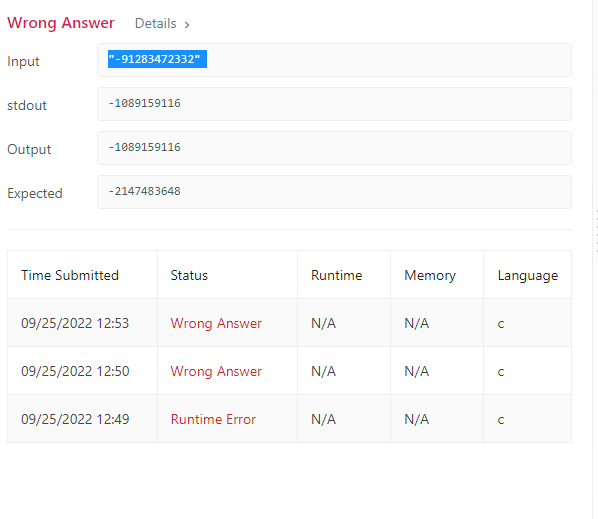
对不起,这是一条经过编辑的消息,程序运行正常,但是当我输入-“-91283472332”(按照leetcode)时,我得到了错误的答案。
你可以亲眼看到-
#include <stdio.h>

int myAtoi(char *s)
{
    int i = 0;           // for iterating the character
    int isNegative = 0; // for checking if the umber is negative
    long long res = 0;         // for result
    while (s[i] != '\0')
    {
    printf("%d\n",res);
        if (48 <= s[i] && s[i]<= 57)
        {
            res=(res*10)+(s[i]) - 48;
        }
        else if (s[i] == 45)
        {
            isNegative = 1;
        }
        else if (s[i] == ' ')
        {
            ;
        }
        else
        {
            break;
        }

        i++;
    }
    if (isNegative)
    {
        res = res-(res*2);
    }
    printf("%d",res);
    return res;
}


int main()
{
    char a[] = "-91283472332";
    myAtoi(a);
    return 0;

}回答 1
Stack Overflow用户
发布于 2022-09-25 06:55:18
您的解决方案比需要的要复杂得多。
我们可以使用指针算法对字符串进行迭代,并为for循环包含一个条件,该条件在字符串末尾或当前字符不再是数字时自动终止。
可以通过在每个循环中将其乘以10并将当前数字的数字值添加到其中来构建result。
一个负号可以通过检查第一个字符来容纳。这是'-',我们可以将标志negative设置为1作为true,并在第一个字符之后增加str指针。在函数的末尾,我们可以根据该标志确定是生成-result还是result。
#include <string.h>
#include <stdio.h>
#include <ctype.h>

int my_atoi(char *str) {
    int result = 0;
    int negative = 0;

    if (*str == '-') {
        negative = 1;
        str++;
    }

    for (; *str && isdigit(*str); str++) {
        result *= 10;
        result += *str - '0';
    }

    return negative ? -result : result;
}

int main(void) {
    char foo[] = "3456gfghd";

    printf("%d\n", my_atoi(foo));

    return 0;
}页面原文内容由Stack Overflow提供。腾讯云小微IT领域专用引擎提供翻译支持
原文链接:
https://stackoverflow.com/questions/73842363
复制相关文章
相似问题
腾讯云开发者

Copyright © 2013 - 2026 Tencent Cloud. All Rights Reserved. 腾讯云 版权所有
深圳市腾讯计算机系统有限公司 ICP备案/许可证号:粤B2-20090059  粤公网安备44030502008569号
腾讯云计算(北京)有限责任公司 京ICP证150476号 | 京ICP备11018762号