
跨设备的FIDO2无缝登录.密码
编辑2
为了不了解@Tim已经解释过的内容,我对credential.create身份验证器选择选项做了以下更改:-
    authenticatorSelection: {
        //This defaults to false but I specified it anyway
        requireResidentKey: false,
        //This defaults to "preferred" and gives a warning in Chrome if not specified.
        //Not sure if it has any functional impact
        userVerification: "discouraged",
        //This was required to get it to work
        authenticatorAttachment: "cross-platform"
    },
除了第一次它仍然提示使用USB,它的工作就像一个梦!
如果你忘记了,它甚至会打开BlueTooth。哇!(在这种情况下,它怎么知道我的手机?因为我用相同的Chrome帐户PC和Phone登录?注册?)
不管怎么说,这个功能只是狗的坚果!我试着把位于西澳大利亚珀斯的网站拖到FIDO2上,但这一定是最重要的。
对所有相关的人都做得好!
编辑2端
编辑启动
如果您只是尝试使用您的手机测试新的FIDO跨设备身份验证流,
是的,这正是我想要达到的目标。我现在回过头来说:
- 蓝牙在我的Android手机上启用
- 蓝牙可见
- 登录到谷歌个人电脑/Chrome和手机帐户
- 为我的Windows帐户设置了windows hello PIN
但是下面的代码给了我选择输入我的PIN no“添加一个新的Android手机”
“您在这里混合了几个不同的东西,安全密钥、本地平台身份验证器(Windows )和您的手机都将拥有自己的证书。”。
我肯定你是对的。我只是想把所有我认识的离校者都拉出来让它正常工作:- Windows,Acccount.Live.Com帐户选项,等等
不需要常驻凭证(还不支持),也不需要设置附件首选项。
不知道那是什么意思。如果你指的是USB键,那么很好,我不想使用它,但我被提示要使用它。(见下文)
当在Chrome中提示时,添加您的手机链接,扫描手机上的QR,然后执行UV手势。
好的,您使用的是什么QR代码阅读器?
我的问题是Chrome并没有促使我添加一部手机:-(我缺少一个配置或API参数?)
请帮帮忙。
编辑端
我理解“今年晚些时候为开发人员提供的”警告,但作为一个FIDO爱好者,我对密码9:00+预览的功能感到非常兴奋。现在Chrome/Samsung/Windows版本的潜在支持进一步刺激了我的胃口!
TL;DR
- 我已经把我的三星/安卓手机和我的Windows配对了
- 我启用了我的Yubikey USB设备(没有Yubikey软件)
- 我打电话给navigator.credentials.create,Windows会提示我输入密码
- 然后我打电话给navigator.credentials.get,Windows告诉我它不认识我的YubiKey
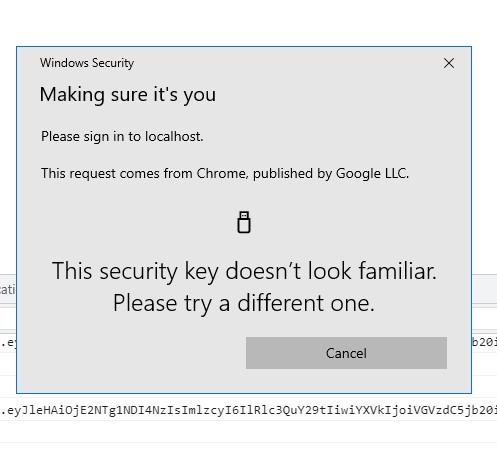
- 在取消时,我会被提示要另一个设备。
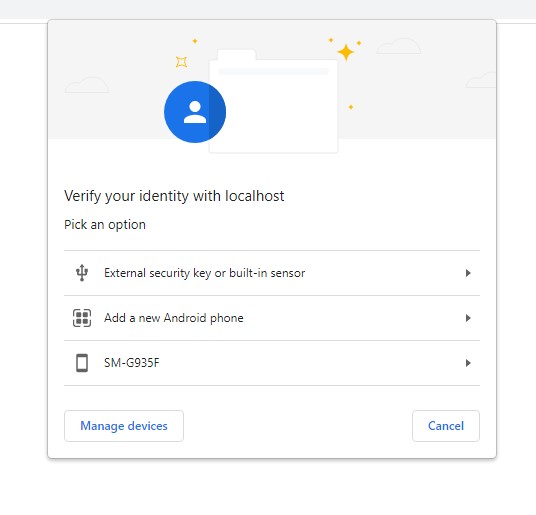
- 如果我选择我的SM_*手机,我的手机提示我的手指指纹,三星/安卓是快乐的!
- 铬不是
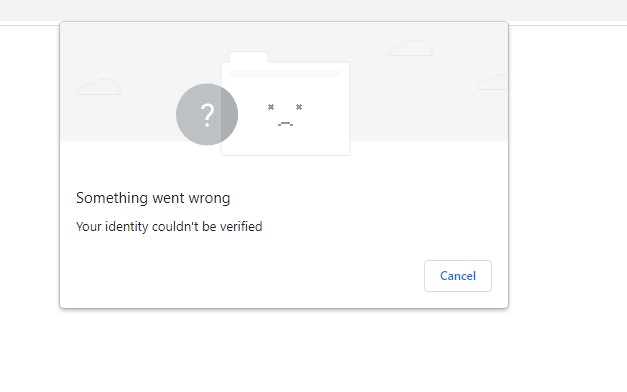
高兴的
因此,尽管我愿意承认/承认这是“新兴”技术:-
- 为什么要为PIN而不是指纹创建提示
- 我尝试过设置各种Google帐户选项、和Windows / account选项;哪些在发挥作用?
- 我的手机配上了Windows/蓝牙,这对Chrome来说还不够吗?
- 如果我选择“添加一个新的安卓手机”,我会得到恐龙QRCode。在我的手机上,三星浏览器是我唯一返回FIDO:/484543913687778941263973123987003762051850670080716404329165的QRC阅读器。。。Chrome不认识它,它去哪里了?
- 这是Android/Samsumg给我的提示
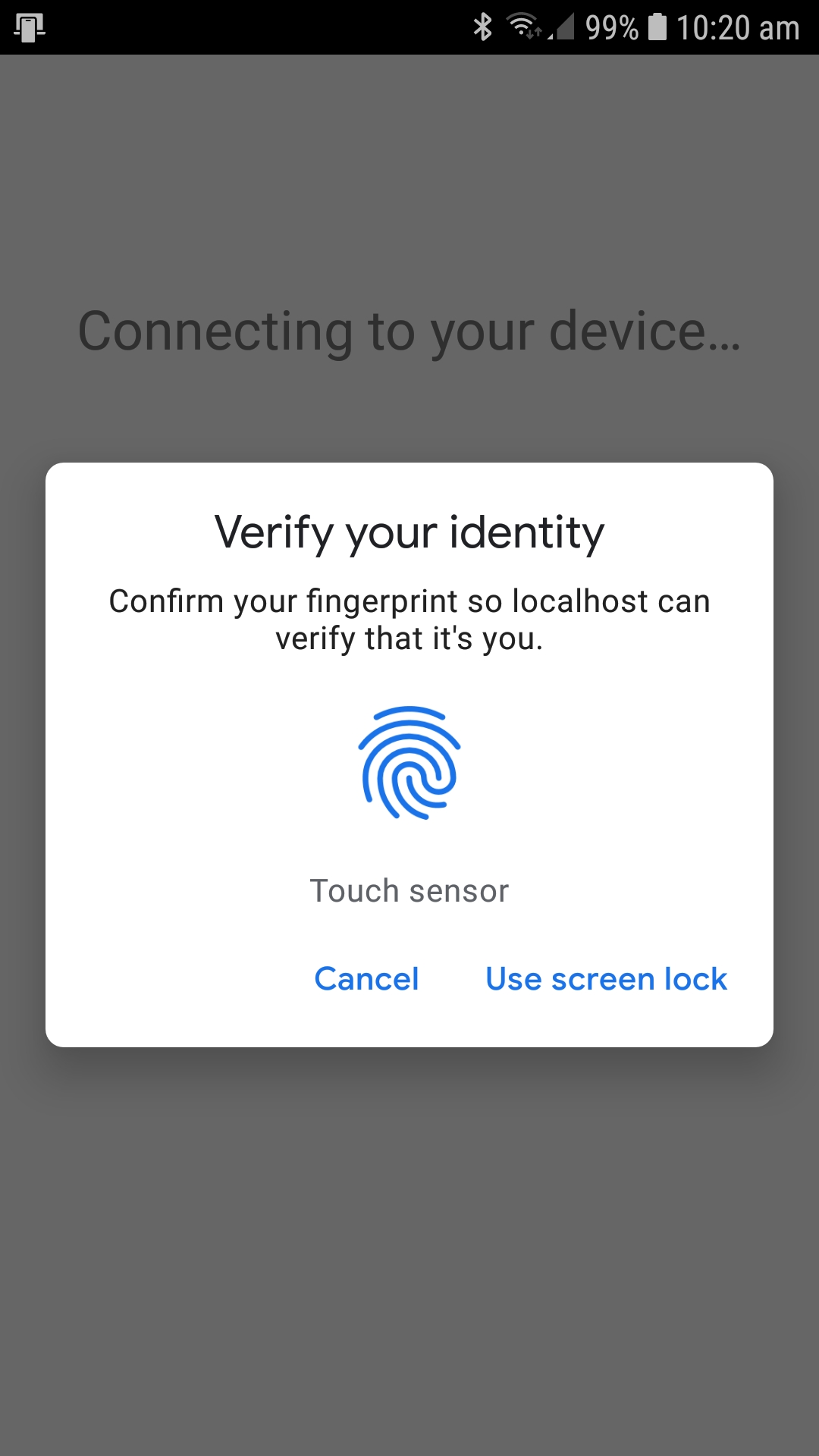
请参阅下面的源代码。
const utf8Decoder = new TextDecoder('utf-8');

async function verifyCredential() {
    var keyResult = await getKey();
    var serverChallenge = JSON.parse(keyResult);
    var credentialId = localStorage.getItem("credentialId");
    if (!credentialId) {
        throw new Error("You must create a Credential first");
    }

    var allowCredentials = [{
        type: "public-key",
        id: Uint8Array.from(atob(credentialId), x => x.charCodeAt(0)).buffer
    }]

    var getAssertionOptions = {
        timeout: 30000,
        challenge: Uint8Array.from(serverChallenge.Token, c => c.charCodeAt(0)).buffer,
        allowCredentials: allowCredentials,
        userVerification: "required"
    };

    return navigator.credentials.get({
        publicKey: getAssertionOptions
    }).then(rawAssertion => {
        var assertion = {
            id: base64encode(rawAssertion.rawId),
            clientDataJSON: utf8Decoder.decode(rawAssertion.response.clientDataJSON),
            userHandle: base64encode(rawAssertion.response.userHandle),
            signature: base64encode(rawAssertion.response.signature),
            authenticatorData: base64encode(rawAssertion.response.authenticatorData)
        };

        // Check id = allowcredentials.id
        console.log("=== Assertion response ===");
        console.log(assertion);
        verifyAssertion(assertion).then(
            result => {
                var res = JSON.parse(result);
                console.log(res.success);
                if (res.success) {
                }
            });

        return;

    }).catch(
        (err) => {
            if (err.name == "NotAllowedError") {
                console.log("here " + err.name);
            } else {
                console.log("other " + err.name);
            }
            return Promise.resolve(false);
        });
}

async function createCredential() {
    var keyResult = await getKey();
    var serverChallenge = JSON.parse(keyResult);

    var createCredentialOptions = {
        rp: {
            name: "WebAuthn Sample App",
            icon: ""
        },
        user: {
            id: Uint8Array.from("some.user.guid", c => c.charCodeAt(0)),
            name: "maherrj@gmail.com",
            displayName: "Richard Maher",
            icon: ""
        },
        pubKeyCredParams: [
            {
                //External authenticators support the ES256 algorithm
                type: "public-key",
                alg: -7
            },
            {
                //Windows Hello supports the RS256 algorithm
                type: "public-key",
                alg: -257
            }
        ],
        authenticatorSelection: {
            //Select authenticators that support username-less flows
            //requireResidentKey: true,

            //Select authenticators that have a second factor (e.g. PIN, Bio) "preferred" "discouraged"
            userVerification: "required",
            //Selects between bound or detachable authenticators
            authenticatorAttachment: "platform"  // Optional
        },
        //Since Edge shows UI, it is better to select larger timeout values
        timeout: 30000,
        //an opaque challenge that the authenticator signs over
        challenge: Uint8Array.from(serverChallenge.Token, c => c.charCodeAt(0)).buffer,
        //prevent re-registration by specifying existing credentials here
        excludeCredentials: [],
        //specifies whether you need an attestation statement
        attestation: "none"
    };

    const authAbort = new AbortController();
    const abortSignal = authAbort.signal;
    abortSignal.addEventListener("abort", (e) => { console.log("It has been aborted"); });

    return navigator.credentials.create({
        publicKey: createCredentialOptions,
        signal: abortSignal
    }).then(rawAttestation => {
        var attestation = {
            id: base64encode(rawAttestation.rawId),
            clientDataJSON: utf8Decoder.decode(rawAttestation.response.clientDataJSON),
            attestationObject: base64encode(rawAttestation.response.attestationObject)
        };

        console.log("=== Attestation response ===");
        console.log(attestation);
        verifyCredentials(attestation).then(
            result => {
                var res = JSON.parse(result);
                console.log(res.success);
                if (res.success) {
                    localStorage.setItem("credentialId", res.id);
                }
            });

        return;

    }).catch(
        (err) => {
            if (err.name == "NotAllowedError") {
                console.log("here " + err.name);
            } else {
                console.log("other " + err.name);
            }
            return Promise.resolve(false);
        });
}

async function verifyCredentials(attestation) {
    let params = JSON.stringify(attestation);
    let resp = await fetch("api/fido/verifycredentials", {
        method: "POST",
        headers: { "Content-type": "application/json", "Accept": "application/json" },
        body: params
    });

    var myStat;
    if (resp.ok) {
        myStat = await resp.json();
        console.log("Stat vc = " + myStat)
    } else {
        console.log("boom");
    }
    console.log("done ");
    return myStat;
}

async function verifyAssertion(assertion) {
    let params = JSON.stringify(assertion);
    let resp = await fetch("api/fido/verifyassertion", {
        method: "POST",
        headers: { "Content-type": "application/json", "Accept": "application/json" },
        body: params
    });

    var myStat;
    if (resp.ok) {
        myStat = await resp.json();
        console.log("Stat va = " + myStat)
    } else {
        console.log("boom");
    }
    console.log("done ");
    return myStat;
}

async function getKey() {
    let resp = await fetch("api/fido/getkey", {
        method: "GET",
        headers: { "Content-type": "application/json", "Accept": "application/json" }
    });

    var mykey;
    if (resp.ok) {
        mykey = await resp.json();
        console.log("key = " + mykey)
    } else {
        throw new Error("boom");
    }
    console.log("done key");
    return mykey;
}

function base64encode(arrayBuffer) {
    if (!arrayBuffer || arrayBuffer.length == 0)
        return undefined;

    return btoa(String.fromCharCode.apply(null, new Uint8Array(arrayBuffer)));
}回答 1
Stack Overflow用户
发布于 2022-07-25 13:12:22
你在这里混合了一些不同的东西。安全密钥、本地平台身份验证器(Windows )和您的手机都将拥有自己的凭据。
如果您只是尝试使用您的手机测试新的FIDO跨设备身份验证流,则不需要常驻凭证(还不支持),也不要设置附件首选项。
当提示进入Chrome,添加您的手机连接它,扫描你的手机上的QR,然后执行紫外线手势。
https://stackoverflow.com/questions/73088756
复制相似问题
腾讯云开发者

Copyright © 2013 - 2026 Tencent Cloud. All Rights Reserved. 腾讯云 版权所有
深圳市腾讯计算机系统有限公司 ICP备案/许可证号:粤B2-20090059  粤公网安备44030502008569号
腾讯云计算(北京)有限责任公司 京ICP证150476号 | 京ICP备11018762号