
熊猫从多个列合并连接组
熊猫从多个列合并连接组
提问于 2022-02-09 09:42:56
如何对至少具有一个共同值的行进行分组?我可以将多个列传递给groupby,但我希望考虑其中的任何一列,而不是所有列。
样本代码:
import pandas as pd

input = pd.DataFrame({
  'fruit': ['peach', 'banana', pd.NA, 'peach', 'apple', 'avocado', pd.NA],
  'vegetable': [pd.NA, pd.NA, 'zucchini', pd.NA, pd.NA, pd.NA, 'potato'],
  'sugar': [17, 17, 2, 18, 20, pd.NA, 4],
  'color': ['orange', 'yellow', 'green', 'orange', 'red', 'green', 'brown']
})

output = input.groupby(['fruit', 'vegetable', 'sugar', 'color']).agg({
  'fruit': lambda x: list(set(x)),
  'vegetable': lambda x: list(set(x)),
  'sugar': lambda x: list(set(x)),
  'color': lambda x: list(set(x))
})
输入:
    fruit       vegetable   sugar   color
0   peach                   17      orange
1   banana                  17      yellow
2               zucchini    2       green
3   peach                   18      orange
4   apple                   20      red
5   avocado                         green
6               potato      4       brown
预期产出:
    fruit               vegetable   sugar       color
0   [peach, banana]     []          [17, 18]    [orange, yellow]
1   [avocado]           [zucchini]  [2]         [green]
2   [apple]             []          [20]        [red]
3 [] [potato] [4] [brown]回答 2
Stack Overflow用户
回答已采纳
发布于 2022-02-09 10:49:39
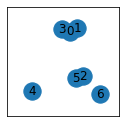
你的问题似乎是一个图问题。
查找每列的组
首先,让我们看看哪些行按列分组。
from itertools import combinations, chain
groups = {col:
          list(chain.from_iterable(list(combinations(x, 2))
                                   for x in df.index.groupby(df[col]).values()
                                   if len(x)>1))
          for col in df.columns}

# {'fruit': [(0, 3)],
#  'vegetable': [],
#  'sugar': [(0, 1)],
#  'color': [(2, 5), (0, 3)]}
所以,在这里,我们想将组(0,3)和(0,1)合并为0是常见的。
得到连接的部件
让我们使用networkx
import networkx as nx

edges = list(chain.from_iterable(groups.values()))

G = nx.from_edgelist(edges)
G.add_nodes_from(df.index)

combined_groups = {k:v for v,l in enumerate(nx.connected_components(G))
                   for k in l}
# index: group_id
# {0: 0, 1: 0, 3: 0, 2: 1, 5: 1, 4: 2, 6: 3}
最后一群
df.groupby(df.index.map(combined_groups)).agg(list)产出:
                    fruit           vegetable         sugar                     color
0  [peach, banana, peach]  [<NA>, <NA>, <NA>]  [17, 17, 18]  [orange, yellow, orange]
1         [<NA>, avocado]    [zucchini, <NA>]     [2, <NA>]            [green, green]
2                 [apple]              [<NA>]          [20]                     [red]
3 [<NA>] [potato] [4] [brown]Stack Overflow用户
发布于 2022-02-09 17:34:11
在@mozway的“挑战”之后,我试图给出一个机会,这是我在上述问题上的“艰难之路”:
import pandas as pd

df = pd.DataFrame({
    'fruit': ['peach', 'banana', pd.NA, 'peach', 'apple', 'avocado', pd.NA],
    'vegetable': [pd.NA, pd.NA, 'zucchini', pd.NA, pd.NA, pd.NA, 'potato'],
    'sugar': [17, 17, 2, 18, 20, pd.NA, 4],
    'color': ['orange', 'yellow', 'green', 'orange', 'red', 'green', 'brown']
})

# Replacing pd.NA with empty string
df.replace(pd.NA, '', inplace=True)

# Initializing output dataframe with the columns of input dataframe
output_df = df2 = pd.DataFrame(data=None, columns=df.columns)

# Converting all the values per each row to list and removing empty values from it
df['common'] = df.values.tolist()
df['common'] = df['common'].apply(lambda x: list(filter(lambda y: y != '', x)))

check_list = set()
index = 0

# Iterating over each row of df
for i, row_i in df.iterrows():
    # Check if the index of row_i is not in check_list
    if i not in check_list:
        # Looping through the columns and setting up the output_df with each value as a list
        for column in df.columns[:-1]:
            temp = str(df.at[i, column])
            output_df.at[index, column] = [temp] if temp else []
        # Looping throught the dataframe again to compare the 'common' values
        for j, row_j in df.iterrows():
            # Check if index of row_j is not in check_list and not matches with the index of row_i
            if i != j and j not in check_list:
                # Check the common values between row_i and row_j
                # if found, update the output_df and append the values into the already defined list
                if set(row_i['common']).intersection(row_j['common']):
                    for column in df.columns[:-1]:
                        temp = str(df.at[j, column])
                        # Avoid the duplicate values in the column
                        if temp and temp not in output_df.at[index, column]:
                            output_df.at[index, column].append(temp)
                    check_list.add(j)
        # Increment the index of output_df
        index += 1

print(output_df)
这是输出,我得到:
             fruit   vegetable     sugar             color
0  [peach, banana]          []  [17, 18]  [orange, yellow]
1        [avocado]  [zucchini]       [2]           [green]
2          [apple]          []      [20]             [red]
3               []    [potato]       [4]           [brown]
但是无论如何,给我的答案是微妙的,简单的,简短的。
页面原文内容由Stack Overflow提供。腾讯云小微IT领域专用引擎提供翻译支持
原文链接:
https://stackoverflow.com/questions/71047209
复制相关文章
相似问题
腾讯云开发者

Copyright © 2013 - 2026 Tencent Cloud. All Rights Reserved. 腾讯云 版权所有
深圳市腾讯计算机系统有限公司 ICP备案/许可证号:粤B2-20090059  粤公网安备44030502008569号
腾讯云计算(北京)有限责任公司 京ICP证150476号 | 京ICP备11018762号