【C++高级主题】异常处理(三):自动资源释放

【C++高级主题】异常处理(三):自动资源释放

byte轻骑兵
发布于 2026-01-21 17:31:51
发布于 2026-01-21 17:31:51
在软件开发中,资源泄漏是最令人头疼的问题之一。想象一下:一个服务器程序因内存泄漏每天崩溃一次,一个文件处理工具因未关闭文件句柄导致磁盘空间被占满…… 这些问题的根源往往在于资源未被正确释放,而异常的发生会让问题雪上加霜 —— 当代码因异常提前退出时,手动编写的资源释放代码(如delete、fclose)可能被跳过,导致资源永远无法回收。
C++ 通过 RAII(Resource Acquisition Is Initialization,资源获取即初始化)模式完美解决了这一问题。
一、传统资源管理的痛点:手动释放的 “不靠谱”
1.1 资源的定义与分类
资源是程序运行时依赖的有限供给品,常见类型包括:
- 内存(
new分配的堆内存) - 文件句柄(
fopen打开的文件) - 互斥锁(
pthread_mutex_lock获取的锁) - 网络连接(
socket创建的 TCP 连接) - 数据库连接(
mysql_connect建立的会话)
1.2 手动释放的风险:异常路径的 “漏网之鱼”
传统资源管理依赖手动释放(如delete、fclose),但在异常场景下极易遗漏。例如,以下代码尝试读取文件内容并处理,但可能因异常导致文件未关闭:
#include <fstream>
#include <stdexcept>
#include <iostream>
using namespace std;

void processFile(const string& path) {
    ifstream file(path);  // 打开文件
    if (!file.is_open()) {
        throw runtime_error("Failed to open file");
    }

    string content;
    file >> content;

    // 模拟处理内容时可能抛出异常(如格式错误)
    if (content.empty()) {
        throw runtime_error("Empty content");
    }

    file.close();  // 手动关闭文件(异常可能跳过此步骤)
}

int main() {
    try {
        processFile("data.txt");
    } catch (const exception& e) {
        cout << "Error: " << e.what() << endl;  // cout正常使用
    }
    return 0;
}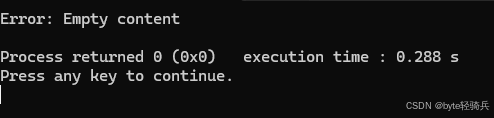
问题分析:
- 若
file >> content后抛出异常(如content.empty()),file.close()会被跳过,文件句柄未释放。 - 程序长期运行时,句柄泄漏会导致 “too many open files” 错误。
1.3 手动释放的扩展问题:代码冗余与逻辑混乱
即使没有异常,手动释放也会让代码变得臃肿。例如,一个函数中可能有多个return语句,每个都需要重复释放资源:
void manualManage() {
    Resource* res = acquireResource();  // 获取资源
    if (condition1) {
        releaseResource(res);  // 释放1
        return;
    }
    if (condition2) {
        releaseResource(res);  // 释放2
        return;
    }
    // ... 更多逻辑
    releaseResource(res);  // 释放3
}痛点总结:手动释放依赖开发者的 “完美操作”,但异常、多返回路径等场景下极易遗漏,导致资源泄漏。
二、RAII:用对象生命周期管理资源
2.1 RAII 的核心思想:资源即对象
RAII(资源获取即初始化) 是 C++ 的核心设计模式,其核心思想是:
将资源的生命周期绑定到对象的生命周期—— 对象构造时获取资源,析构时自动释放资源。
无论对象因正常作用域结束、return返回,还是异常抛出而销毁,其析构函数都会被调用,确保资源释放。
2.2 RAII 的实现步骤:构造获取,析构释放
RAII 的实现分为两步:
- 构造函数:获取资源(如打开文件、分配内存)。
- 析构函数:释放资源(如关闭文件、释放内存)。
2.3 实战案例:用 RAII 管理文件句柄
针对 1.2 节的文件泄漏问题,我们可以自定义FileHandle类,通过 RAII 自动关闭文件:
#include <iostream>
#include <fstream>
#include <stdexcept>
using namespace std;

// RAII文件句柄管理类
class FileHandle {
private:
    ifstream file;  // 实际资源(文件流)

public:
    // 构造函数:获取资源(打开文件)
    explicit FileHandle(const string& path) {
        file.open(path);
        if (!file.is_open()) {
            throw runtime_error("Failed to open file");
        }
    }

    // 析构函数:释放资源(关闭文件)
    ~FileHandle() {
        if (file.is_open()) {
            file.close();
            cout << "File closed automatically" << endl;
        }
    }

    // 禁止拷贝(避免资源被多次释放)
    FileHandle(const FileHandle&) = delete;
    FileHandle& operator=(const FileHandle&) = delete;

    // 提供访问资源的接口(如读取内容)
    string readContent() {
        string content;
        file >> content;
        return content;
    }
};

// 使用RAII的文件处理函数
void processFile(const string& path) {
    FileHandle fh(path);  // 构造时打开文件,析构时自动关闭
    string content = fh.readContent();

    if (content.empty()) {
        throw runtime_error("Empty content");
    }
}

int main() {
    try {
        processFile("data.txt");
    } catch (const exception& e) {
        cout << "Error: " << e.what() << endl;
    }
    return 0;
}运行结果(假设data.txt为空):
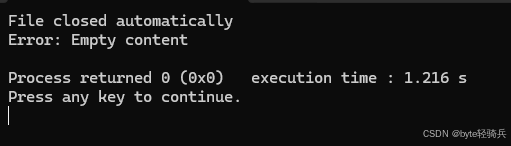
- 自动释放:
FileHandle对象fh在processFile函数结束(或异常抛出)时销毁,触发析构函数关闭文件。 - 异常安全:无论
fh.readContent()是否抛出异常,fh的析构函数都会执行,确保文件关闭。 - 禁止拷贝:通过删除拷贝构造函数和赋值运算符,避免多个对象管理同一资源导致重复释放(如
FileHandle fh2 = fh会编译错误)。
三、RAII 的 “标准武器”:智能指针
C++ 标准库提供了unique_ptr和shared_ptr两种智能指针,它们是 RAII 的典型应用,用于管理动态分配的内存资源。
3.1 unique_ptr:独占所有权的内存管理
unique_ptr表示独占所有权:一个资源只能被一个unique_ptr管理,对象销毁时自动释放资源。
①基础用法
#include <memory>
#include <iostream>
using namespace std;

class Resource {
public:
    Resource() { cout << "Resource created" << endl; }
    ~Resource() { cout << "Resource destroyed" << endl; }
    void use() { cout << "Using resource" << endl; }
};

int main() {
    {
        unique_ptr<Resource> res(new Resource());  // 构造时获取资源
        res->use();  // 使用资源
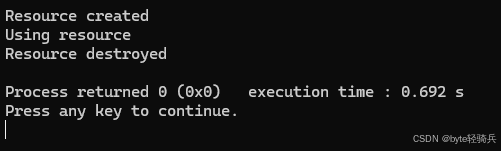
    }  // 作用域结束,res销毁,自动调用~Resource()
    return 0;
}
运行结果:
②异常场景下的表现
void doSomething() {
    unique_ptr<Resource> res(new Resource());
    throw runtime_error("Oops!");  // 抛出异常
}  // 异常导致函数退出,但res的析构仍会执行

int main() {
    try {
        doSomething();
    } catch (const exception& e) {
        cout << e.what() << endl;
    }
    return 0;
}
运行结果:
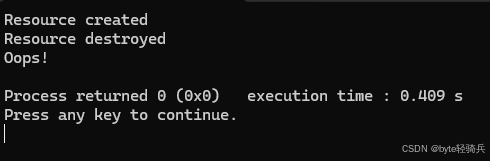
结论:即使函数因异常提前退出,unique_ptr的析构函数仍会执行,确保资源释放。
3.2 shared_ptr:共享所有权的内存管理
shared_ptr表示共享所有权:多个shared_ptr可以共享同一资源,通过引用计数管理,最后一个shared_ptr销毁时释放资源。
①基础用法
#include <memory>
#include <iostream>
using namespace std;

class Data {
public:
    Data() { cout << "Data created" << endl; }
    ~Data() { cout << "Data destroyed" << endl; }
};

int main() {
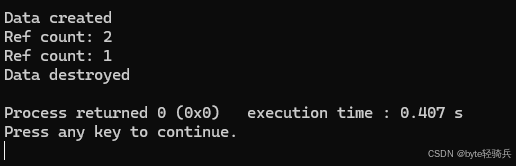
    shared_ptr<Data> ptr1(new Data());  // 引用计数=1
    {
        shared_ptr<Data> ptr2 = ptr1;   // 引用计数=2
        cout << "Ref count: " << ptr2.use_count() << endl;  // 输出2
    }  // ptr2销毁,引用计数=1
    cout << "Ref count: " << ptr1.use_count() << endl;      // 输出1
    return 0;  // ptr1销毁,引用计数=0,释放资源
}
运行结果:
②异常场景下的表现
void shareResource() {
    shared_ptr<Data> ptr1(new Data());
    shared_ptr<Data> ptr2 = ptr1;  // 引用计数=2
    throw runtime_error("Shared error");
}  // ptr1和ptr2销毁,引用计数减为0,释放资源

int main() {
    try {
        shareResource();
    } catch (const exception& e) {
        cout << e.what() << endl;
    }
    return 0;
}
运行结果:
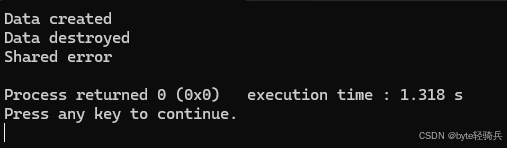
结论:shared_ptr通过引用计数确保资源在所有所有者销毁后释放,异常无法打断这一过程。
3.3 智能指针的扩展:自定义删除器
智能指针默认通过delete释放内存,但对于非内存资源(如文件句柄、网络连接),可以通过自定义删除器指定释放方式。
① 管理 C 风格文件句柄(FILE*)
#include <memory>
#include <cstdio>
using namespace std;

// 自定义删除器:关闭文件
void fileCloser(FILE* file) {
    if (file) {
        fclose(file);
        cout << "File closed by custom deleter" << endl;
    }
}

int main() {
    // 创建shared_ptr,指定自定义删除器
    shared_ptr<FILE> file(
        fopen("data.txt", "r"),  // 获取资源(打开文件)
        fileCloser                // 自定义删除器
    );

    if (!file) {
        cerr << "Failed to open file" << endl;
        return 1;
    }

    // 使用文件(如读取内容)
    char buffer[1024];
    fgets(buffer, sizeof(buffer), file.get());

    // 作用域结束,file销毁,调用fileCloser关闭文件
    return 0;
}
运行结果(假设文件存在):
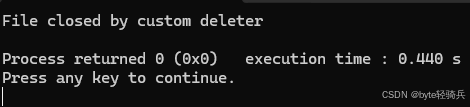
shared_ptr<FILE>通过自定义删除器fileCloser实现文件句柄的自动关闭。file.get()获取原始FILE*指针,用于操作资源。
四、非内存资源的 RAII 管理:自定义类的实战
除了内存,RAII 还能管理文件、锁、网络连接等非内存资源。以下是几个典型场景的实战案例。
4.1 互斥锁:避免死锁的MutexLock类
多线程编程中,互斥锁(mutex)的加锁(lock)和解锁(unlock)必须成对出现,否则会导致死锁。通过 RAII 可以确保解锁操作自动执行。
①自定义MutexLock类
#include <mutex>
#include <stdexcept>
#include <iostream>
using namespace std;

class Mutex {
private:
    mutex mtx;

public:
    void lock() {
        mtx.lock();
    }

    void unlock() {
        mtx.unlock();
    }
};

// RAII互斥锁管理类
class MutexLock {
private:
    Mutex& mtx;  // 引用外部互斥锁

public:
    explicit MutexLock(Mutex& m) : mtx(m) {
        mtx.lock();  // 构造时加锁
        cout << "Mutex locked" << endl;
    }

    ~MutexLock() {
        mtx.unlock();  // 析构时解锁
        cout << "Mutex unlocked" << endl;
    }

    // 禁止拷贝
    MutexLock(const MutexLock&) = delete;
    MutexLock& operator=(const MutexLock&) = delete;
};

// 共享数据
int sharedData = 0;
Mutex mtx;  // 全局互斥锁

void updateData() {
    MutexLock lock(mtx);  // 构造时加锁,析构时自动解锁
    sharedData++;  // 临界区操作
    if (sharedData % 2 == 0) {
        throw runtime_error("Even number!");  // 模拟异常
    }
}

int main() {
    try {
        updateData();
    } catch (const exception& e) {
        cout << "Error: " << e.what() << endl;
    }
    return 0;
}- 无论
updateData函数正常返回还是因异常退出,MutexLock对象lock的析构函数都会调用unlock,避免死锁。 - C++ 标准库已提供
lock_guard和unique_lock实现类似功能(无需自定义),此处仅为演示 RAII 原理。
4.2 网络连接:自动关闭的SocketHandle类
网络编程中,socket连接需要显式关闭(close),否则会占用端口资源。通过 RAII 可以自动管理连接生命周期。
① 自定义SocketHandle类(Linux 示例)
#include <sys/socket.h>
#include <netinet/in.h>
#include <stdexcept>
#include <iostream>
using namespace std;

// RAII网络连接管理类
class SocketHandle {
private:
    int fd;  // socket文件描述符

public:
    // 构造函数:创建socket连接
    SocketHandle() {
        fd = socket(AF_INET, SOCK_STREAM, 0);
        if (fd == -1) {
            throw runtime_error("Failed to create socket");
        }
        cout << "Socket created (fd=" << fd << ")" << endl;
    }

    // 析构函数:关闭socket
    ~SocketHandle() {
        if (fd != -1) {
            close(fd);
            cout << "Socket closed (fd=" << fd << ")" << endl;
        }
    }

    // 禁止拷贝
    SocketHandle(const SocketHandle&) = delete;
    SocketHandle& operator=(const SocketHandle&) = delete;

    // 获取原始文件描述符
    int get() const { return fd; }
};

void connectToServer() {
    SocketHandle sock;  // 构造时创建socket,析构时自动关闭
    // 模拟连接服务器(如connect()调用)
    // ...
    throw runtime_error("Connection failed");  // 模拟异常
}

int main() {
    try {
        connectToServer();
    } catch (const exception& e) {
        cout << "Error: " << e.what() << endl;
    }
    return 0;
}关键说明:即使连接过程中抛出异常,SocketHandle的析构函数仍会关闭 socket,避免端口泄漏。
五、异常安全的四个级别
RAII 不仅能解决资源泄漏问题,还能提升代码的异常安全性—— 即异常发生时,对象状态的一致性和资源的完整性。C++ 异常安全分为四个级别:
5.1 无保证(No Safety)
代码可能因异常导致资源泄漏或对象状态破坏,这是最危险的级别。
示例:手动管理内存且未捕获异常:
vector<int> vec;
try {
    vec.push_back(10);  // 若内存分配失败抛出异常,vec状态不变
} catch (const bad_alloc&) {
    // vec仍有效(可能为空或原有状态)
}
5.2 基本保证(Basic Guarantee)
异常发生后,对象状态有效(不会处于非法状态),但可能改变(如部分操作完成)。
示例:使用vector添加元素(push_back提供基本保证):
vector<int> vec;
try {
    vec.push_back(10);  // 若内存分配失败抛出异常,vec状态不变
} catch (const bad_alloc&) {
    // vec仍有效(可能为空或原有状态)
}
5.3 强保证(Strong Guarantee)
异常发生后,对象状态与操作前完全一致(“要么全做,要么不做”)。
示例:交换两个对象的状态(通过局部变量实现强保证):
class Account {
private:
    double balance;

public:
    void swap(Account& other) {
        // 使用局部变量暂存状态(强保证)
        double temp = balance;
        balance = other.balance;
        other.balance = temp;
    }
};

// 调用swap时,若中途抛出异常,两个Account的状态不变
5.4 无抛出保证(No Throw Guarantee)
操作绝对不会抛出异常(通常通过noexcept声明)。
示例:析构函数(应始终无抛出):
class SafeResource {
public:
    ~SafeResource() noexcept {  // noexcept声明
        // 释放资源(如关闭文件),避免抛出异常
    }
};
5.5 通过 RAII 实现异常安全
RAII 是实现异常安全的基石:
- 基本保证:通过 RAII 确保资源释放,避免泄漏。
- 强保证:结合 RAII 与 “拷贝 - 交换”(Copy-And-Swap)模式,先操作临时对象,再原子交换到目标对象。
- 无抛出保证:析构函数、移动操作等应声明
noexcept,并确保内部操作不抛出异常。
六、构造函数与析构函数的异常处理
6.1 构造函数:资源获取失败时抛出异常
构造函数的职责是正确初始化对象。若资源获取失败(如文件无法打开、内存分配失败),应抛出异常,避免创建 “无效对象”。
示例:
class DatabaseConnection {
private:
    MYSQL* conn;  // MySQL连接句柄

public:
    DatabaseConnection(const string& host, const string& user, const string& pass) {
        conn = mysql_init(nullptr);
        if (!mysql_real_connect(conn, host.c_str(), user.c_str(), pass.c_str(), nullptr, 0, nullptr, 0)) {
            throw runtime_error("Failed to connect to database: " + string(mysql_error(conn)));
        }
    }

    ~DatabaseConnection() {
        if (conn) {
            mysql_close(conn);
        }
    }
};- 若构造函数抛出异常,对象未完全创建,析构函数不会被调用(因此无需在析构函数中处理未完全初始化的对象)。
6.2 析构函数:绝对不能抛出异常
析构函数的职责是释放资源。若析构函数抛出异常,会导致程序终止(terminate()调用)。
原因:
- 异常未被捕获时,程序终止。
- 多个析构函数链式抛出异常时,无法确定如何处理。
①析构函数的安全实现
class FileWriter {
private:
    ofstream file;

public:
    explicit FileWriter(const string& path) {
        file.open(path);
        if (!file.is_open()) {
            throw runtime_error("Failed to open file");
        }
    }

    ~FileWriter() noexcept {  // noexcept声明
        try {
            if (file.is_open()) {
                file.close();  // 可能抛出异常(如磁盘错误)
                if (file.fail()) {
                    cerr << "Warning: Failed to close file" << endl;
                }
            }
        } catch (...) {  // 捕获所有异常,避免传播
            cerr << "Warning: Exception caught in destructor" << endl;
        }
    }
};- 使用
noexcept声明析构函数,表明其不会抛出异常。 - 若资源释放可能失败(如文件关闭时磁盘错误),应在析构函数内部捕获异常并记录日志,而非抛出。
七、常见错误模式与最佳实践
7.1 错误模式:混合使用 RAII 与手动管理
反例:
void badPractice() {
    unique_ptr<int> smartPtr(new int(10));  // RAII管理
    int* rawPtr = new int(20);  // 手动管理
    // ... 可能抛出异常的操作
    delete rawPtr;  // 异常可能跳过此步骤,导致内存泄漏
}最佳实践:所有资源都应通过 RAII 管理(如用unique_ptr替代手动new/delete)。
7.2 错误模式:析构函数中调用可能抛出异常的函数
反例:
class UnsafeResource {
public:
    ~UnsafeResource() {
        externalLibraryRelease();  // 可能抛出异常
    }
};最佳实践:在析构函数中捕获所有可能的异常,或确保释放操作无抛出(如通过noexcept)。
7.3 错误模式:拷贝 RAII 对象导致资源重复释放
反例:
class FileHandle {
    // 未删除拷贝构造函数
public:
    ~FileHandle() { fclose(file); }
};

void duplicateRelease() {
    FileHandle fh1("data.txt");
    FileHandle fh2 = fh1;  // 拷贝导致fh1和fh2都管理同一文件句柄
}  // fh2析构时关闭文件,fh1析构时再次关闭(未定义行为)
八、总结:RAII—— 异常安全的 “守护天使”
RAII 是 C++ 处理资源管理和异常安全的核心机制,其通过对象生命周期自动管理资源,彻底解决了手动释放的可靠性问题。无论是内存、文件、锁还是网络连接,RAII 都能提供一致、安全的资源管理方案。
关键总结:
- 资源即对象:将资源绑定到对象的生命周期,构造获取,析构释放。
- 智能指针:标准库的
unique_ptr和shared_ptr是 RAII 的典型应用,覆盖内存资源管理。 - 自定义 RAII 类:通过构造 / 析构函数管理非内存资源(如文件、锁、网络连接)。
- 异常安全:RAII 是实现基本保证、强保证的基础,析构函数应无抛出。
掌握 RAII 后,将告别 “忘记释放资源” 的噩梦,编写出更健壮、更易维护的 C++ 代码。
本文参与 腾讯云自媒体同步曝光计划,分享自作者个人站点/博客。
原始发表:2025-05-27,如有侵权请联系 cloudcommunity@tencent.com 删除
评论
登录后参与评论
推荐阅读
目录
腾讯云开发者

Copyright © 2013 - 2026 Tencent Cloud. All Rights Reserved. 腾讯云 版权所有
深圳市腾讯计算机系统有限公司 ICP备案/许可证号:粤B2-20090059  粤公网安备44030502008569号
腾讯云计算(北京)有限责任公司 京ICP证150476号 | 京ICP备11018762号