【C++】字符串处理标准库函数大全

【C++】字符串处理标准库函数大全

byte轻骑兵
发布于 2026-01-20 18:12:27
发布于 2026-01-20 18:12:27
在 C++ 编程中,字符串处理是一项非常基础且重要的操作。C++ 继承了 C 语言的字符串处理函数,同时也拥有功能更强大的标准库 string 类。本文将全面介绍 C++ 中常用的字符串处理标准库函数,包括 C 风格字符串函数和 C++ 标准库 string 类的相关函数。
一、C 风格字符串函数
C 风格字符串是以空字符 '\0' 结尾的字符数组,C++ 继承了 C 语言中用于处理这类字符串的大量函数,这些函数声明在头文件中。
1.1 字符串长度计算函数
strlen 函数
strlen 函数用于计算字符串的长度,它的参数是一个 const char * 类型的指针,指向要计算长度的字符串。返回值是 size_t 类型,表示字符串中字符的个数,不包括结束符 '\0'。
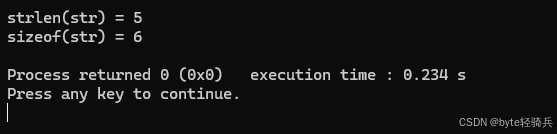
例如,对于字符串 "hello",strlen 的返回值是 5。需要注意的是,strlen 和 sizeof 不同,sizeof 计算的是变量所占用的内存大小,对于字符数组来说,包括结束符 '\0'。
示例代码:
#include <iostream>
#include <cstring>
using namespace std;

int main() {
    char str[] = "hello";
    cout << "strlen(str) = " << strlen(str) << endl; // 输出5
    cout << "sizeof(str) = " << sizeof(str) << endl; // 输出6,包含'\0'
    return 0;
}
1.2 字符串复制函数
①strcpy 函数
strcpy 函数用于将源字符串复制到目标字符串中,其原型为 char* strcpy (char* dest, const char* src)。它会把 src 指向的字符串(包括 '\0')复制到 dest 指向的数组中。但要注意,若 dest 指向的数组空间不够大,可能会导致缓冲区溢出,造成程序错误。
示例代码:
#include <iostream>
#include <cstring>
using namespace std;

int main() {
    char dest[10];
    char src[] = "hello";
    strcpy(dest, src);
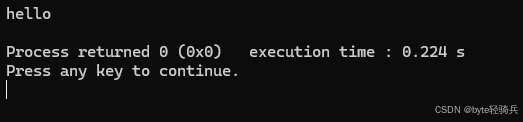
    cout << dest << endl; // 输出hello
    return 0;
}
②strncpy 函数
为了避免 strcpy 函数可能导致的缓冲区溢出问题,引入了 strncpy 函数,其原型为 char* strncpy (char* dest, const char* src, size_t n)。该函数将 src 指向的字符串中前 n 个字符复制到 dest 指向的数组中。
如果源字符串长度小于 n,则会在 dest 的剩余位置填充 '\0';如果源字符串长度大于等于 n,则不会自动添加结束符 '\0',此时需要手动添加,否则可能导致字符串处理错误。
示例代码:
#include <iostream>
#include <cstring>
using namespace std;

int main() {
    char dest[10];
    char src[] = "helloworld";
    strncpy(dest, src, 5);
    dest[5] = '\0'; // 手动添加结束符
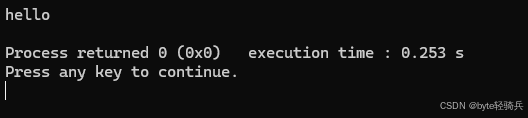
    cout << dest << endl; // 输出hello
    return 0;
}
1.3 字符串连接函数
①strcat 函数
strcat 函数用于将源字符串连接到目标字符串的末尾,其原型为 char* strcat (char* dest, const char* src)。它会将 src 指向的字符串(包括 '\0')添加到 dest 指向的字符串的后面,连接后的字符串以 '\0' 结尾。使用该函数时,必须保证 dest 指向的数组有足够的空间容纳连接后的字符串,否则会导致缓冲区溢出。
示例代码:
#include <iostream>
#include <cstring>
using namespace std;

int main() {
    char dest[20] = "hello";
    char src[] = "world";
    strcat(dest, src);
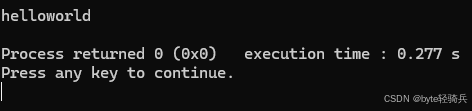
    cout << dest << endl; // 输出helloworld
    return 0;
}
②strncat 函数
strncat 函数相对更安全,其原型为 char* strncat (char* dest, const char* src, size_t n)。它将 src 指向的字符串中前 n 个字符连接到 dest 指向的字符串末尾,并自动添加结束符 '\0'。即使 src 的长度大于 n,也只会连接 n 个字符,且会添加结束符。
示例代码:
#include <iostream>
#include <cstring>
using namespace std;

int main() {
    char dest[20] = "hello";
    char src[] = "world123";
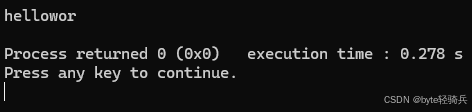
    strncat(dest, src, 3);
    cout << dest << endl; // 输出hellowor
    return 0;
}
1.4 字符串比较函数
①strcmp 函数
strcmp 函数用于比较两个字符串的大小,其原型为 int strcmp (const char* str1, const char* str2)。比较规则是按照 ASCII 码值逐个字符进行比较,直到出现不同的字符或遇到 '\0' 为止。
如果 str1 等于 str2,返回 0;如果 str1 大于 str2,返回一个正数;如果 str1 小于 str2,返回一个负数。
示例代码:
#include <iostream>
#include <cstring>
using namespace std;

int main() {
    char str1[] = "apple";
    char str2[] = "banana";
    int result = strcmp(str1, str2);
    if (result < 0) {
        cout << "str1小于str2" << endl;
    } else if (result > 0) {
        cout << "str1大于str2" << endl;
    } else {
        cout << "str1等于str2" << endl;
    }
    return 0;
}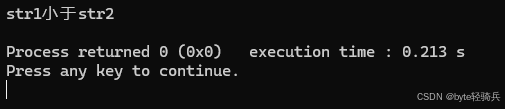
"apple" 和 "banana" 比较,第一个字符 'a' 的 ASCII 码小于 'b',所以 result 为负数,输出 “str1 小于 str2”。
②strncmp 函数
strncmp 函数用于比较两个字符串的前 n 个字符,其原型为 int strncmp (const char* str1, const char* str2, size_t n)。比较规则与 strcmp 类似,但只比较前 n 个字符。
示例代码:
#include <iostream>
#include <cstring>
using namespace std;

int main() {
    char str1[] = "apple";
    char str2[] = "appletree";
    int result = strncmp(str1, str2, 5);
    if (result == 0) {
        cout << "前5个字符相等" << endl;
    } else {
        cout << "前5个字符不相等" << endl;
    }
    return 0;
}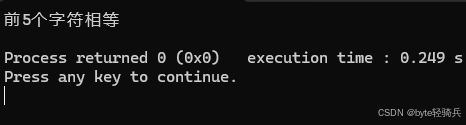
这里比较前 5 个字符,"apple" 和 "appletree" 的前 5 个字符都是 "apple",所以输出 “前 5 个字符相等”。
1.5 字符串查找函数
①strchr 函数
strchr 函数用于在字符串中查找指定字符第一次出现的位置,其原型为 char* strchr (const char* str, int c)。其中 c 是要查找的字符(以 ASCII 码形式传入)。如果找到该字符,返回指向该字符的指针;如果未找到,返回 NULL。
示例代码:
#include <iostream>
#include <cstring>
using namespace std;

int main() {
    char str[] = "hello world";
    char* ptr = strchr(str, 'o');
    if (ptr != NULL) {
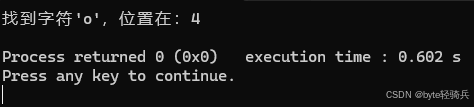
        cout << "找到字符'o',位置在:" << ptr - str << endl; // 输出4
    } else {
        cout << "未找到字符'o'" << endl;
    }
    return 0;
}
②strrchr 函数
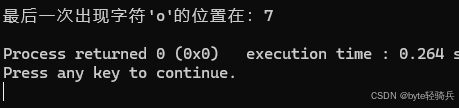
strrchr 函数用于在字符串中查找指定字符最后一次出现的位置,其原型为 char* strrchr (const char* str, int c)。用法与 strchr 类似,只是查找方向是从字符串末尾开始。
示例代码:
#include <iostream>
#include <cstring>
using namespace std;

int main() {
    char str[] = "hello world";
    char* ptr = strrchr(str, 'o');
    if (ptr != NULL) {
        cout << "最后一次出现字符'o'的位置在:" << ptr - str << endl; // 输出7
    } else {
        cout << "未找到字符'o'" << endl;
    }
    return 0;
}
③strstr 函数
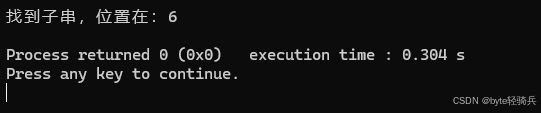
strstr 函数用于在一个字符串中查找另一个字符串第一次出现的位置,其原型为 char* strstr (const char* haystack, const char* needle)。如果找到,返回指向第一次出现位置的指针;如果未找到,返回 NULL。
示例代码:
#include <iostream>
#include <cstring>
using namespace std;

int main() {
    char haystack[] = "hello world, welcome to the world";
    char needle[] = "world";
    char* ptr = strstr(haystack, needle);
    if (ptr != NULL) {
        cout << "找到子串,位置在:" << ptr - haystack << endl; // 输出6
    } else {
        cout << "未找到子串" << endl;
    }
    return 0;
}
1.6 其他常用 C 风格字符串函数
①strtok 函数
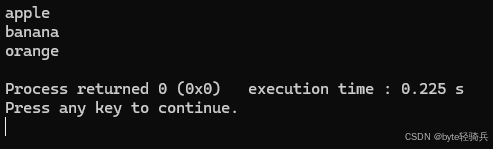
strtok 函数用于将字符串分割成多个子串,其原型为 char* strtok (char* str, const char* delim)。第一次调用时,str 指向要分割的字符串,后续调用时,str 设为 NULL,delim 是分隔符集合。
该函数会修改原字符串,将分隔符替换为 '\0',并返回指向当前子串的指针。当没有更多子串时,返回 NULL。
示例代码:
#include <iostream>
#include <cstring>
using namespace std;

int main() {
    char str[] = "apple,banana,orange";
    const char* delim = ",";
    char* token = strtok(str, delim);
    while (token != NULL) {
        cout << token << endl;
        token = strtok(NULL, delim);
    }
    return 0;
}
②memset 函数
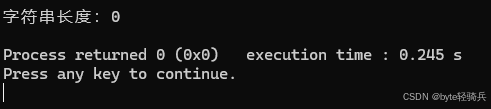
memset 函数用于将一块内存区域的内容设置为指定的值,其原型为 void* memset (void* ptr, int value, size_t num)。常用来初始化字符数组,将其所有元素设置为某个字符(通常是 '\0')。
示例代码:
#include <iostream>
#include <cstring>
using namespace std;

int main() {
    char str[10];
    memset(str, '\0', sizeof(str)); // 将数组所有元素设为'\0'
    cout << "字符串长度:" << strlen(str) << endl; // 输出0
    return 0;
}
二、C++ 标准库 string 类
C++ 标准库中的 string 类封装了字符串的操作,提供了更安全、更便捷的字符串处理方式,声明在头文件中。string 类重载了许多运算符,并提供了丰富的成员函数。
2.1 string 类的构造函数
string 类有多种构造函数,可以满足不同的初始化需求:
- 默认构造函数:string (),创建一个空字符串。
- string (const char* s):用 C 风格字符串 s 初始化。
- string (size_t n, char c):创建一个包含 n 个字符 c 的字符串。
- string (const string& str):拷贝构造函数,用另一个 string 对象初始化。
- string (const string& str, size_t pos, size_t len):用 str 中从 pos 位置开始的 len 个字符初始化。
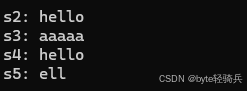
示例代码:
#include <iostream>
#include <string>
using namespace std;

int main() {
    string s1; // 空字符串
    string s2("hello"); // 用C风格字符串初始化
    string s3(5, 'a'); // 包含5个'a'的字符串
    string s4(s2); // 拷贝构造
    string s5(s2, 1, 3); // 用s2中从位置1开始的3个字符初始化,即"ell"
    cout << "s2: " << s2 << endl;
    cout << "s3: " << s3 << endl;
    cout << "s4: " << s4 << endl;
    cout << "s5: " << s5 << endl;
    return 0;
}
2.2 string 类的赋值操作
1. 直接赋值:使用 = 运算符,如 string s; s = "hello";。
2. assign 成员函数:
- string& assign (const char* s):用 C 风格字符串 s 赋值。
- string& assign (const char* s, size_t n):用 s 的前 n 个字符赋值。
- string& assign (const string& str):用另一个 string 对象赋值。
- string& assign (const string& str, size_t pos, size_t len):用 str 中从 pos 位置开始的 len 个字符赋值。
- string& assign (size_t n, char c):赋值为 n 个字符 c。
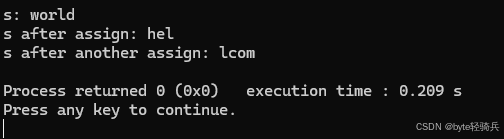
示例代码:
#include <iostream>
#include <string>
using namespace std;

int main() {
    string s;
    s = "world"; // 直接赋值
    cout << "s: " << s << endl;
    s.assign("hello", 3); // 用"hello"的前3个字符赋值,即"hel"
    cout << "s after assign: " << s << endl;
    string s2 = "welcome";
    s.assign(s2, 2, 4); // 用s2中从位置2开始的4个字符赋值,即"lcom"
    cout << "s after another assign: " << s << endl;
    return 0;
}
2.3 string 类的字符串拼接
1. 使用 + 运算符:可以将两个 string 对象或 string 对象与 C 风格字符串、字符拼接。
2. 使用 append 成员函数:
- string& append (const char* s):将 C 风格字符串 s 拼接到当前字符串后。
- string& append (const char* s, size_t n):将 s 的前 n 个字符拼接到当前字符串后。
- string& append (const string& str):将另一个 string 对象拼接到当前字符串后。
- string& append (const string& str, size_t pos, size_t len):将 str 中从 pos 位置开始的 len 个字符拼接到当前字符串后。
- string& append (size_t n, char c):在当前字符串后添加 n 个字符 c。
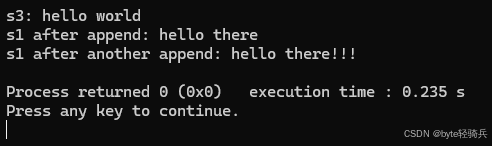
示例代码:
#include <iostream>
#include <string>
using namespace std;

int main() {
    string s1 = "hello";
    string s2 = "world";
    string s3 = s1 + " " + s2; // 使用+运算符拼接
    cout << "s3: " << s3 << endl; // 输出hello world
    s1.append(" there"); // 拼接C风格字符串
    cout << "s1 after append: " << s1 << endl; // 输出hello there
    s1.append(3, '!'); // 添加3个'!'
    cout << "s1 after another append: " << s1 << endl; // 输出hello there!!!
    return 0;
}
2.4 string 类的字符串比较
1. 使用关系运算符:==、!=、<、>、<=、>=,可以直接比较两个 string 对象或 string 对象与 C 风格字符串。
2. 使用 compare 成员函数:int compare (const string& str) const,比较当前字符串与 str。返回值规则与 strcmp 类似,0 表示相等,正数表示当前字符串大,负数表示当前字符串小。
此外,compare 还有其他重载形式,如比较子串等。
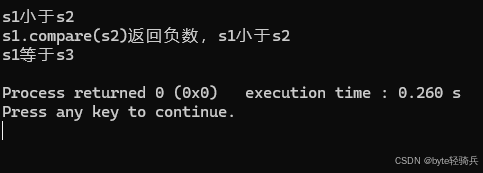
示例代码:
#include <iostream>
#include <string>
using namespace std;

int main() {
    string s1 = "apple";
    string s2 = "banana";
    if (s1 < s2) {
        cout << "s1小于s2" << endl;
    }
    int result = s1.compare(s2);
    if (result < 0) {
        cout << "s1.compare(s2)返回负数,s1小于s2" << endl;
    }
    string s3 = "apple";
    if (s1 == s3) {
        cout << "s1等于s3" << endl;
    }
    return 0;
}
2.5 string 类的字符访问
1. 使用 [] 运算符:char& operator [](size_t pos),可以访问或修改指定位置的字符,不进行越界检查。
2. 使用 at 成员函数:char& at (size_t pos),与 [] 类似,但会进行越界检查,若越界会抛出 out_of_range 异常。
示例代码:
#include <iostream>
#include <string>
using namespace std;

int main() {
    string s = "hello";
    cout << s[1] << endl; // 输出e
    s[1] = 'E';
    cout << s << endl; // 输出hEllo
    try {
        cout << s.at(10) << endl; // 越界访问
    } catch (out_of_range& e) {
        cout << "异常:" << e.what() << endl;
    }
    return 0;
}
2.6 string 类的子串操作
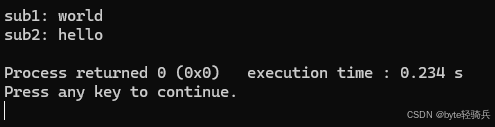
substr 成员函数用于获取子串,原型为 string substr (size_t pos = 0, size_t len = npos) const,其中 npos 是一个静态常量,表示直到字符串末尾。该函数返回从 pos 位置开始,长度为 len 的子串。
示例代码:
#include <iostream>
#include <string>
using namespace std;

int main() {
    string s = "hello world";
    string sub1 = s.substr(6); // 从位置6开始到末尾的子串,即"world"
    string sub2 = s.substr(0, 5); // 从位置0开始,长度为5的子串,即"hello"
    cout << "sub1: " << sub1 << endl;
    cout << "sub2: " << sub2 << endl;
    return 0;
}
2.7 string 类的查找操作
string 类提供了多个查找相关的成员函数,用于查找字符或子串:
1. find:从字符串开头查找,返回第一次出现的位置,若未找到返回 npos。
- size_t find (const string& str, size_t pos = 0) const:从 pos 位置开始查找子串 str。
- size_t find (const char* s, size_t pos = 0) const:从 pos 位置开始查找 C 风格字符串 s。
- size_t find (char c, size_t pos = 0) const:从 pos 位置开始查找字符 c。
2. rfind:从字符串末尾开始查找,返回最后一次出现的位置。
3. find_first_of:查找字符串中第一次出现指定字符集中任何一个字符的位置。
4. find_last_of:查找字符串中最后一次出现指定字符集中任何一个字符的位置。
5. find_first_not_of:查找字符串中第一次出现不在指定字符集中的字符的位置。
6. find_last_not_of:查找字符串中最后一次出现不在指定字符集中的字符的位置。
示例代码:
#include <iostream>
#include <string>
using namespace std;

int main() {
    string s = "hello world, welcome to the world";
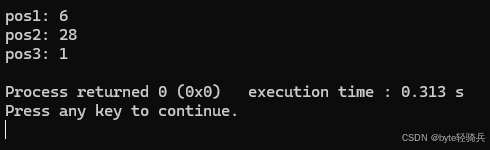
    size_t pos1 = s.find("world"); // 查找"world"第一次出现的位置
    cout << "pos1: " << pos1 << endl; // 输出6
    size_t pos2 = s.rfind("world"); // 查找"world"最后一次出现的位置
    cout << "pos2: " << pos2 << endl; // 输出29
    size_t pos3 = s.find_first_of("aeiou"); // 查找第一次出现元音字母的位置
    cout << "pos3: " << pos3 << endl; // 输出1('e'的位置)
    return 0;
}
2.8 string 类的替换操作
replace 成员函数用于替换字符串中的部分内容,有多种重载形式:
- string& replace (size_t pos, size_t len, const char* s):将从 pos 位置开始的 len 个字符替换为 s。
- string& replace (size_t pos, size_t len, const string& str):将从 pos 位置开始的 len 个字符替换为 str。
- string& replace (size_t pos, size_t len, size_t n, char c):将从 pos 位置开始的 len 个字符替换为 n 个字符 c。
- 还有其他基于迭代器范围的替换形式。
示例代码:
#include <iostream>
#include <string>
using namespace std;

int main() {
    string s = "hello world";
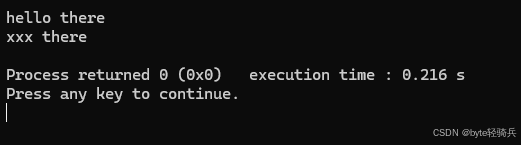
    s.replace(6, 5, "there"); // 将从位置6开始的5个字符("world")替换为"there"
    cout << s << endl; // 输出hello there
    s.replace(0, 5, 3, 'x'); // 将从位置0开始的5个字符替换为3个'x'
    cout << s << endl; // 输出xxx there
    return 0;
}
2.9 string 类的插入操作
insert 成员函数用于在字符串中插入内容,有多种重载形式:
- string& insert (size_t pos, const char* s):在 pos 位置插入 C 风格字符串 s。
- string& insert (size_t pos, const string& str):在 pos 位置插入 string 对象 str。
- string& insert (size_t pos, size_t n, char c):在 pos 位置插入 n 个字符 c。
- 基于迭代器的插入形式。
示例代码:
#include <iostream>
#include <string>
using namespace std;

int main() {
    string s = "hello";
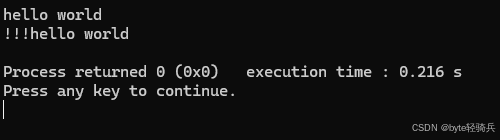
    s.insert(5, " world"); // 在位置5插入" world"
    cout << s << endl; // 输出hello world
    s.insert(0, 3, '!'); // 在位置0插入3个'!'
    cout << s << endl; // 输出!!!hello world
    return 0;
}
2.10 string 类的删除操作
erase 成员函数用于删除字符串中的部分内容:
- string& erase (size_t pos = 0, size_t len = npos):删除从 pos 位置开始的 len 个字符。
- 基于迭代器的删除形式。
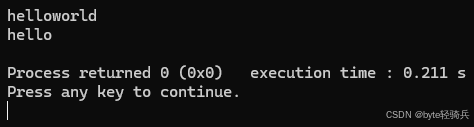
示例代码:
#include <iostream>
#include <string>
using namespace std;

int main() {
    string s = "hello world";
    s.erase(5, 1); // 删除从位置5开始的1个字符(空格)
    cout << s << endl; // 输出helloworld
    s.erase(5); // 删除从位置5开始到末尾的字符
    cout << s << endl; // 输出hello
    return 0;
}
2.11 string 类与 C 风格字符串的转换
- c_str () 成员函数:返回一个指向 C 风格字符串的 const char * 指针,该指针指向的字符串以 '\0' 结尾。
- data () 成员函数:在 C++11 之后,与 c_str () 功能相同,返回 const char * 指针。
- copy (char* s, size_t len, size_t pos = 0) const:将字符串中从 pos 位置开始的 len 个字符复制到字符数组 s 中,不会自动添加 '\0',需要手动添加。
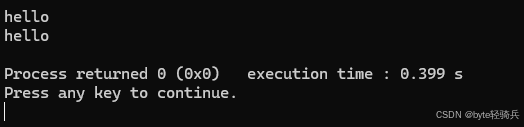
示例代码:
#include <iostream>
#include <string>
#include <cstring>
using namespace std;

int main() {
    string s = "hello";
    const char* cstr = s.c_str();
    cout << cstr << endl; // 输出hello
    char arr[10];
    s.copy(arr, 5, 0);
    arr[5] = '\0'; // 手动添加结束符
    cout << arr << endl; // 输出hello
    return 0;
}
2.12 string 类的其他常用函数
- size () 和 length ():都返回字符串的长度,即字符的个数,不包括结束符(string 内部管理,用户无需关心),功能相同。
- empty ():判断字符串是否为空,若为空返回 true,否则返回 false。
- clear ():清空字符串,使之为空。
- reserve (size_t n):预留 n 个字符的存储空间,避免频繁的内存分配,但不会改变字符串的实际长度。
- capacity ():返回当前字符串在重新分配内存之前所能容纳的最大字符数。
- resize (size_t n, char c = '\0'):调整字符串的长度为 n,若 n 大于当前长度,用字符 c 填充;若 n 小于当前长度,截断字符串。
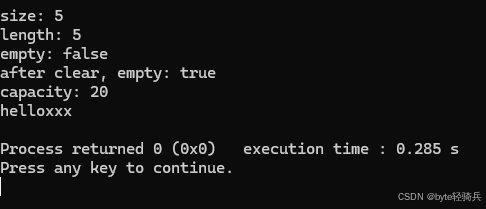
示例代码:
#include <iostream>
#include <string>
using namespace std;

int main() {
    string s = "hello";
    cout << "size: " << s.size() << endl; // 输出5
    cout << "length: " << s.length() << endl; // 输出5
    cout << "empty: " << (s.empty() ? "true" : "false") << endl; // 输出false
    s.clear();
    cout << "after clear, empty: " << (s.empty() ? "true" : "false") << endl; // 输出true
    s = "hello";
    s.reserve(20);
    cout << "capacity: " << s.capacity() << endl; // 可能输出20(具体实现可能不同)
    s.resize(8, 'x');
    cout << s << endl; // 输出helloxxx
    return 0;
}
三、其他字符串处理相关函数
除了上述 C 风格字符串函数和 string 类的成员函数外,C++ 标准库中还有一些与字符串处理相关的函数,主要在头文件和中。
3.1 字符分类和转换函数()
- isalpha (int c):判断字符 c 是否为字母(a-z 或 A-Z)。
- isdigit (int c):判断字符 c 是否为数字(0-9)。
- isalnum (int c):判断字符 c 是否为字母或数字。
- islower (int c):判断字符 c 是否为小写字母。
- isupper (int c):判断字符 c 是否为大写字母。
- tolower (int c):将字符 c 转换为小写字母(若为大写字母)。
- toupper (int c):将字符 c 转换为大写字母(若为小写字母)。
这些函数的参数是 int 类型,通常传入字符的 ASCII 码,若传入的不是 unsigned char 范围内的值且不是 EOF,行为未定义。
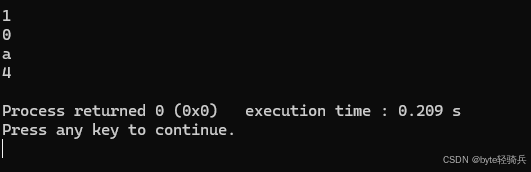
示例代码:
#include <iostream>
#include <cctype>
using namespace std;

int main() {
    char c = 'A';
    cout << isalpha(c) << endl; // 非0,表示是字母
    cout << isdigit(c) << endl; // 0,表示不是数字
    cout << (char)tolower(c) << endl; // 输出a
    char d = '3';
    cout << isalnum(d) << endl; // 非0,表示是字母或数字
    return 0;
}
3.2 算法库中的字符串操作函数()
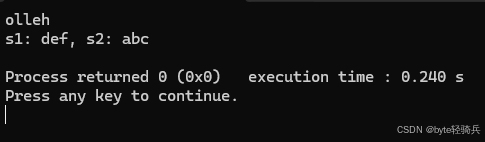
- reverse:反转字符串,可以用于 string 对象或字符数组。对于 string 对象,reverse (s.begin (), s.end ()) 可以反转字符串。
- swap:交换两个 string 对象的值,swap (s1, s2)。
示例代码:
#include <iostream>
#include <string>
#include <algorithm>
using namespace std;

int main() {
    string s = "hello";
    reverse(s.begin(), s.end());
    cout << s << endl; // 输出olleh
    string s1 = "abc", s2 = "def";
    swap(s1, s2);
    cout << "s1: " << s1 << ", s2: " << s2 << endl; // 输出s1: def, s2: abc
    return 0;
}
掌握这些字符串处理函数,能够帮助开发者更高效地进行字符串的各种操作,如复制、连接、比较、查找、替换等。在使用过程中,应根据具体需求选择合适的函数,并注意函数的参数、返回值和可能出现的异常情况,以编写健壮的代码。
本文参与 腾讯云自媒体同步曝光计划,分享自作者个人站点/博客。
原始发表:2025-07-17,如有侵权请联系 cloudcommunity@tencent.com 删除
评论
登录后参与评论
推荐阅读
目录
腾讯云开发者

Copyright © 2013 - 2026 Tencent Cloud. All Rights Reserved. 腾讯云 版权所有
深圳市腾讯计算机系统有限公司 ICP备案/许可证号:粤B2-20090059  粤公网安备44030502008569号
腾讯云计算(北京)有限责任公司 京ICP证150476号 | 京ICP备11018762号