【C++高级主题】异常处理(二):异常类层次

【C++高级主题】异常处理(二):异常类层次

byte轻骑兵
发布于 2026-01-20 17:22:02
发布于 2026-01-20 17:22:02
在C++中,异常处理机制允许程序在运行时检测到错误或异常情况,并跳转到专门的错误处理代码块中执行。这种机制不仅提高了程序的健壮性,还使得错误处理更加清晰和集中。在上一篇博客中,我们探讨了异常处理的基础知识,包括如何抛出和捕获异常。在本篇博客中,我们将深入探讨C++中的异常类层次,了解标准异常库的结构以及如何自定义异常类层次,以满足特定需求。
一、C++ 标准异常类层次结构
1.1 标准异常类的核心架构
C++ 标准库在<exception>头文件中定义了异常类的基类std::exception,所有标准异常类均直接或间接派生自该基类。标准异常类主要分为两大分支:
- 逻辑错误(Logic Errors):表示程序中的可避免错误,如无效参数、违反前置条件等。通常由程序员错误引起,而非运行时环境问题。
- 运行时错误(Runtime Errors):表示程序运行过程中发生的不可预测错误,如资源耗尽、I/O 失败等。
下图展示了 C++ 标准异常类的简化层次结构:
std::exception
├── std::logic_error
│   ├── std::invalid_argument
│   ├── std::domain_error
│   ├── std::length_error
│   ├── std::out_of_range
│   └── std::future_error (C++11)
├── std::runtime_error
│   ├── std::range_error
│   ├── std::overflow_error
│   ├── std::underflow_error
│   ├── std::system_error (C++11)
│   └── std::ios_base::failure (C++11)
├── std::bad_alloc
│   └── std::bad_array_new_length (C++11)
├── std::bad_cast
├── std::bad_typeid
├── std::bad_exception
├── std::bad_function_call (C++11)
├── std::bad_weak_ptr (C++11)
└── std::bad_variant_access (C++17)
1.2 关键基类解析
①std::exception
所有标准异常类的基类,定义了两个核心接口:
class exception {
public:
    exception() noexcept;
    exception(const exception&) noexcept;
    exception& operator=(const exception&) noexcept;
    virtual ~exception();
    virtual const char* what() const noexcept; // 返回错误描述信息
};②std::logic_error
逻辑错误的基类,通常表示程序内部逻辑错误,可在开发阶段通过代码审查避免。
class logic_error : public exception {
public:
    explicit logic_error(const string& what_arg);
    explicit logic_error(const char* what_arg);
};③std::runtime_error
运行时错误的基类,表示程序运行过程中发生的不可预测错误。
class runtime_error : public exception {
public:
    explicit runtime_error(const string& what_arg);
    explicit runtime_error(const char* what_arg);
};
1.3 常见标准异常类及其应用场景
①std::invalid_argument
当函数接收到无效参数时抛出,例如:
#include <stdexcept>
#include <string>

int convertToInt(const std::string& str) {
    if (str.empty()) {
        throw std::invalid_argument("Empty string cannot be converted to int");
    }
    // 转换逻辑...
}②std::out_of_range
用于表示越界访问,如std::vector或std::string的非法索引:
#include <stdexcept>
#include <vector>

int getElement(const std::vector<int>& vec, size_t index) {
    if (index >= vec.size()) {
        throw std::out_of_range("Index out of range");
    }
    return vec[index];
}③std::bad_alloc
当内存分配失败时抛出,通常由new操作符触发:
try {
    while (true) {
        char* p = new char[1024*1024]; // 持续分配内存
    }
} catch (const std::bad_alloc& e) {
    std::cerr << "Memory allocation failed: " << e.what() << std::endl;
}
④std::system_error (C++11)
表示与操作系统相关的错误,封装了系统错误码:
#include <system_error>
#include <fstream>

void openFile(const std::string& filename) {
    std::ifstream file(filename);
    if (!file.is_open()) {
        throw std::system_error(errno, std::generic_category(), "Failed to open file");
    }
}
二、自定义异常类的设计与实现
2.1 为什么需要自定义异常类?
尽管标准异常类提供了常见错误场景的处理能力,但在实际项目中,我们通常需要:
- 特定领域的错误分类:例如数据库错误、网络错误等
- 携带更多上下文信息:如错误代码、时间戳等
- 统一的错误处理接口:便于上层代码捕获和处理
2.2 自定义异常类的设计原则
- 继承标准异常类:从
std::runtime_error或std::logic_error派生,利用已有结构 - 提供清晰的错误信息:重写
what()方法返回有意义的错误描述 - 避免深继承层次:保持异常类层次简洁,通常不超过 3 层
- 线程安全:异常类的操作应保证线程安全
- 可移植性:避免依赖平台特定的错误码
2.3 自定义异常类的实现示例
①基础实现:从std::runtime_error派生
#include <stdexcept>
#include <string>
#include <iostream>

// 自定义异常类
class DatabaseException : public std::runtime_error {
public:
    explicit DatabaseException(const std::string& message)
        : std::runtime_error(message) {}
};

class ConnectionFailure : public DatabaseException {
public:
    explicit ConnectionFailure(const std::string& server)
        : DatabaseException("Connection failed: " + server) {}
};

class QueryError : public DatabaseException {
public:
    QueryError(const std::string& query, const std::string& error)
        : DatabaseException("Query failed: " + query + ", error: " + error),
          query_(query), error_(error) {}

    const std::string& getQuery() const { return query_; }
    const std::string& getError() const { return error_; }

private:
    std::string query_;
    std::string error_;
};
②使用示例
bool isConnected();
bool executeInternal(const std::string& query);

void executeQuery(const std::string& query) {
    if (!isConnected()) {
        throw ConnectionFailure("localhost:3306");
    }

    if (query.empty()) {
        throw QueryError(query, "Empty query");
    }

    // 执行查询...
    bool success = executeInternal(query);
    if (!success) {
        throw QueryError(query, "Syntax error");
    }
}

int main() {
    try {
        executeQuery("SELECT * FROM users");
    } catch (const ConnectionFailure& e) {
        std::cerr << "Connection error: " << e.what() << std::endl;
    } catch (const QueryError& e) {
        std::cerr << "Query error: " << e.getError() << " in query: " << e.getQuery() << std::endl;
    } catch (const std::exception& e) {
        std::cerr << "General error: " << e.what() << std::endl;
    }
    return 0;
}

// 函数的简单实现(实际项目中需要根据需求实现)
bool isConnected() {
    // 模拟连接状态
    return false;  // 返回false以触发ConnectionFailure异常
}

bool executeInternal(const std::string& query) {
    // 模拟查询执行
    return !query.empty();  // 空查询返回失败
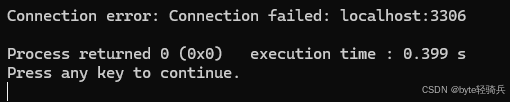
}
③携带更多上下文信息
class DetailedException : public std::runtime_error {
public:
    DetailedException(const std::string& message,
                      int errorCode,
                      const std::string& file,
                      int line)
        : std::runtime_error(message),
          errorCode_(errorCode),
          file_(file),
          line_(line) {}

    int getErrorCode() const { return errorCode_; }
    const std::string& getFile() const { return file_; }
    int getLine() const { return line_; }

    // 重写what()方法,提供更详细的错误信息
    const char* what() const noexcept override {
        try {
            if (fullMessage_.empty()) {
                fullMessage_ = std::string(std::runtime_error::what()) +
                              ", code: " + std::to_string(errorCode_) +
                              ", location: " + file_ + ":" + std::to_string(line_);
            }
            return fullMessage_.c_str();
        } catch (...) {
            return std::runtime_error::what();
        }
    }

private:
    int errorCode_;
    std::string file_;
    int line_;
    mutable std::string fullMessage_; // mutable允许在const方法中修改
};

// 使用宏简化异常抛出
#define THROW_DETAILED_EXCEPTION(msg, code) \
    throw DetailedException(msg, code, __FILE__, __LINE__)
三、异常类层次的最佳实践
3.1 异常类层次的设计模式
①分类式设计
将异常按错误类型分类,形成树状结构:
CustomException
├── NetworkException
│   ├── ConnectionError
│   ├── TimeoutError
│   └── DNSFailure
└── DatabaseException
    ├── ConnectionFailure
    ├── QueryError
    └── TransactionError
②混合式设计
结合错误类型和错误严重程度:
CustomException
├── FatalError
│   ├── SystemCrash
│   └── ResourceExhaustion
└── RecoverableError
    ├── NetworkException
    │   ├── ConnectionError
    │   └── TimeoutError
    └── DatabaseException
        ├── ConnectionFailure
        └── QueryError
3.2 异常类的实现细节
①虚析构函数
确保正确释放派生类资源:
class MyException : public std::exception {
public:
    virtual ~MyException() noexcept {} // 虚析构函数
    // ...
};
②线程安全考虑
异常对象可能在多线程环境中被访问,确保线程安全:
class ThreadSafeException : public std::exception {
public:
    const char* what() const noexcept override {
        std::lock_guard<std::mutex> lock(mutex_);
        return message_.c_str();
    }

private:
    mutable std::mutex mutex_; // mutable允许在const方法中加锁
    std::string message_;
};
③避免资源泄漏
异常类应遵循 RAII 原则,确保资源自动释放:
class FileException : public std::exception {
public:
    FileException(const std::string& filename, const std::string& message)
        : filename_(filename), message_(message) {}

private:
    std::string filename_; // 自动管理字符串资源
    std::string message_;
};
3.3 异常处理的最佳实践
①按引用捕获异常
try {
    // ...
} catch (const CustomException& e) { // 按const引用捕获
    // 处理自定义异常
} catch (const std::exception& e) {
    // 处理标准异常
} catch (...) {
    // 处理未知异常
}
②保持异常层次简洁
避免过深的继承层次,通常不超过 3 层:
// 推荐
CustomException
├── NetworkException
└── DatabaseException

// 不推荐
CustomException
├── LowLevelException
│   ├── MiddleLevelException
│   │   └── HighLevelException
│   │       ├── NetworkException
│   │       └── DatabaseException
③提供清晰的错误信息
异常信息应包含足够的上下文,便于调试:
class FileOpenException : public std::runtime_error {
public:
    FileOpenException(const std::string& filename, const std::string& details)
        : std::runtime_error("Failed to open file: " + filename + ", details: " + details) {}
};
四、完整示例:实现一个多层次的异常处理系统
4.1 异常类层次结构设计
// exception_base.h
#pragma once
#include <exception>
#include <string>
#include <vector>
#include <memory>
#include <sstream>
#include <chrono>

namespace myapp {

// 基础异常类
class BaseException : public std::exception {
public:
    BaseException(const std::string& message,
                  const std::string& file,
                  int line,
                  const std::string& function)
        : message_(message),
          file_(file),
          line_(line),
          function_(function),
          timestamp_(std::chrono::system_clock::now()) {}

    virtual ~BaseException() noexcept {}

    const char* what() const noexcept override {
        try {
            if (fullMessage_.empty()) {
                std::ostringstream oss;
                oss << message_ << "\n";
                oss << "Location: " << file_ << ":" << line_ << " in " << function_ << "\n";
                oss << "Timestamp: " << getTimestampString() << "\n";
                fullMessage_ = oss.str();
            }
            return fullMessage_.c_str();
        } catch (...) {
            return message_.c_str();
        }
    }

    const std::string& getMessage() const { return message_; }
    const std::string& getFile() const { return file_; }
    int getLine() const { return line_; }
    const std::string& getFunction() const { return function_; }
    std::chrono::system_clock::time_point getTimestamp() const { return timestamp_; }

    // 添加调用栈信息
    void addStackTrace(const std::string& function,
                       const std::string& file,
                       int line) {
        stackTrace_.push_back({function, file, line});
    }

    // 获取调用栈信息
    const std::vector<std::tuple<std::string, std::string, int>>& getStackTrace() const {
        return stackTrace_;
    }

protected:
    std::string getTimestampString() const {
        auto now = std::chrono::system_clock::to_time_t(timestamp_);
        char buffer[26];
        ctime_s(buffer, sizeof(buffer), &now);
        return std::string(buffer);
    }

private:
    std::string message_;
    std::string file_;
    int line_;
    std::string function_;
    std::chrono::system_clock::time_point timestamp_;
    mutable std::string fullMessage_;
    std::vector<std::tuple<std::string, std::string, int>> stackTrace_;
};

// 系统异常
class SystemException : public BaseException {
public:
    SystemException(const std::string& message,
                    const std::string& file,
                    int line,
                    const std::string& function,
                    int errorCode)
        : BaseException(message, file, line, function),
          errorCode_(errorCode) {}

    int getErrorCode() const { return errorCode_; }

private:
    int errorCode_;
};

// 应用异常
class ApplicationException : public BaseException {
public:
    ApplicationException(const std::string& message,
                         const std::string& file,
                         int line,
                         const std::string& function,
                         const std::string& module)
        : BaseException(message, file, line, function),
          module_(module) {}

    const std::string& getModule() const { return module_; }

private:
    std::string module_;
};

// 网络异常
class NetworkException : public ApplicationException {
public:
    enum class ErrorType {
        CONNECTION_FAILURE,
        TIMEOUT,
        DNS_FAILURE,
        PROTOCOL_ERROR
    };

    NetworkException(const std::string& message,
                     const std::string& file,
                     int line,
                     const std::string& function,
                     const std::string& endpoint,
                     ErrorType errorType)
        : ApplicationException(message, file, line, function, "network"),
          endpoint_(endpoint),
          errorType_(errorType) {}

    const std::string& getEndpoint() const { return endpoint_; }
    ErrorType getErrorType() const { return errorType_; }

private:
    std::string endpoint_;
    ErrorType errorType_;
};

// 数据库异常
class DatabaseException : public ApplicationException {
public:
    enum class ErrorType {
        CONNECTION_FAILURE,
        QUERY_ERROR,
        TRANSACTION_ERROR,
        CONSTRAINT_VIOLATION
    };

    DatabaseException(const std::string& message,
                      const std::string& file,
                      int line,
                      const std::string& function,
                      const std::string& database,
                      ErrorType errorType)
        : ApplicationException(message, file, line, function, "database"),
          database_(database),
          errorType_(errorType) {}

    const std::string& getDatabase() const { return database_; }
    ErrorType getErrorType() const { return errorType_; }

private:
    std::string database_;
    ErrorType errorType_;
};

} // namespace myapp

// 辅助宏
#define THROW_BASE_EXCEPTION(msg) \
    throw myapp::BaseException(msg, __FILE__, __LINE__, __FUNCTION__)

#define THROW_SYSTEM_EXCEPTION(msg, code) \
    throw myapp::SystemException(msg, __FILE__, __LINE__, __FUNCTION__, code)

#define THROW_NETWORK_EXCEPTION(msg, endpoint, type) \
    throw myapp::NetworkException(msg, __FILE__, __LINE__, __FUNCTION__, endpoint, type)

#define THROW_DATABASE_EXCEPTION(msg, db, type) \
    throw myapp::DatabaseException(msg, __FILE__, __LINE__, __FUNCTION__, db, type)
4.2 异常处理器实现
// exception_handler.h
#pragma once
#include "exception_base.h"
#include <iostream>
#include <fstream>
#include <string>
#include <ctime>

namespace myapp {

class ExceptionHandler {
public:
    static void logException(const BaseException& e) {
        std::cerr << "Exception caught:\n" << e.what() << std::endl;

        // 记录调用栈
        const auto& stackTrace = e.getStackTrace();
        if (!stackTrace.empty()) {
            std::cerr << "Stack trace:" << std::endl;
            for (const auto& frame : stackTrace) {
                std::cerr << "  at " << std::get<0>(frame)
                          << " (" << std::get<1>(frame)
                          << ":" << std::get<2>(frame) << ")" << std::endl;
            }
        }

        // 写入日志文件
        writeToLogFile(e);
    }

    static void handleUncaughtException() {
        try {
            if (const auto e = std::current_exception()) {
                try {
                    std::rethrow_exception(e);
                } catch (const BaseException& e) {
                    logException(e);
                } catch (const std::exception& e) {
                    std::cerr << "Standard exception caught: " << e.what() << std::endl;
                } catch (...) {
                    std::cerr << "Unknown exception caught" << std::endl;
                }
            }
        } catch (...) {
            std::cerr << "Exception handling failed" << std::endl;
        }

        // 终止程序
        std::abort();
    }

private:
    static void writeToLogFile(const BaseException& e) {
        try {
            std::ofstream logFile("application.log", std::ios::app);
            if (logFile.is_open()) {
                logFile << "[" << getCurrentDateTime() << "] "
                        << "Exception: " << e.getMessage() << "\n"
                        << "Location: " << e.getFile() << ":" << e.getLine()
                        << " in " << e.getFunction() << "\n";

                // 记录调用栈
                const auto& stackTrace = e.getStackTrace();
                if (!stackTrace.empty()) {
                    logFile << "Stack trace:" << std::endl;
                    for (const auto& frame : stackTrace) {
                        logFile << "  at " << std::get<0>(frame)
                                << " (" << std::get<1>(frame)
                                << ":" << std::get<2>(frame) << ")" << std::endl;
                    }
                }

                logFile << "----------------------------------------\n";
                logFile.close();
            }
        } catch (...) {
            // 日志记录失败,忽略
        }
    }

    static std::string getCurrentDateTime() {
        auto now = std::time(nullptr);
        char buffer[26];
        ctime_s(buffer, sizeof(buffer), &now);
        std::string datetime(buffer);
        // 移除换行符
        if (!datetime.empty() && datetime.back() == '\n') {
            datetime.pop_back();
        }
        return datetime;
    }
};

} // namespace myapp
4.3 应用示例
// main.cpp
#include "exception_base.h"
#include "exception_handler.h"
#include <iostream>
#include <string>
#include <thread>
#include <vector>

namespace myapp {

// 模拟数据库操作
void connectToDatabase(const std::string& dbName) {
    if (dbName.empty()) {
        THROW_DATABASE_EXCEPTION("Database name cannot be empty", dbName,
                                DatabaseException::ErrorType::CONNECTION_FAILURE);
    }

    // 模拟连接失败
    if (dbName == "test") {
        THROW_DATABASE_EXCEPTION("Connection refused", dbName,
                                DatabaseException::ErrorType::CONNECTION_FAILURE);
    }

    std::cout << "Connected to database: " << dbName << std::endl;
}

// 模拟网络请求
void sendNetworkRequest(const std::string& url) {
    if (url.empty()) {
        THROW_NETWORK_EXCEPTION("URL cannot be empty", url,
                               NetworkException::ErrorType::PROTOCOL_ERROR);
    }

    // 模拟超时
    if (url.find("timeout") != std::string::npos) {
        THROW_NETWORK_EXCEPTION("Request timed out", url,
                               NetworkException::ErrorType::TIMEOUT);
    }

    std::cout << "Successfully sent request to: " << url << std::endl;
}

// 业务逻辑
void processData(const std::string& dbName, const std::string& apiUrl) {
    try {
        connectToDatabase(dbName);
        sendNetworkRequest(apiUrl);
    } catch (const DatabaseException& e) {
        // 添加当前函数到调用栈
        const_cast<DatabaseException&>(e).addStackTrace(__FUNCTION__, __FILE__, __LINE__);
        std::cerr << "Database operation failed: " << e.getMessage() << std::endl;
        throw; // 重新抛出,保留异常类型
    } catch (const NetworkException& e) {
        const_cast<NetworkException&>(e).addStackTrace(__FUNCTION__, __FILE__, __LINE__);
        std::cerr << "Network request failed: " << e.getMessage() << std::endl;
        throw;
    }
}

} // namespace myapp

int main() {
    // 设置全局异常处理器
    std::set_terminate(myapp::ExceptionHandler::handleUncaughtException);

    try {
        myapp::processData("production", "https://api.example.com/data");

        // 测试异常情况
        myapp::processData("test", "https://api.example.com/timeout");
    } catch (const myapp::DatabaseException& e) {
        myapp::ExceptionHandler::logException(e);
        return 1;
    } catch (const myapp::NetworkException& e) {
        myapp::ExceptionHandler::logException(e);
        return 2;
    } catch (const myapp::BaseException& e) {
        myapp::ExceptionHandler::logException(e);
        return 3;
    } catch (const std::exception& e) {
        std::cerr << "Standard exception: " << e.what() << std::endl;
        return 4;
    } catch (...) {
        std::cerr << "Unknown exception" << std::endl;
        return 5;
    }

    std::cout << "Application completed successfully" << std::endl;
    return 0;
}
五、异常类层次的常见问题与解决方案
5.1 异常类设计的常见陷阱
①过度继承:创建过深的异常类层次,导致维护困难
解决方案:保持层次简洁,通常不超过 3 层
②异常信息不足:what()方法返回信息过少,不利于调试
解决方案:在异常类中包含足够的上下文信息,如错误代码、文件位置等
③异常类与错误码混用:同时使用异常和错误码处理错误
解决方案:统一使用异常处理机制,错误码作为异常的属性
④异常安全问题:异常抛出导致资源泄漏或对象状态不一致
解决方案:使用 RAII 技术管理资源,确保异常安全
5.2 异常处理的性能考虑
①异常抛出与捕获的开销:异常处理比条件检查慢
最佳实践:
- 仅在真正异常的情况下使用异常
- 避免在性能关键路径上使用异常
②异常对象的拷贝开销:抛出和捕获异常时可能涉及对象拷贝
最佳实践:
- 按 const 引用捕获异常
- 设计轻量级的异常类,避免大对象拷贝
5.3 异常处理的兼容性问题
①跨平台异常处理:不同平台对异常的实现可能存在差异
解决方案:
- 使用标准 C++ 异常机制
- 避免依赖平台特定的异常特性
②与遗留代码的集成:遗留代码可能使用错误码而非异常
解决方案:
- 封装遗留代码,将错误码转换为异常
- 在边界处统一错误处理机制
六、总结
C++ 异常类层次结构为程序提供了一种结构化的错误处理方式,通过继承标准异常类并自定义特定领域的异常类,可以构建出既灵活又易于维护的异常处理系统。
关键要点:
- 标准异常类:C++ 标准库提供了一套完整的异常类层次,从
std::exception基类派生 - 自定义异常类:从
std::logic_error或std::runtime_error派生,提供清晰的错误信息 - 异常类设计原则:保持层次简洁、提供足够上下文信息、确保线程安全
- 异常处理最佳实践:按引用捕获异常、保持异常层次清晰、提供统一的异常处理器
- 异常安全:使用 RAII 技术确保资源在异常发生时正确释放
通过合理设计异常类层次和遵循最佳实践,可以使代码更加健壮、可维护,并提高开发效率。异常处理不仅是错误处理的手段,更是代码设计的重要组成部分。
本文参与 腾讯云自媒体同步曝光计划,分享自作者个人站点/博客。
原始发表:2025-05-27,如有侵权请联系 cloudcommunity@tencent.com 删除
评论
登录后参与评论
推荐阅读
目录
腾讯云开发者

Copyright © 2013 - 2026 Tencent Cloud. All Rights Reserved. 腾讯云 版权所有
深圳市腾讯计算机系统有限公司 ICP备案/许可证号:粤B2-20090059  粤公网安备44030502008569号
腾讯云计算(北京)有限责任公司 京ICP证150476号 | 京ICP备11018762号