【数据结构】TreeMap & TreeSet

【数据结构】TreeMap & TreeSet

那我掉的头发算什么
发布于 2026-01-12 18:43:22
发布于 2026-01-12 18:43:22
搜索树
概念
二叉搜索树又称二叉排序树,它或者是一棵空树,或者是具有以下性质的二叉树: 若它的左子树不为空,则左子树上所有节点的值都小于根节点的值 若它的右子树不为空,则右子树上所有节点的值都大于根节点的值 它的左右子树也分别为二叉搜索树

操作-查找
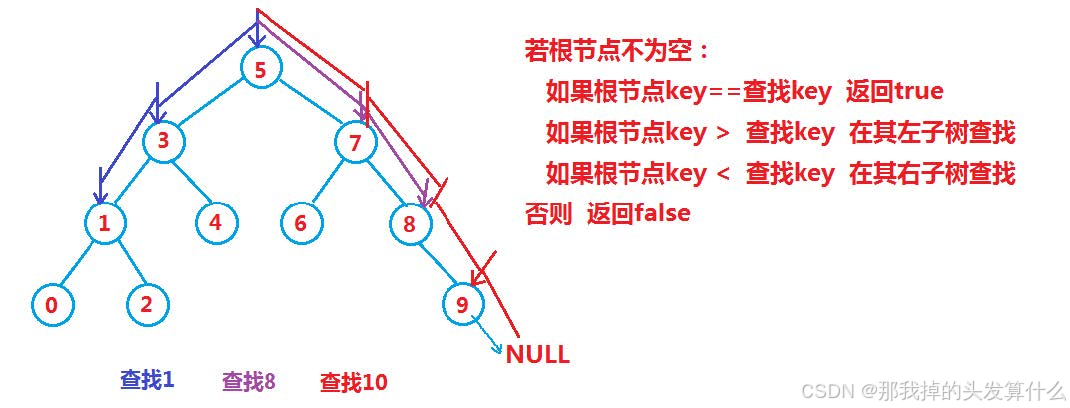
在这里插入图片描述
操作-插入
- 如果树为空树,即根 == null,直接插入
- 如果树不是空树,按照查找逻辑确定插入位置,插入新结点

在这里插入图片描述
操作-删除(难点)
设待删除结点为 cur, 待删除结点的双亲结点为 parent 一、cur.left == null
- cur 是 root,则 root = cur.right
- cur 不是 root,cur 是 parent.left,则 parent.left = cur.right
- cur 不是 root,cur 是 parent.right,则 parent.right = cur.right
二、 cur.right == null
- cur 是 root,则 root = cur.left
- cur 不是 root,cur 是 parent.left,则 parent.left = cur.left
- cur 不是 root,cur 是 parent.right,则 parent.right = cur.left
三、. cur.left != null && cur.right != null 需要使用替换法进行删除,即在它的右子树中寻找中序下的第一个结点(关键码最小),用它的值填补到被删除节点中,再来处理该结点的删除问题
实现
import com.sun.source.tree.Tree;

public class BinarySearchTree {
    static class TreeNode{
        public int val;
        public TreeNode left;
        public TreeNode right;

        public TreeNode(int val) {
            this.val = val;
        }
    }
    public TreeNode root;

    public void insert(int val){

        if(root == null){
            root = new TreeNode(val);
            return;
        }
        TreeNode node = new TreeNode(val);
        TreeNode cur = root;
        TreeNode parent = null;
        while(cur != null){
            if(node.val > cur.val){
                parent = cur;
                cur = cur.right;
            }else if(node.val < cur.val){
                parent = cur;
                cur = cur.right;
            }else{
                return;
            }

        }
        if(parent.val < node.val){
            parent.right = node;
        }else{
            parent.left = node;
        }
    }

    public TreeNode search(int val){
        TreeNode cur = root;
        while(cur != null){
            if(cur.val < val){
                cur = cur.right;
            } else if (cur.val > val) {
                cur = cur.left;
            }else{
                return cur;
            }
        }
        return null;
    }

    public void remove(int key){
        TreeNode cur = root;
        TreeNode parent = root;
        while(cur.val != key){
            if(cur.val < key){
                parent = cur;
                cur = cur.right;
            }else{
                parent = cur;
                cur = cur.left;
            }
        }
        if(cur.left == null){
            if(cur == root){
                root = root.right;
            }else if(cur.val < parent.val){
                parent.left = cur.right;
            }else{
                parent.right = cur.right;
            }
        } else if (cur.right == null) {
            if(cur == root){
                root = root.left;
            } else if (cur.val < parent.val) {
                parent.left = cur.left;
            }else{
                parent.right = cur.left;
            }
        }else{
            removeCur(cur,parent);
        }
    }

    private void removeCur(TreeNode target, TreeNode parent) {
        TreeNode tp = target;
        parent = target;
        target = target.right;

        while(target.left!= null){
            parent = target;
            target = target.left;
        }
        tp.val = target.val;
        if(parent.left == target){
            parent.left = target.right;
        }else{
            parent.right = target.right;
        }
    }

}
这里我的删除采用的是找到右子树最小值替换。
性能分析
插入和删除操作都必须先查找,查找效率代表了二叉搜索树中各个操作的性能。 对有n个结点的二叉搜索树,若每个元素查找的概率相等,则二叉搜索树平均查找长度是结点在二叉搜索树的深度的函数,即结点越深,则比较次数越多。 但对于同一个关键码集合,如果各关键码插入的次序不同,可能得到不同结构的二叉搜索树:

在这里插入图片描述
最优情况下,二叉搜索树为完全二叉树,其平均比较次数为:logN 最差情况下,二叉搜索树退化为单支树,其平均比较次数为:N/2 问题:如果退化成单支树,二叉搜索树的性能就失去了。那能否进行改进,不论按照什么次序插入关键码,都可以是二叉搜索树的性能最佳?
搜索
概念及场景
Map和set是一种专门用来进行搜索的容器或者数据结构,其搜索的效率与其具体的实例化子类有关。以前常见的搜索方式有:
- 直接遍历,时间复杂度为O(N),元素如果比较多效率会非常慢
- 二分查找,时间复杂度为 ,但搜索前必须要求序列是有序的
上述排序比较适合静态类型的查找,即一般不会对区间进行插入和删除操作了,而现实中的查找比如:
- 根据姓名查询考试成绩
- 通讯录,即根据姓名查询联系方式
- 不重复集合,即需要先搜索关键字是否已经在集合中
可能在查找时进行一些插入和删除的操作,即动态查找,那上述两种方式就不太适合了,本节介绍的Map和Set是一种适合动态查找的集合容器。
模型
一般把搜索的数据称为关键字(Key),和关键字对应的称为值(Value),将其称之为Key-value的键值对,所以模型会有两种:
- 纯 key 模型,比如: 有一个英文词典,快速查找一个单词是否在词典中 快速查找某个名字在不在通讯录中
- Key-Value 模型,比如: 统计文件中每个单词出现的次数,统计结果是每个单词都有与其对应的次数:<单词,单词出现的次数> 梁山好汉的江湖绰号:每个好汉都有自己的江湖绰号 而Map中存储的就是key-value的键值对,Set中只存储了Key。
Map 的使用

在这里插入图片描述
关于Map的说明
Map是一个接口类,该类没有继承自Collection,该类中存储的是<K,V>结构的键值对,并且K一定是唯一的,不能重复。
关于Map.Entry<K, V>的说明
Map.Entry<K, V> 是Map内部实现的用来存放<key, value>键值对映射关系的内部类(接口类),该内部类中主要提供了<key, value>的获取,value的设置以及Key的比较方式。 所以后面的TreeMap实现了Map接口的同时也需要实现这个内部类。
K getKey() : 返回 entry 中的 key
V getValue() : 返回 entry 中的 value
V setValue(V value) : 将键值对中的value替换为指定value
Map 的常用方法说明

在这里插入图片描述
注意:
- Map是一个接口,不能直接实例化对象,如果要实例化对象只能实例化其实现类TreeMap或者HashMap
- Map中存放键值对的Key是唯一的,value是可以重复的
- 在TreeMap中插入键值对时,key不能为空,否则就会抛NullPointerException异常,value可以为空。但是HashMap的key和value都可以为空。
- Map中的Key可以全部分离出来,存储到Set中来进行访问(因为Key不能重复)。
- Map中的value可以全部分离出来,存储在Collection的任何一个子集合中(value可能有重复)。
- Map中键值对的Key不能直接修改,value可以修改,如果要修改key,只能先将该key删除掉,然后再来进行重新插入。
- TreeMap和HashMap的区别【HashMap在课件最后会讲到】
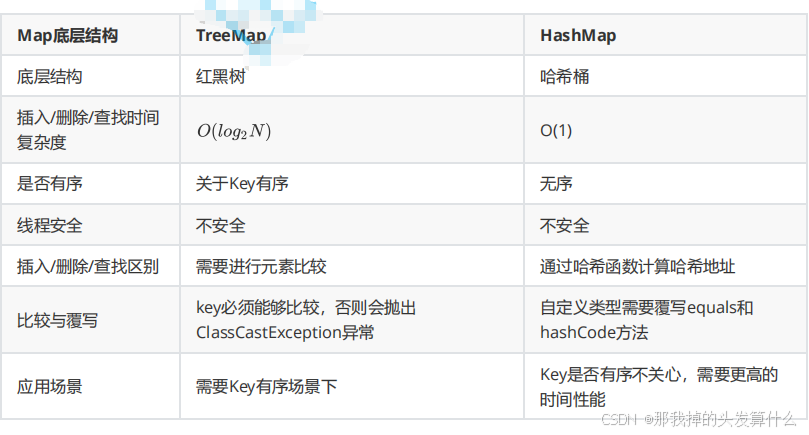
在这里插入图片描述
TreeMap的使用案例
public static void main(String[] args) {
        Map<String,Integer> map = new TreeMap<>();
        map.put("hello",5);
        map.put("world",7);
        System.out.println(map.get("hello"));
        System.out.println(map.get("a"));
        System.out.println(map.getOrDefault("a",8));
        //int a = map.get("a");
        Integer A = map.get("a");
        System.out.println(A);

        Set<String> set = map.keySet();
        System.out.println(set);

        for(Map.Entry<String,Integer> s: map.entrySet()){
            System.out.println("key: "+s.getKey() +" val: "+s.getValue());
        }

    }
在这里插入图片描述
Set 的说明
Set与Map主要的不同有两点:Set是继承自Collection的接口类,Set中只存储了Key。
常见方法说明
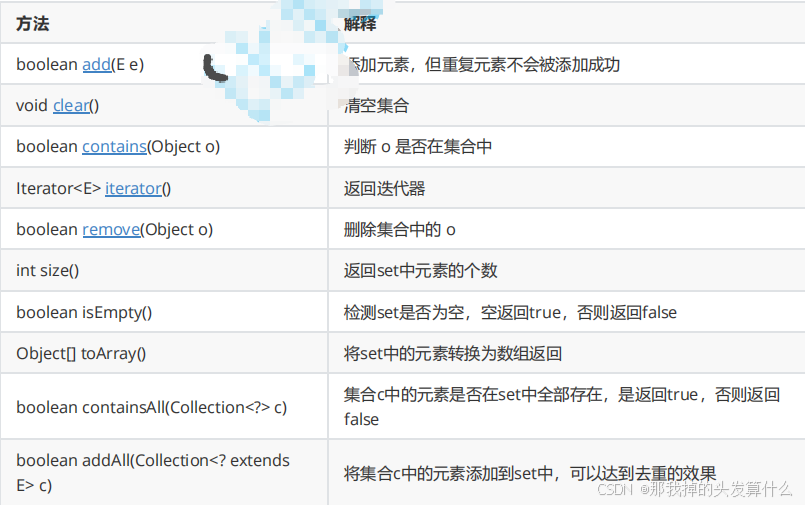
在这里插入图片描述
注意:
- Set是继承自Collection的一个接口类
- Set中只存储了key,并且要求key一定要唯一
- TreeSet的底层是使用Map来实现的,其使用key与Object的一个默认对象作为键值对插入到Map中的
- Set最大的功能就是对集合中的元素进行去重
- 实现Set接口的常用类有TreeSet和HashSet,还有一个LinkedHashSet,LinkedHashSet是在HashSet的基础上维护了一个双向链表来记录元素的插入次序。
- Set中的Key不能修改,如果要修改,先将原来的删除掉,然后再重新插入
- TreeSet中不能插入null的key,HashSet可以。
- TreeSet和HashSet的区别【HashSet在课件最后会讲到】
TreeSet的使用案例
与TreeMap类似的就不重新演示了
public static void main(String[] args) {
        Set<Integer> treeSet = new TreeSet<>();
        treeSet.add(1);
        treeSet.add(9);
        treeSet.add(5);
        treeSet.add(3);

        System.out.println(Arrays.toString(treeSet.toArray()));
        Iterator<Integer> it = treeSet.iterator();
        while(it.hasNext()){
            System.out.print(it.next() + " ");
        }
        System.out.println();
    }
本文参与 腾讯云自媒体同步曝光计划,分享自作者个人站点/博客。
原始发表:2025-10-13,如有侵权请联系 cloudcommunity@tencent.com 删除
目录
腾讯云开发者

Copyright © 2013 - 2026 Tencent Cloud. All Rights Reserved. 腾讯云 版权所有
深圳市腾讯计算机系统有限公司 ICP备案/许可证号:粤B2-20090059  粤公网安备44030502008569号
腾讯云计算(北京)有限责任公司 京ICP证150476号 | 京ICP备11018762号