Rust专项——控制流:if表达式详解

Rust专项——控制流:if表达式详解

红目香薰
发布于 2025-12-16 16:06:18
发布于 2025-12-16 16:06:18
引言
控制流是编程的核心,它决定了程序如何根据条件执行不同的代码分支。在Rust中,控制流的主要工具包括:
- if表达式:条件分支
- 循环:重复执行代码
- match表达式:模式匹配(下一章详细介绍)
Rust的一个独特之处在于:if是一个表达式而不是语句,这意味着它可以返回值。这种设计让Rust代码更加简洁和函数式。
本文将深入探讨Rust的if表达式,包括:
- if表达式的基本语法
- if-else链和多分支条件
- if表达式的返回值特性
- 在let语句中使用if表达式
- 嵌套if表达式
- 与其他语言的对比
- 最佳实践和常见错误
通过本文的学习,你将能够:
- 熟练使用if表达式进行条件判断
- 理解Rust if表达式的表达式特性
- 掌握if表达式返回值的用法
- 写出更符合Rust风格的代码
1. if表达式基础
1.1 基本的if表达式
Rust中的if表达式语法与其他语言类似,但更加强调其作为表达式的特性:
fn main() {
    let number = 5;

    if number < 10 {
        println!("数字小于10");
    }

    println!("继续执行");
}关键特点:
- 条件不需要括号(但括号也不会报错)
- 条件必须是
bool类型(不像C/C++可以用0/非0) - 代码块使用花括号
{}
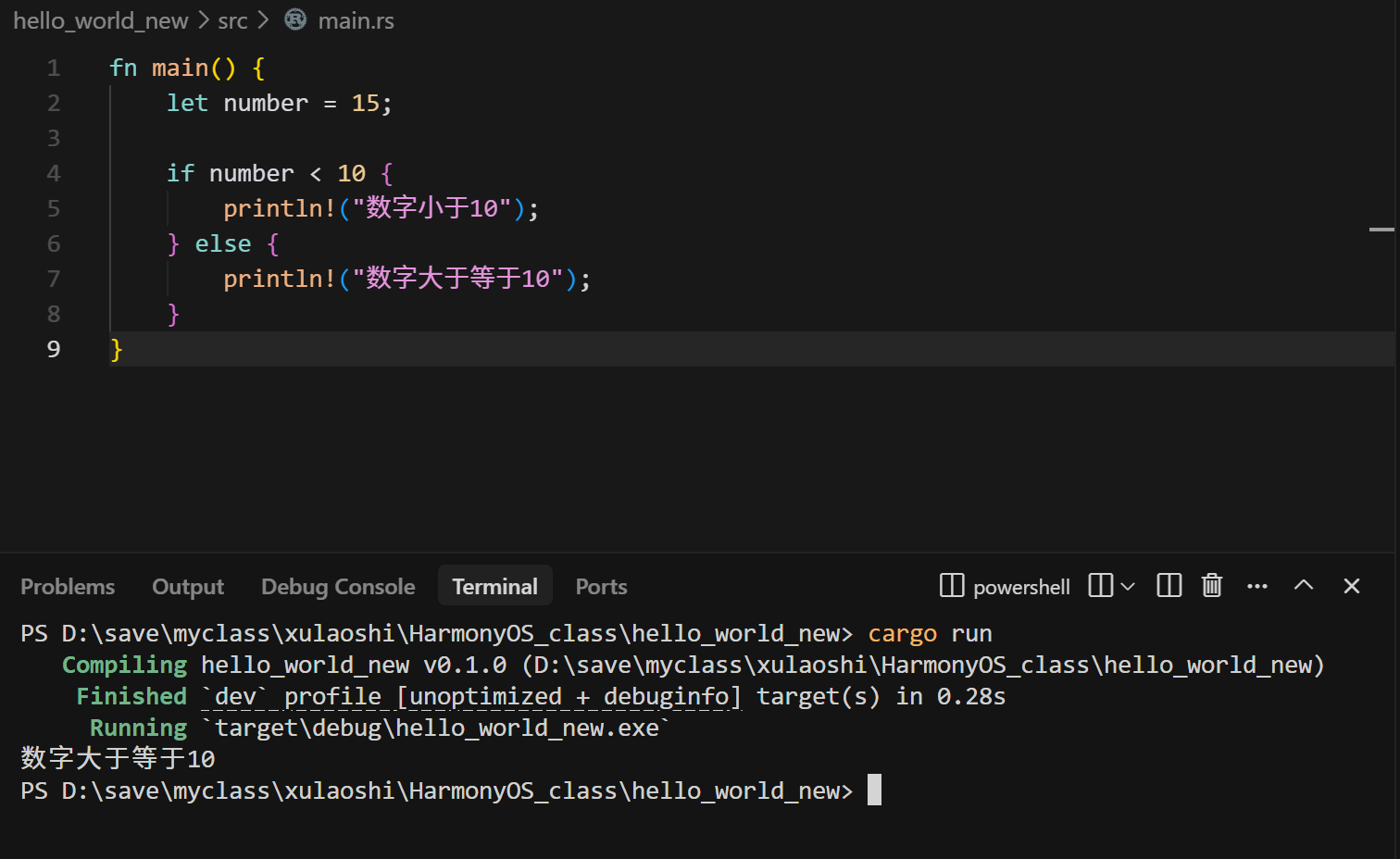
1.2 if-else表达式
fn main() {
    let number = 15;

    if number < 10 {
        println!("数字小于10");
    } else {
        println!("数字大于等于10");
    }
}
在这里插入图片描述
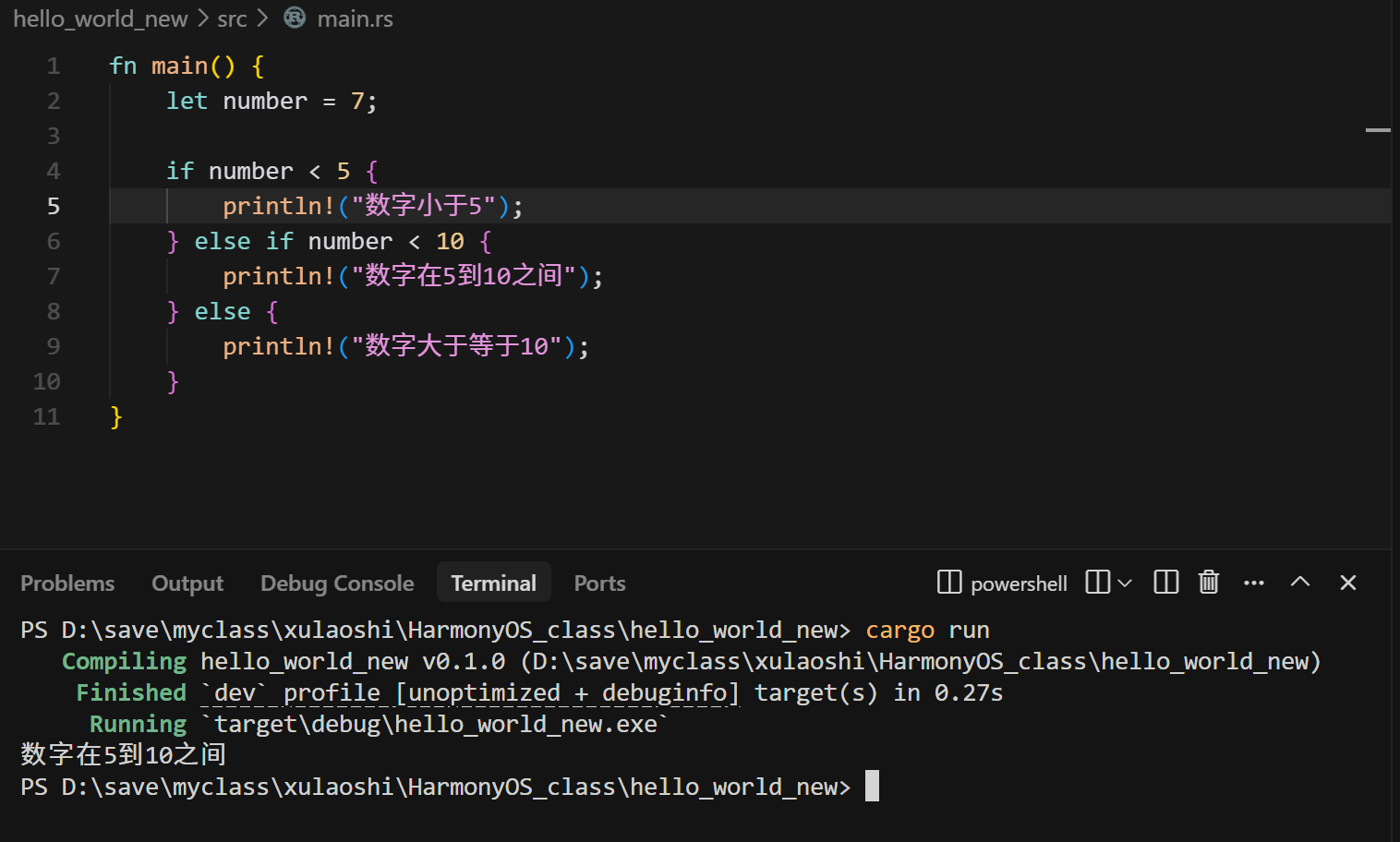
1.3 if-else if-else链
fn main() {
    let number = 7;

    if number < 5 {
        println!("数字小于5");
    } else if number < 10 {
        println!("数字在5到10之间");
    } else {
        println!("数字大于等于10");
    }
}
在这里插入图片描述
2. if作为表达式:返回值特性
2.1 if表达式返回值的概念
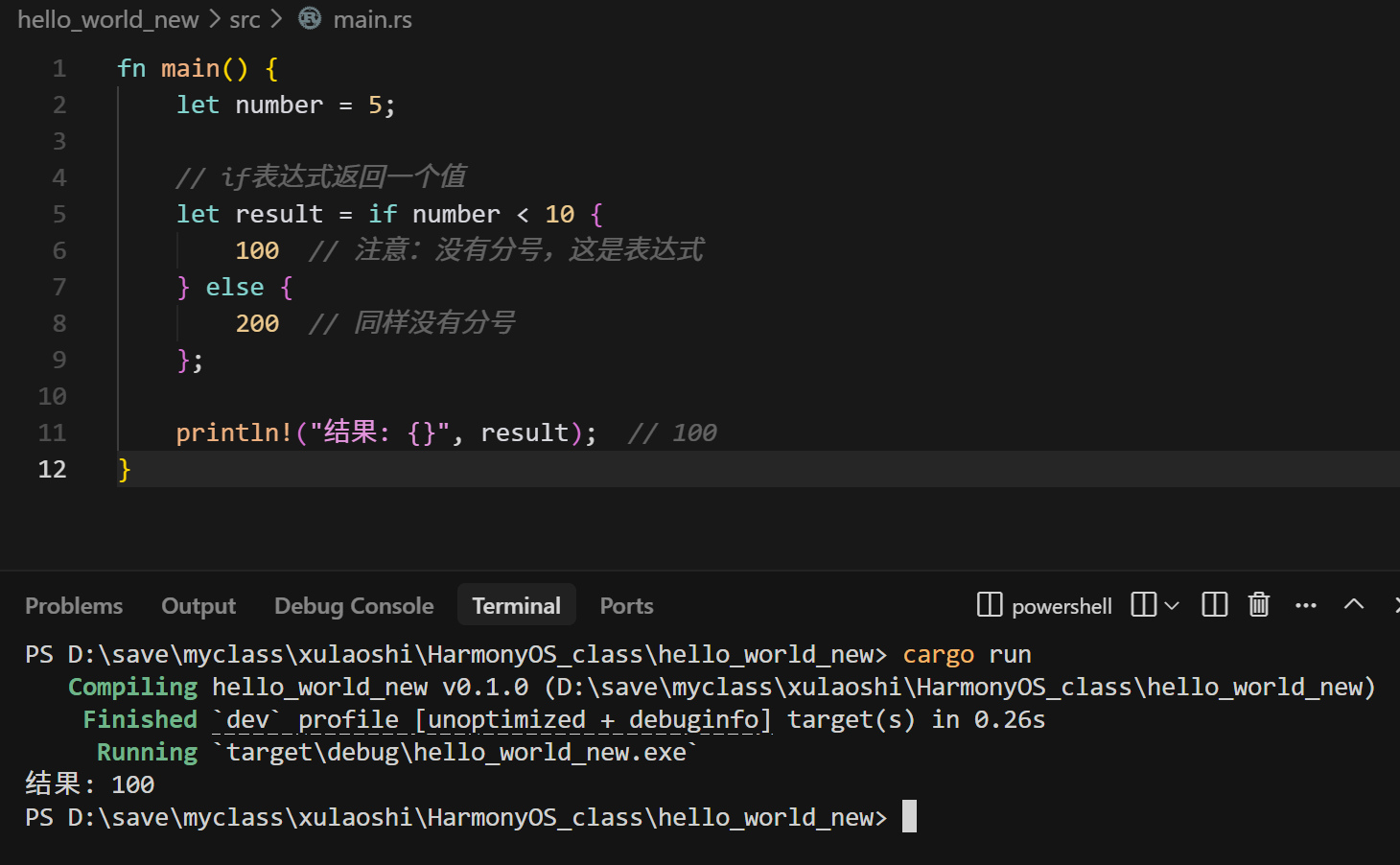
这是Rust if最独特的特性:if表达式可以返回值!
fn main() {
    let number = 5;

    // if表达式返回一个值
    let result = if number < 10 {
        100  // 注意:没有分号,这是表达式
    } else {
        200  // 同样没有分号
    };

    println!("结果: {}", result);  // 100
}
在这里插入图片描述
关键规则:
- if和else分支返回值的类型必须相同
- 每个分支的末尾不能有分号(有分号就变成语句了)
- 如果某个分支不需要返回值,可以返回单元类型
()
2.2 在let语句中使用if表达式
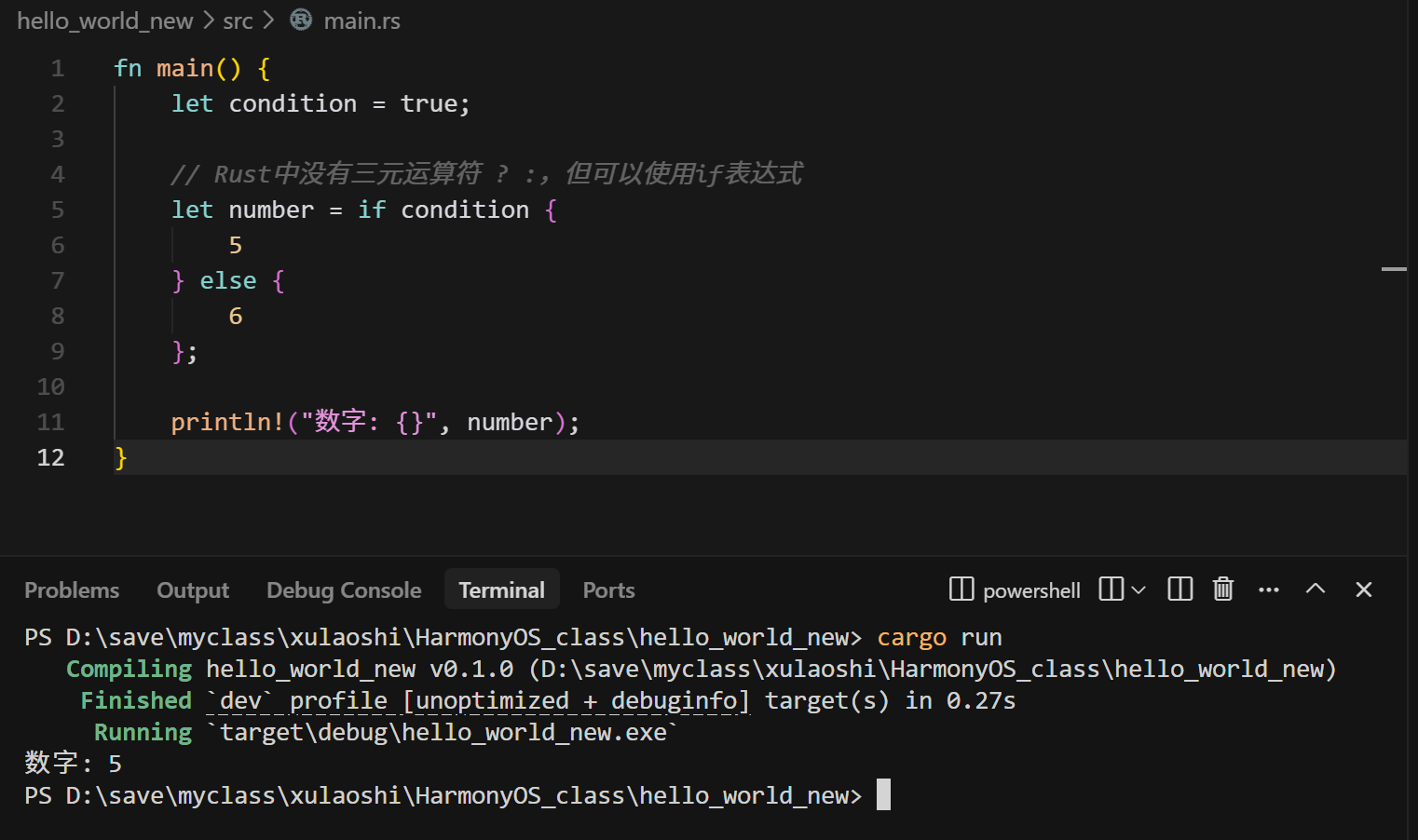
这是Rust的常见模式,可以替代其他语言的三元运算符:
fn main() {
    let condition = true;

    // Rust中没有三元运算符 ? :,但可以使用if表达式
    let number = if condition {
        5
    } else {
        6
    };

    println!("数字: {}", number);
}
在这里插入图片描述
与C/C++/Java的对比:
// C/C++/Java中的三元运算符
// int number = condition ? 5 : 6;

// Rust中的等价写法
let number = if condition { 5 } else { 6 };
2.3 多个分支的返回值
fn main() {
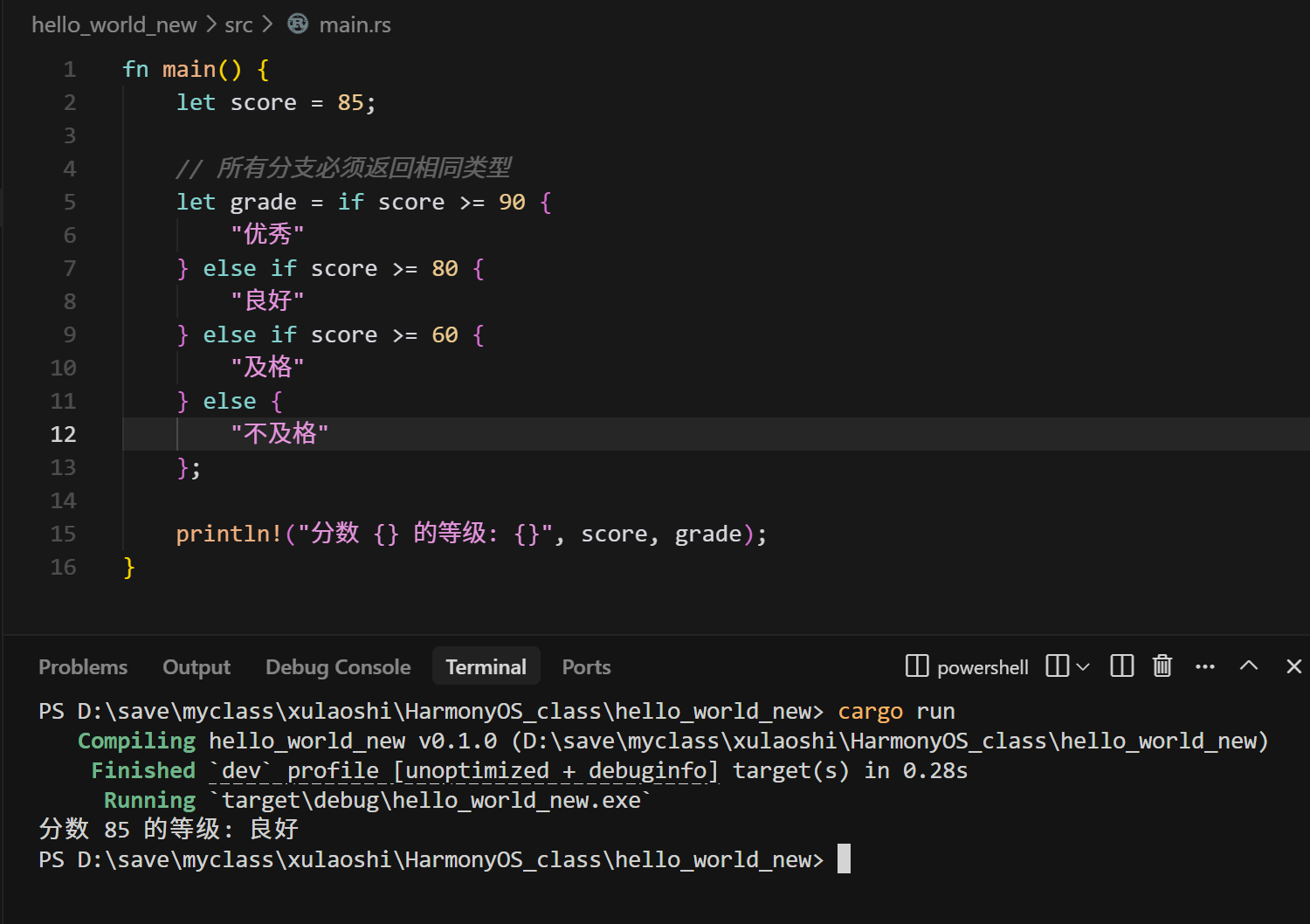
    let score = 85;

    // 所有分支必须返回相同类型
    let grade = if score >= 90 {
        "优秀"
    } else if score >= 80 {
        "良好"
    } else if score >= 60 {
        "及格"
    } else {
        "不及格"
    };

    println!("分数 {} 的等级: {}", score, grade);
}
在这里插入图片描述
错误示例:
fn main() {
    let condition = true;

    // 错误!类型不匹配
    // let result = if condition {
    //     5        // i32类型
    // } else {
    //     "six"    // &str类型 - 编译错误!
    // };

    // 正确:返回相同类型
    let result = if condition {
        5
    } else {
        6
    };
}
3. 条件必须是bool类型
3.1 Rust的类型安全
在Rust中,if的条件必须是 bool 类型,不能使用数字或其他类型:
fn main() {
    let number = 5;

    // 错误!数字不能直接用作条件
    // if number {
    //     println!("非零");
    // }

    // 正确:使用比较运算符
    if number != 0 {
        println!("非零");
    }

    // 或者显式转换为bool
    if number > 0 {
        println!("正数");
    }
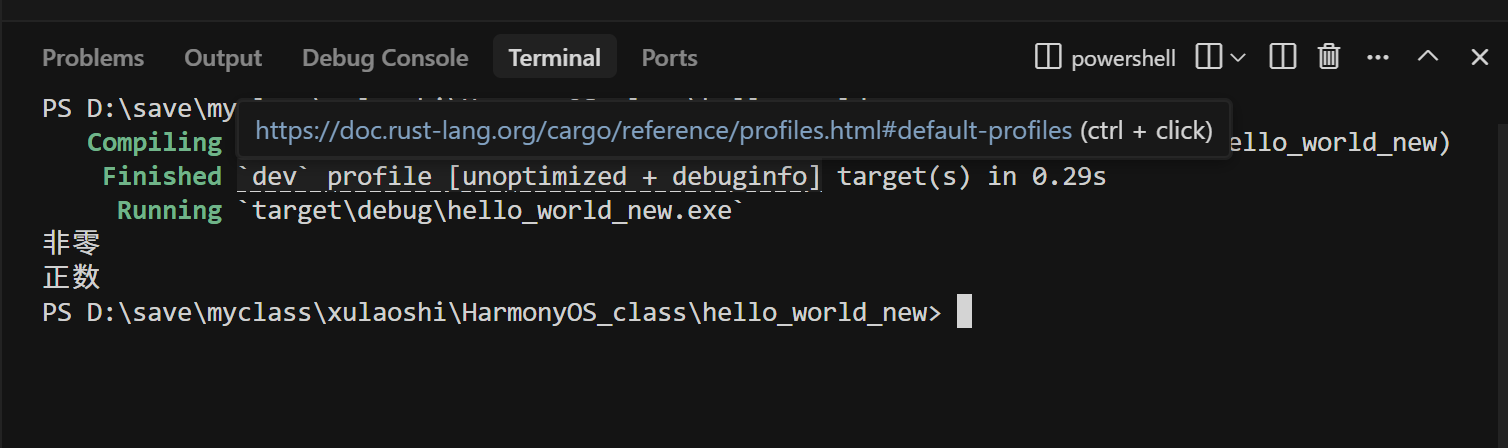
}
在这里插入图片描述
与其他语言的对比:
语言 | 条件类型 | 示例 |
|---|---|---|
C/C++ | 任何类型 | if (5) ✅ |
Python | 任何类型(真值测试) | if 5: ✅ |
JavaScript | 任何类型(真值测试) | if (5) ✅ |
Rust | 只能是bool | if 5 ❌,if true ✅ |
3.2 布尔值的创建
fn main() {
    let number = 5;

    // 使用比较运算符创建bool值
    let is_positive = number > 0;
    let is_even = number % 2 == 0;

    if is_positive {
        println!("正数");
    }

    if is_even {
        println!("偶数");
    } else {
        println!("奇数");
    }

    // 直接使用表达式
    if number > 0 && number < 10 {
        println!("在0到10之间");
    }
}
4. 复杂条件表达式
4.1 逻辑运算符组合
fn main() {
    let age = 25;
    let has_license = true;
    let has_car = false;

    // 复杂的逻辑组合
    if age >= 18 && has_license {
        println!("可以开车");
    }

    if (age >= 18 && has_license) || has_car {
        println!("可以出行");
    }

    // 多个条件
    if age >= 18 && age <= 65 && has_license {
        println!("符合开车条件");
    }

    if !has_car && (age < 18 || !has_license) {
        println!("不能单独出行");
    }
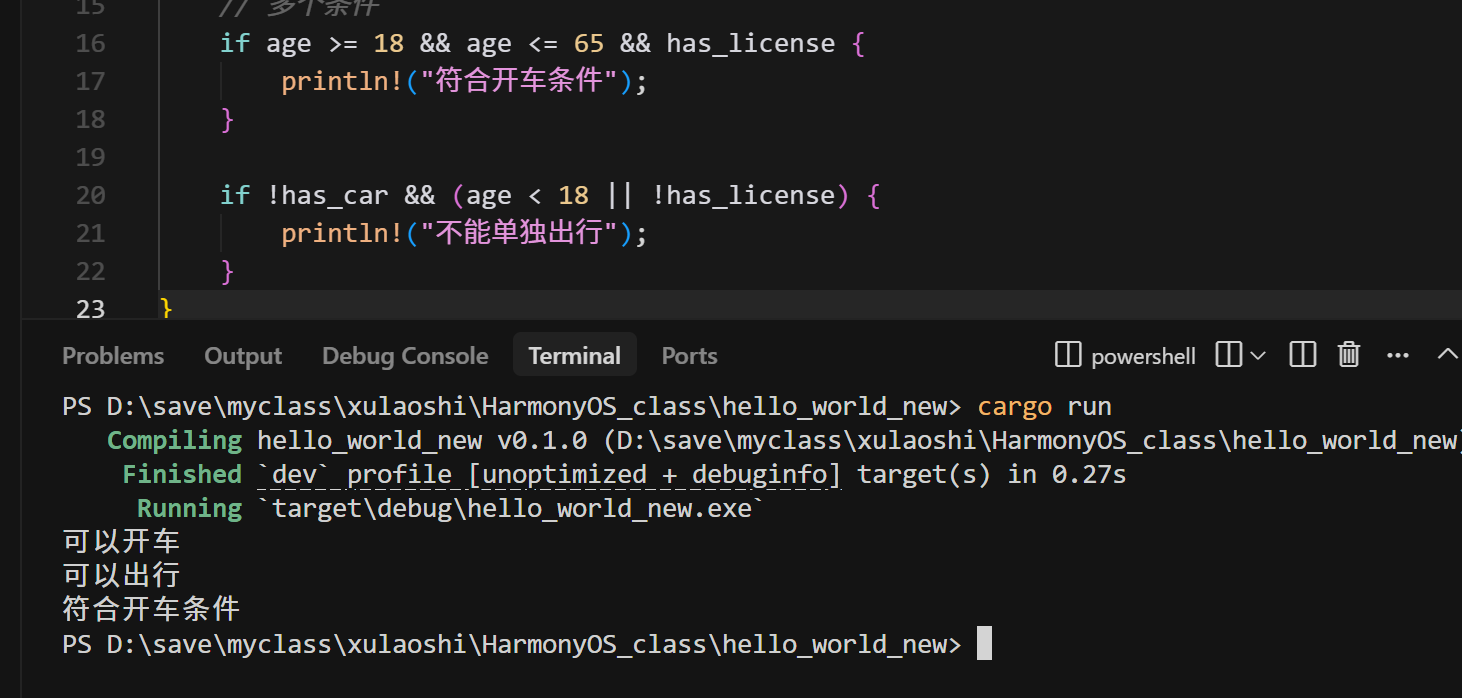
}
在这里插入图片描述
4.2 使用函数作为条件
fn is_even(n: i32) -> bool {
    n % 2 == 0
}

fn is_positive(n: i32) -> bool {
    n > 0
}

fn main() {
    let number = 8;

    if is_even(number) && is_positive(number) {
        println!("{} 是正偶数", number);
    }

    // 链式条件
    if is_even(number) {
        if is_positive(number) {
            println!("{} 是正偶数", number);
        }
    }
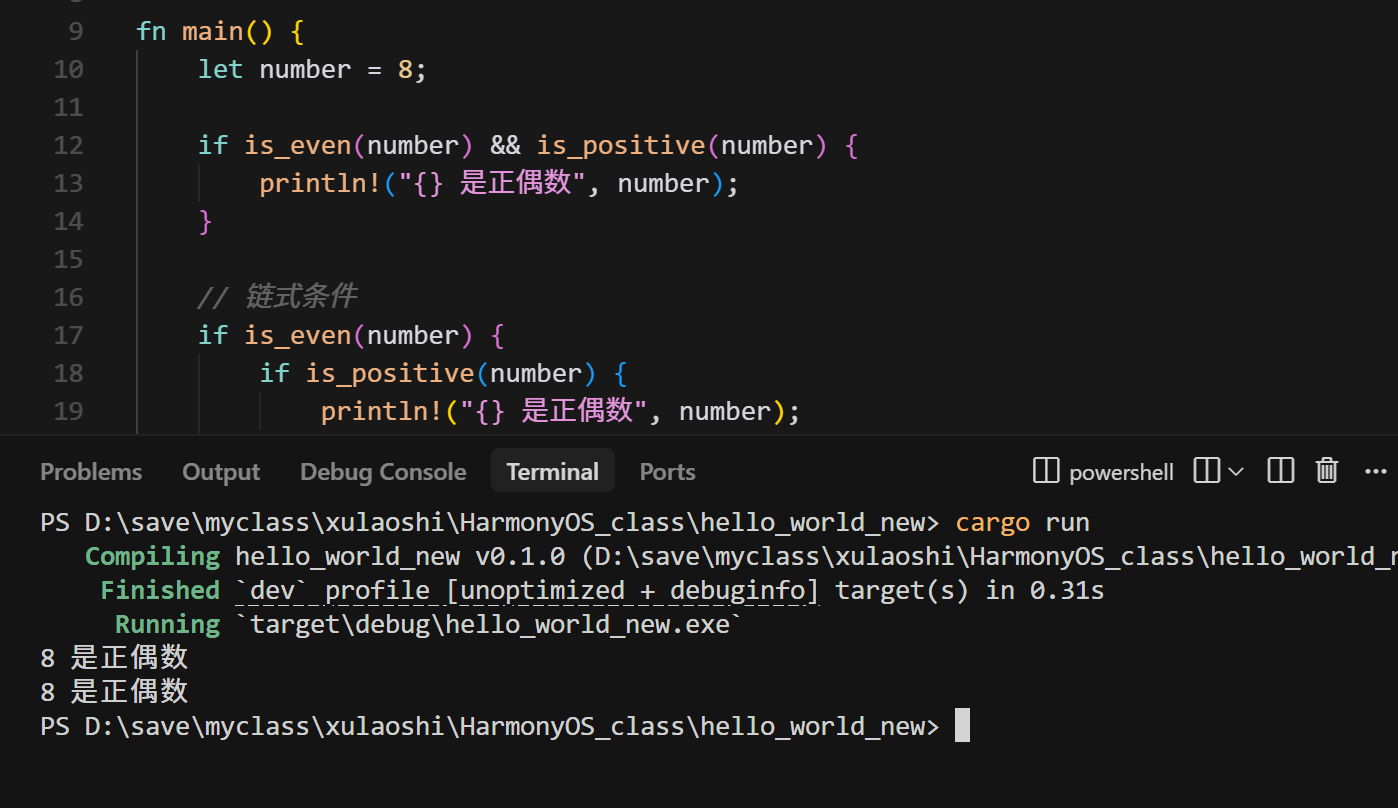
}
在这里插入图片描述
5. 嵌套if表达式
5.1 基本嵌套
fn main() {
    let x = 5;
    let y = 10;

    if x > 0 {
        if y > 0 {
            println!("x 和 y 都是正数");
        } else {
            println!("x 是正数,但 y 不是");
        }
    } else {
        println!("x 不是正数");
    }
}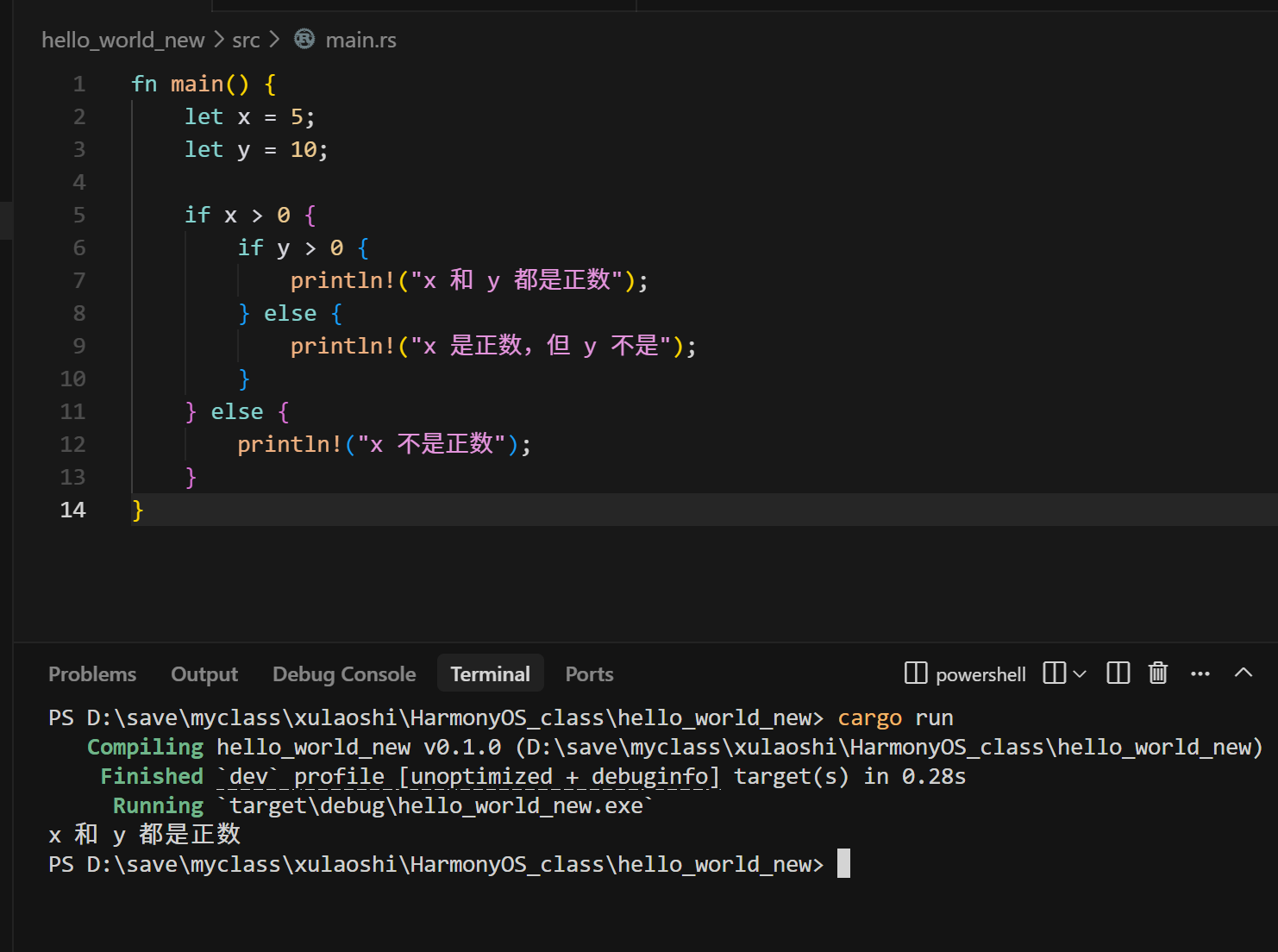
在这里插入图片描述
5.2 嵌套if作为表达式
fn main() {
    let x = 5;
    let y = 10;

    // 嵌套if表达式也可以返回值
    let result = if x > 0 {
        if y > 0 {
            "都是正数"
        } else {
            "x是正数,y不是"
        }
    } else {
        "x不是正数"
    };

    println!("结果: {}", result);
}
5.3 简化嵌套:使用else if
fn main() {
    let x = 5;
    let y = 10;

    // 方式1:嵌套(可能较复杂)
    let result1 = if x > 0 {
        if y > 0 {
            "都是正数"
        } else {
            "x是正数,y不是"
        }
    } else {
        "x不是正数"
    };

    // 方式2:使用else if(更清晰)
    let result2 = if x > 0 && y > 0 {
        "都是正数"
    } else if x > 0 {
        "x是正数,y不是"
    } else {
        "x不是正数"
    };

    println!("结果1: {}", result1);
    println!("结果2: {}", result2);
}
6. 实际应用示例
示例1:年龄判断系统
fn main() {
    let age = 25;

    // 使用if表达式返回值
    let category = if age < 13 {
        "儿童"
    } else if age < 18 {
        "青少年"
    } else if age < 65 {
        "成年人"
    } else {
        "老年人"
    };

    println!("年龄 {} 属于: {}", age, category);

    // 多个条件的判断
    let can_vote = age >= 18;
    let can_drive = age >= 16;
    let can_drink = age >= 21;

    println!("可以投票: {}", can_vote);
    println!("可以开车: {}", can_drive);
    println!("可以饮酒: {}", can_drink);
}
示例2:成绩等级系统
fn main() {
    fn get_grade(score: f64) -> &'static str {
        if score >= 90.0 {
            "A"
        } else if score >= 80.0 {
            "B"
        } else if score >= 70.0 {
            "C"
        } else if score >= 60.0 {
            "D"
        } else {
            "F"
        }
    }

    let scores = vec![95.0, 85.0, 75.0, 65.0, 55.0];

    for score in scores {
        let grade = get_grade(score);
        println!("分数 {:.1} -> 等级 {}", score, grade);
    }
}
示例3:配置选择器
fn main() {
    let environment = "production";  // 或 "development", "testing"

    // 根据环境选择配置
    let config = if environment == "production" {
        ("prod.example.com", 443, true)
    } else if environment == "testing" {
        ("test.example.com", 8080, false)
    } else {
        ("localhost", 3000, false)
    };

    let (host, port, use_ssl) = config;
    println!("环境: {}", environment);
    println!("主机: {}", host);
    println!("端口: {}", port);
    println!("使用SSL: {}", use_ssl);
}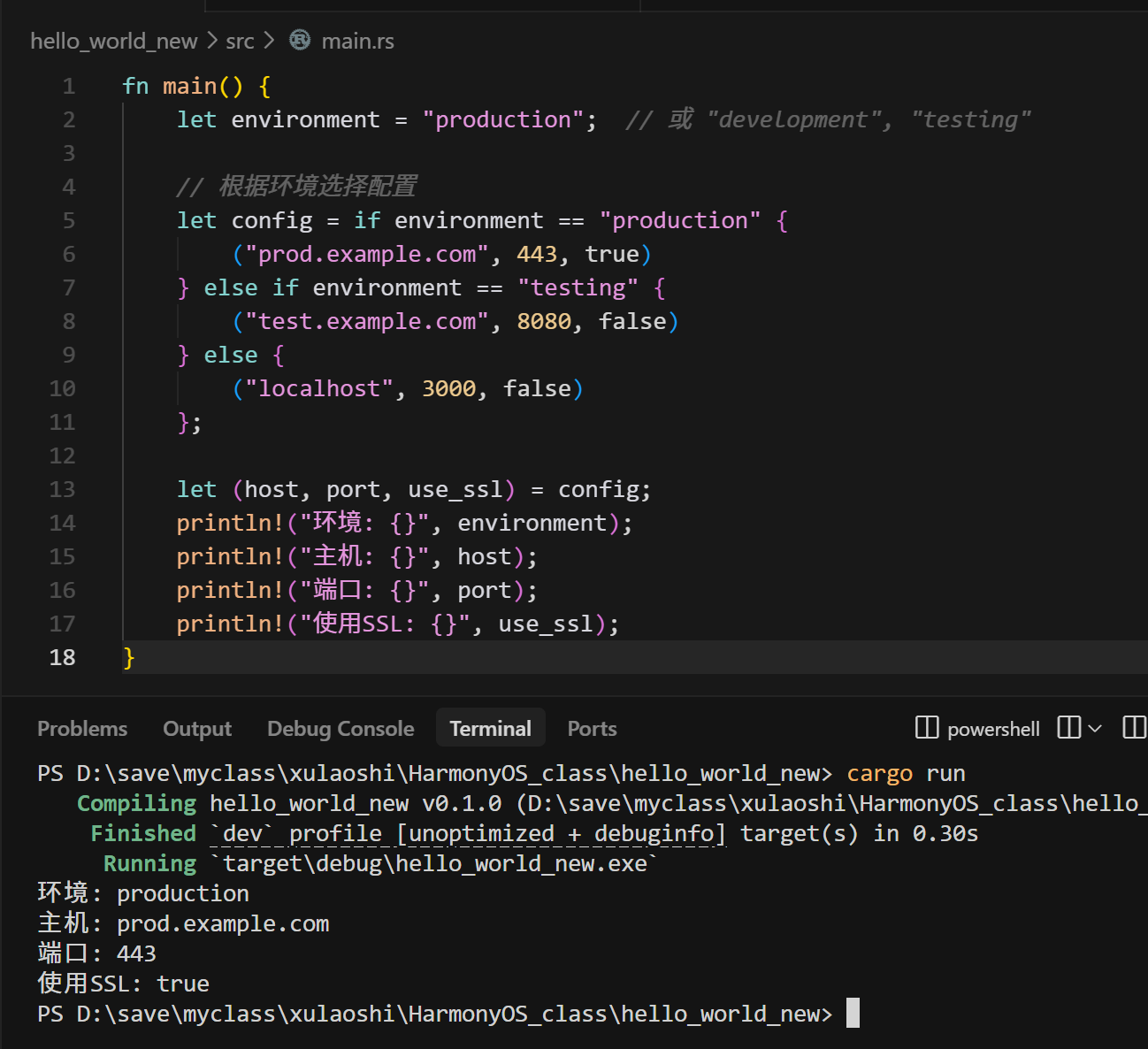
在这里插入图片描述
示例4:最大值计算器
fn main() {
    fn max(a: i32, b: i32) -> i32 {
        if a > b {
            a
        } else {
            b
        }
    }

    let x = 10;
    let y = 20;
    let z = 15;

    // 嵌套if表达式找最大值
    let maximum = max(max(x, y), z);
    println!("{}, {}, {} 中的最大值: {}", x, y, z, maximum);

    // 使用if表达式链
    let max_val = if x > y {
        if x > z { x } else { z }
    } else {
        if y > z { y } else { z }
    };

    println!("使用if表达式链的最大值: {}", max_val);
}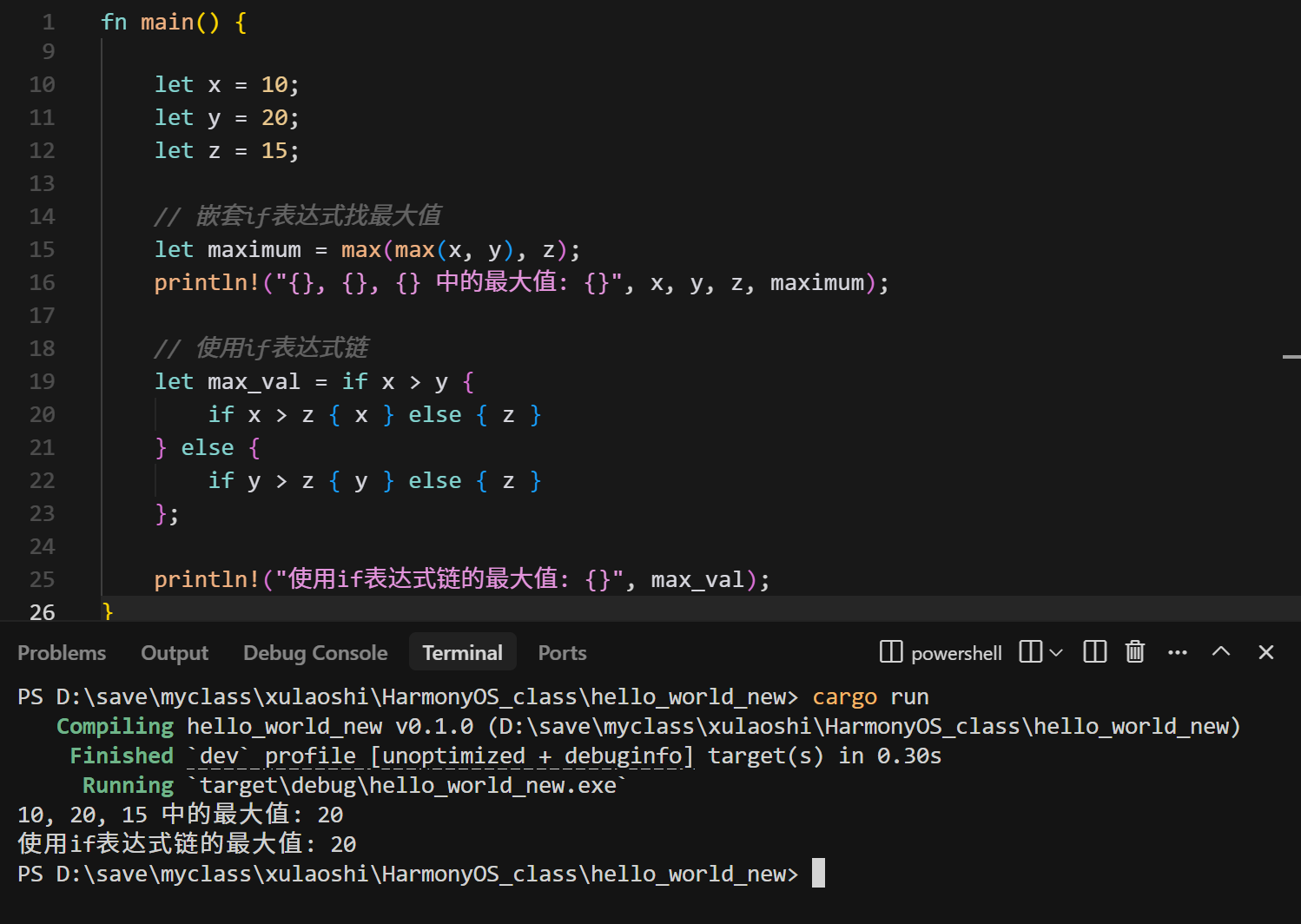
在这里插入图片描述
7. 常见错误与解决方案
错误1:类型不匹配
fn main() {
    let condition = true;

    // 错误!if和else返回类型不同
    // let result = if condition {
    //     5           // i32
    // } else {
    //     "six"       // &str - 类型不匹配!
    // };

    // 解决方案1:返回相同类型
    let result1 = if condition {
        5
    } else {
        6
    };

    // 解决方案2:返回Option
    let result2 = if condition {
        Some(5)
    } else {
        None
    };

    println!("result1: {}", result1);
    println!("result2: {:?}", result2);
}
错误2:分号问题
fn main() {
    let condition = true;

    // 错误!加了分号,变成了语句
    // let result = if condition {
    //     5;     // 这是语句,返回 ()
    // } else {
    //     6;     // 这是语句,返回 ()
    // };

    // 正确:表达式不能有分号
    let result = if condition {
        5  // 没有分号
    } else {
        6  // 没有分号
    };

    println!("结果: {}", result);
}
错误3:非bool条件
fn main() {
    let number = 5;

    // 错误!Rust不支持非bool条件
    // if number {
    //     println!("非零");
    // }

    // 解决方案:使用比较或转换
    if number != 0 {
        println!("非零");
    }

    // 或者
    if number > 0 {
        println!("正数");
    }
}
错误4:缺少else分支
当if作为表达式使用时,如果某个分支可能不返回值,会导致问题:
fn main() {
    let condition = true;

    // 如果condition为false,这个if没有返回值
    // let result = if condition {
    //     5
    // };  // 错误!if表达式必须有else分支

    // 解决方案1:添加else分支
    let result1 = if condition {
        5
    } else {
        0
    };

    // 解决方案2:使用Option
    let result2 = if condition {
        Some(5)
    } else {
        None
    };

    println!("result1: {}", result1);
    println!("result2: {:?}", result2);
}
8. 最佳实践
8.1 什么时候使用if表达式返回值
// ✅ 推荐:简单的值选择
let max = if a > b { a } else { b };

// ✅ 推荐:简单的配置
let port = if is_production { 443 } else { 3000 };

// ❌ 不推荐:过于复杂的逻辑
let result = if condition1 {
    if condition2 {
        if condition3 {
            complex_calculation1()
        } else {
            complex_calculation2()
        }
    } else {
        complex_calculation3()
    }
} else {
    complex_calculation4()
};

// ✅ 推荐:复杂逻辑使用match或函数
let result = match (condition1, condition2, condition3) {
    (true, true, true) => complex_calculation1(),
    (true, true, false) => complex_calculation2(),
    (true, false, _) => complex_calculation3(),
    (false, _, _) => complex_calculation4(),
};
8.2 代码可读性建议
// ✅ 好的做法:清晰的逻辑
let status = if score >= 90 {
    "优秀"
} else if score >= 80 {
    "良好"
} else {
    "需努力"
};

// ✅ 好的做法:使用函数
fn get_status(score: i32) -> &'static str {
    if score >= 90 { "优秀" }
    else if score >= 80 { "良好" }
    else { "需努力" }
}

// ❌ 避免:过于复杂的嵌套
// 如果嵌套超过2层,考虑重构
8.3 与match表达式的对比
fn main() {
    let number = 5;

    // 使用if-else if链
    let result1 = if number < 0 {
        "负数"
    } else if number == 0 {
        "零"
    } else {
        "正数"
    };

    // 使用match表达式(可能更清晰)
    let result2 = match number.cmp(&0) {
        std::cmp::Ordering::Less => "负数",
        std::cmp::Ordering::Equal => "零",
        std::cmp::Ordering::Greater => "正数",
    };

    println!("if表达式: {}", result1);
    println!("match表达式: {}", result2);
}选择指南:
- if表达式:适合简单的2-3个条件分支
- match表达式:适合多个分支或模式匹配
9. if表达式的高级用法
9.1 与Option类型配合
fn main() {
    fn divide(numerator: f64, denominator: f64) -> Option<f64> {
        if denominator != 0.0 {
            Some(numerator / denominator)
        } else {
            None
        }
    }

    match divide(10.0, 2.0) {
        Some(result) => println!("结果: {}", result),
        None => println!("除零错误"),
    }
}
9.2 与Result类型配合
fn main() {
    fn safe_parse(s: &str) -> Result<i32, &'static str> {
        if s.is_empty() {
            Err("字符串为空")
        } else if let Ok(num) = s.parse::<i32>() {
            Ok(num)
        } else {
            Err("不是有效数字")
        }
    }

    match safe_parse("42") {
        Ok(num) => println!("解析成功: {}", num),
        Err(e) => println!("解析失败: {}", e),
    }
}
9.3 条件赋值与初始化
fn main() {
    // 根据条件初始化变量
    let config_value = if std::env::var("DEBUG").is_ok() {
        "debug"
    } else {
        "release"
    };

    println!("配置值: {}", config_value);

    // 在复杂初始化中使用
    let mut counter = if config_value == "debug" {
        0  // 调试模式从0开始
    } else {
        100  // 生产模式从100开始
    };

    println!("计数器初始值: {}", counter);
}
10. 扩展练习
练习1:温度判断器
编写一个函数,根据摄氏度值返回温度描述(极冷、冷、适中、热、极热)。
练习2:闰年判断器
使用if表达式判断一个年份是否为闰年(能被4整除但不能被100整除,或能被400整除)。
练习3:三角形类型判断
编写函数判断三条边能否构成三角形,以及三角形的类型(等边、等腰、普通)。
练习4:折扣计算器
根据购买金额计算折扣后的价格:超过100元打9折,超过500元打8折,超过1000元打7折。
练习5:BMI计算器
根据身高和体重计算BMI,并使用if表达式判断体重状况(过轻、正常、过重、肥胖)。
11. 总结
核心要点回顾
- if是表达式:可以返回值,这是Rust的独特特性
- 类型必须匹配:if和else分支必须返回相同类型
- 没有分号:表达式末尾不能加分号
- bool类型:条件必须是bool类型,不能使用数字
- 代码风格:优先使用if表达式而不是三元运算符
关键特性
- ✅ 表达式特性:if可以返回值,替代三元运算符
- ✅ 类型安全:编译器保证分支类型一致
- ✅ 可读性强:没有括号的语法更简洁
- ✅ 功能强大:支持复杂嵌套和逻辑组合
与其他语言的对比
特性 | C/C++/Java | Python | Rust |
|---|---|---|---|
条件类型 | 任意 | 任意(真值测试) | 只能是bool |
返回值 | 语句 | 语句 | 表达式 |
三元运算符 | ? : | if-else表达式 | 使用if表达式 |
括号 | 必需 | 可选 | 不需要 |
下一步学习
掌握了if表达式后,下一步我们将学习:
- 循环:loop、while、for循环
- match表达式:强大的模式匹配工具
- 函数:函数定义和调用
本文参与 腾讯云自媒体同步曝光计划,分享自作者个人站点/博客。
原始发表:2025-12-16,如有侵权请联系 cloudcommunity@tencent.com 删除
评论
登录后参与评论
推荐阅读
目录
腾讯云开发者

Copyright © 2013 - 2026 Tencent Cloud. All Rights Reserved. 腾讯云 版权所有
深圳市腾讯计算机系统有限公司 ICP备案/许可证号:粤B2-20090059  粤公网安备44030502008569号
腾讯云计算(北京)有限责任公司 京ICP证150476号 | 京ICP备11018762号