FastAPI后台开发基础(15): 依赖注入
原创
FastAPI后台开发基础(15): 依赖注入
原创
CipherHUB.Cloud
修改于 2024-11-18 12:44:30
修改于 2024-11-18 12:44:30
基础
在 FastAPI 中,依赖项可以是任何可调用的对象,如函数、类方法等。这些依赖项可以接受参数,这些参数同样可以是其他依赖项,从而形成依赖关系链。FastAPI 会自动处理这些依赖关系,确保在调用主功能(如API路由处理函数)之前,所有依赖项都已正确解析和调用。
使用依赖注入的优势
代码重用:通过依赖注入,可以在多个API端点中重用相同的功能或数据访问逻辑。
解耦:依赖注入有助于将应用程序的不同部分解耦,使其更容易管理和扩展。
易于测试:依赖注入使得单元测试更加简单,因为你可以轻松地为特定的依赖提供模拟(mock)或替代实现。
灵活性和可扩展性:可以根据需要轻松添加或修改依赖项,而不会影响到使用这些依赖项的主功能。
示例
def check_item_id(item_id: int, x: int) -> int:
    """
    check_item_id 函数有两个参数:item_id 和 x

    其中 item_id 是一个路径参数,因为它直接与路径操作 @app.get('/items/{item_id}') 中的 {item_id} 对应

    而 x 没有在路径中定义,也没有提供默认值,因此 FastAPI 会将其视为查询参数
    """
    print('check item id')
    if item_id > 100:
        return item_id * x
    else:
        raise HTTPException(status_code = 404, detail = "User not found")


@app.get('/items/{item_id}')
async def read_item(item_id: int = Depends(check_item_id)):
    print('read item')
    return {'item_id': item_id}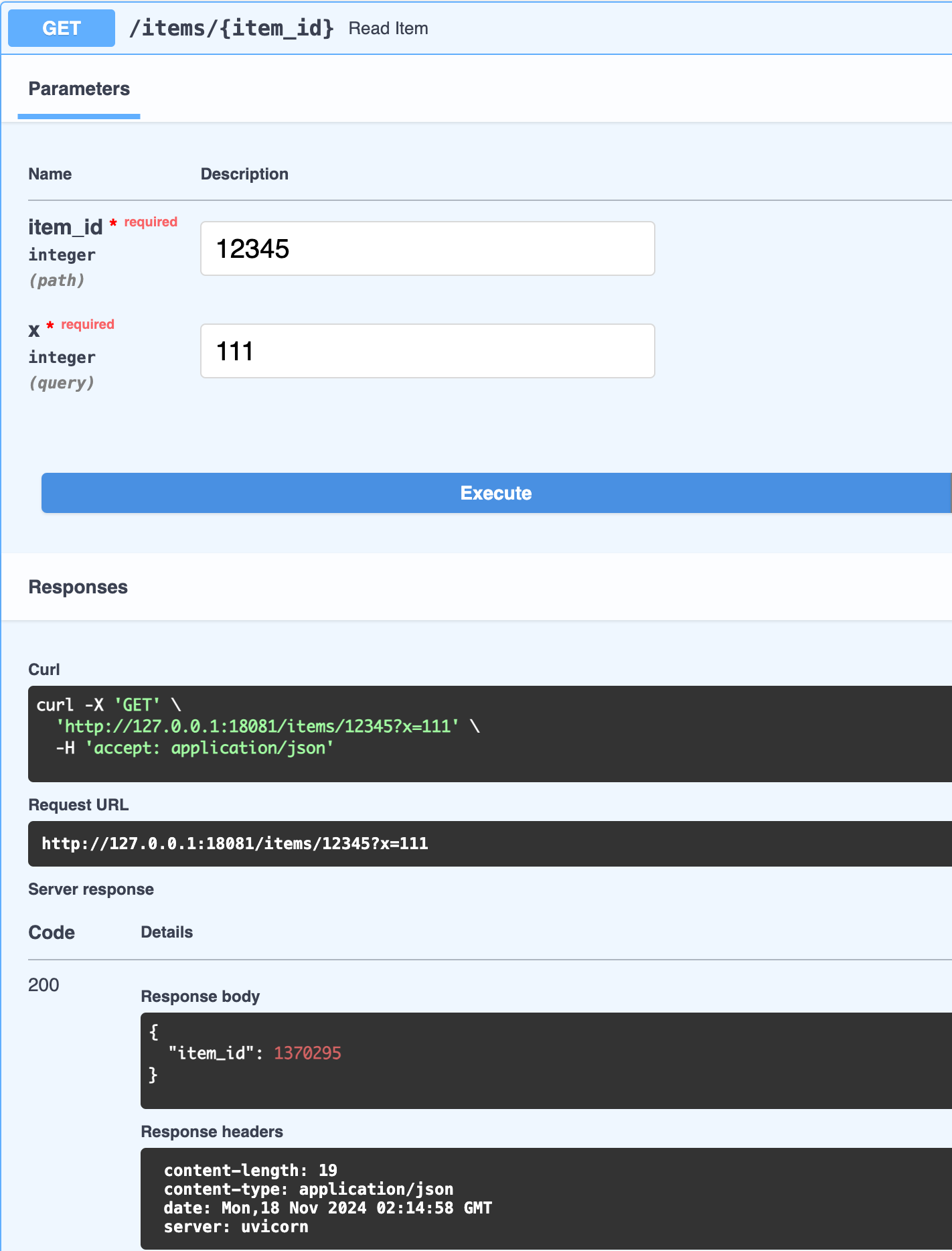
依赖注入示例
更多参数类型作为依赖注入函数的参数
class Item(BaseModel):
    name: str
    description: str = None
    price: float
    tax: float = None


def query_extractor(depend_q: str = Query(..., min_length = 3)):
    return hashlib.sha256(depend_q.encode('utf-8')).hexdigest()


def path_extractor(depend_item_id: int = Path(..., gt = 0)):
    return hashlib.sha256(depend_item_id.to_bytes(4, 'big', signed = True)).hexdigest()


def body_extractor(depend_item: Item = Body(...)):
    return hashlib.sha256(depend_item.model_dump_json().encode('utf-8')).hexdigest()


@app.post("/items/{depend_item_id}")
def read_item_2(query: str = Depends(query_extractor),
                depend_item_id: int = Depends(path_extractor),
                item: Item = Depends(body_extractor)):
    """
    :param query: 查询参数作为query_extractor的入参,请求时的参数需要为depend_q

    :param depend_item_id: 路径参数作为path_extractor的入参,请求时的参数需要为depend_item_id

    :param item: Body 参数作为body_extractor的入参,请求时的参数需要为depend_item

    请求:
    curl -X 'POST' \
    'http://127.0.0.1:18081/items/12334?depend_q=hello%2Cworld' \
    -H 'accept: application/json' \
    -H 'Content-Type: application/json' \
    -d '{
        "name": "测试",
        "description": "描述信息",
        "price": 12.34,
        "tax": 56.78
    }'

    响应:
    {
        "item_id": "17c73e617248212e4adc5e83c87e20e51df159532284996a19c28e15eac3326f",
        "query": "77df263f49123356d28a4a8715d25bf5b980beeeb503cab46ea61ac9f3320eda",
        "item": "4765dec528b96cb04e46f0dd6b039b8dad29c797e4a6e4455cd244b7062e1009"
    }
    """
    return {"item_id": depend_item_id, "query": query, "item": item}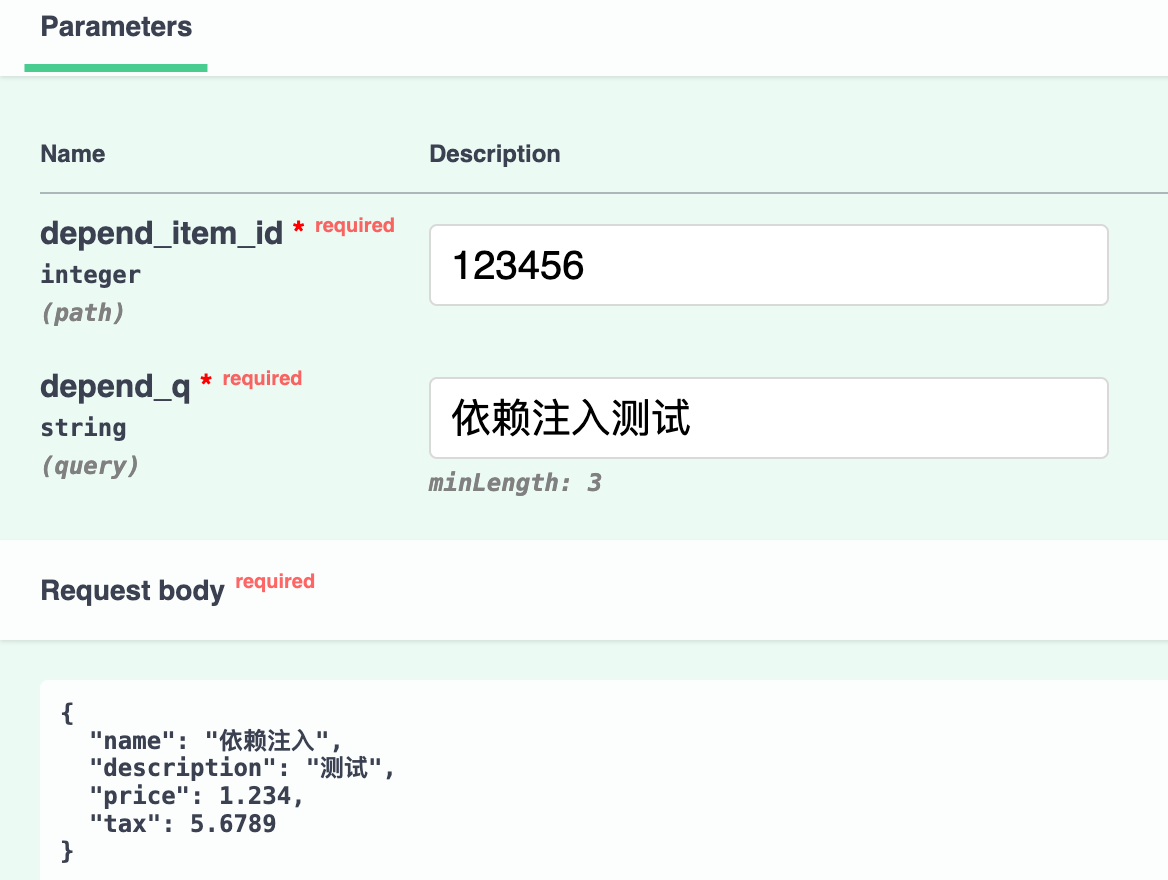
多种参数类型的依赖注入
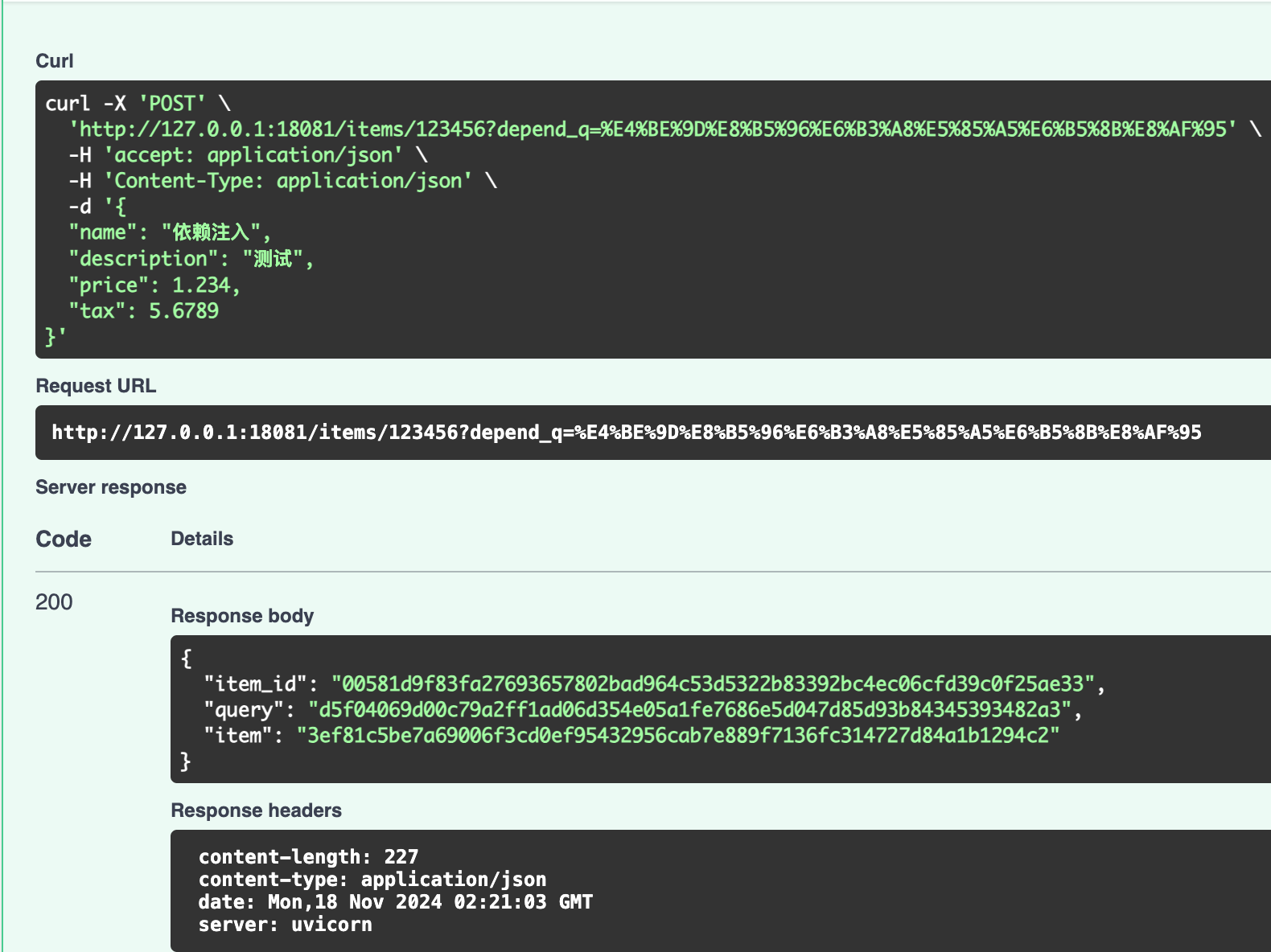
运行效果
常见的 FastAPI 参数作为依赖注入函数的参数
class User(BaseModel):
    username: str
    full_name: str = None


# 依赖函数使用路径参数
def extract_item_id(item_id: int = Path(...)):
    return item_id


# 依赖函数使用查询参数
def pagination(skip: int = Query(0, ge = 0), limit: int = Query(10, ge = 0)):
    return {"skip": skip, "limit": limit}


# 依赖函数使用Header参数
def get_user_agent(user_agent: str = Header(...)):
    return user_agent


# 依赖函数使用Cookie参数
def get_session_id(session_id: str = Cookie(None)):
    return session_id


# 依赖函数使用Body参数
def user_data(user: User = Body(...)):
    return user


@app.get("/items/{item_id}")
def read_item(item_id: int = Depends(extract_item_id),
              pagination_params: dict = Depends(pagination),
              user_agent_str: str = Depends(get_user_agent),
              session: str = Depends(get_session_id)):
    return {
        "item_id": item_id,
        "pagination": pagination_params,
        "user_agent": user_agent_str,
        "session_id": session
    }


@app.post("/users/")
def create_user(user: User = Depends(user_data)):
    return {"username": user.username, "full_name": user.full_name}
依赖注入函数运行的流程
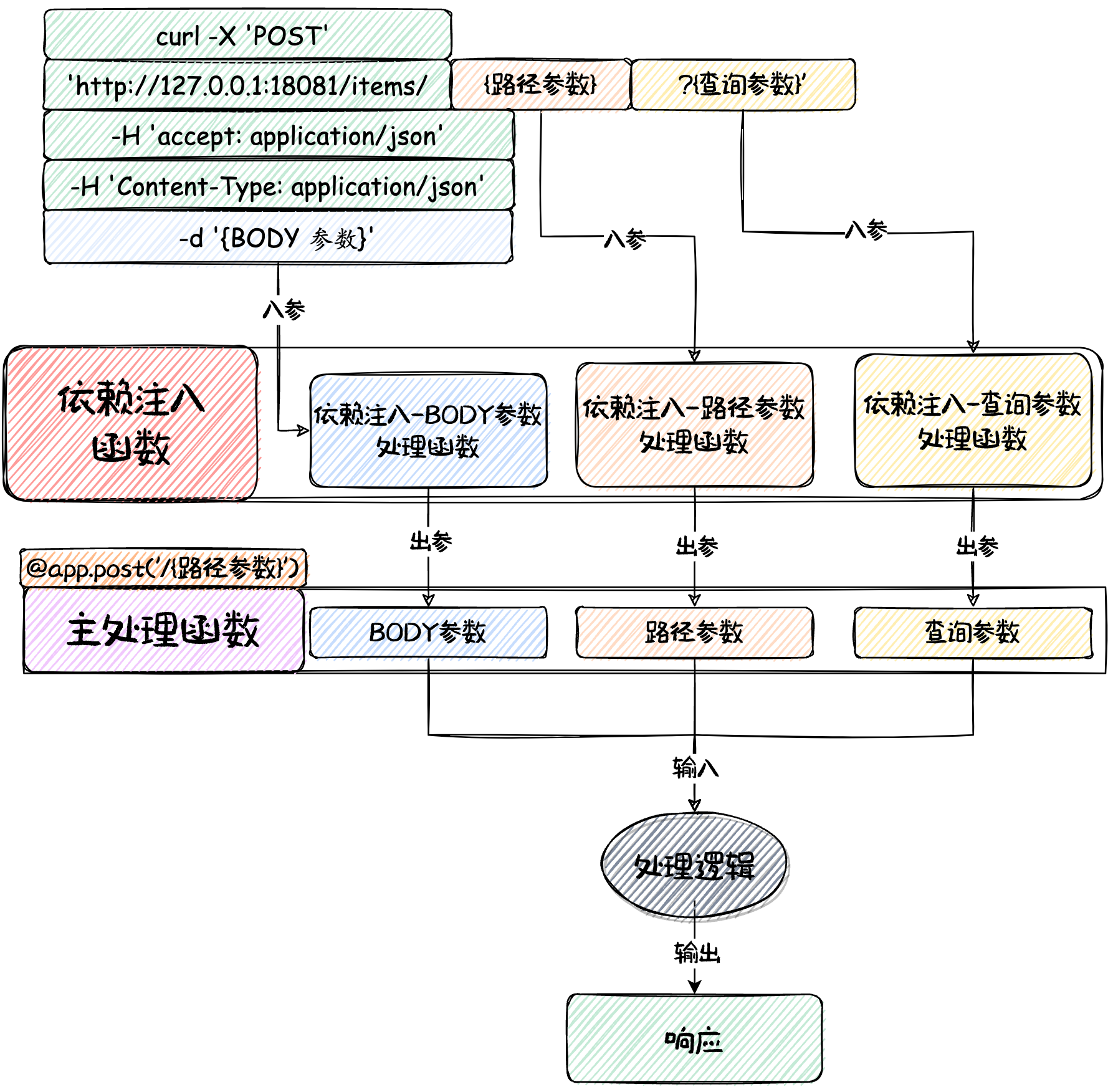
依赖注入函数运行的流程
依赖树
在 FastAPI 中,依赖树是指依赖项之间的层次结构或关系网,其中一个依赖项可以依赖于另一个依赖项,形成一个树状结构。这种结构允许开发者构建复杂而高效的应用程序,通过将逻辑和功能分解成更小、更可管理的部分来提高代码的可维护性和重用性。
# 模拟的用户数据库
users_db = {
    "alice": {"username": "alice", "role": "admin"},
    "bob": {"username": "bob", "role": "user"}
}


class User:
    def __init__(self, username: str, role: str):
        self.username = username
        self.role = role


def get_current_user(username: str):
    if username in users_db:
        user_data = users_db[username]
        return User(username = user_data["username"], role = user_data["role"])
    else:
        raise HTTPException(status_code = 404, detail = "User not found")


def verify_admin(user: User = Depends(get_current_user)):
    if user.role != "admin":
        raise HTTPException(status_code = 403, detail = "Admin privileges required")
    return user


@app.get("/admin-data/")
def admin_data(user: User = Depends(verify_admin)):
    """
    GET /admin-data/:这个路径操作依赖于 verify_admin 函数

    verify_admin 函数本身依赖于 get_current_user 函数来获取当前用户

    verify_admin 函数是 admin_data 路径操作的直接依赖,而 get_current_user 是 verify_admin 的子依赖

    这种方式允许你构建复杂的依赖关系,每个依赖项负责处理特定的任务,从而保持代码的清晰和模块化
    """
    return {"message": "Admin data accessed", "user": user.username}


def get_user_id(test_id: int = Path(..., alias = "aliased_user_id")):
    # 这里的 id 对应于路径中的 user_id
    return hashlib.sha3_512(test_id.to_bytes(8, 'big', signed = True)).hexdigest()


@app.get("/users/{aliased_user_id}")
def read_user(user_id: int = Depends(get_user_id)):
    """
    Path 和 Query 的参数名不必总是与 Depends 函数中的参数名保持一致

    可以通过在 Path 和 Query 的定义中使用 alias 参数来指定如何从请求中提取这些值,并将它们映射到依赖函数的参数上

    在这段代码中,路径参数 aliased_user_id 与 get_user_id 函数中的 test_id 参数

    通过 alias = "aliased_user_id" 保持一致的
    """
    return {"user_id": user_id}
在上面的代码示例中,我们可以看到一个依赖树的实际应用:
- 顶层依赖:API 路径操作函数(如 admin_data 和 read_user)
- 中间层依赖:这些是被路径操作直接依赖的函数(如 verify_admin 和 get_user_id)
- 底层依赖:这些依赖项被中间层依赖所依赖(如 get_current_user)
以 /admin-data/ 路径操作为例,我们可以看到以下依赖关系:
- admin_data 函数 依赖于 verify_admin 函数。
- verify_admin 函数 依赖于 get_current_user 函数。
这里,get_current_user 是底层依赖,它直接与数据交互(从模拟的用户数据库中获取用户信息)。verify_admin 是中间层依赖,它使用 get_current_user 的输出来验证用户是否具有管理员权限。最后,admin_data 是顶层依赖,它依赖于 verify_admin 的验证结果来决定是否允许用户访问特定的数据。
依赖树的优势
- 模块化:每个依赖项负责处理特定的任务,使得代码更加模块化。
- 代码重用:依赖项可以在多个地方重用,减少代码重复。
- 易于测试:每个依赖项可以独立测试,简化了单元测试的过程。
- 清晰的责任分离:每个依赖项只关注自己的责任范围,提高了代码的清晰度和可维护性。
其他用法
使用类作为依赖注入参数
class CommonQueryParams:
    def __init__(self, q: str | None = None, skip: int = 0, limit: int = 100):
        self.q = q
        self.skip = skip
        self.limit = limit


@app.get("/items/")
async def read_items(commons: Annotated[CommonQueryParams, Depends(CommonQueryParams)]):
    """
     Class-Based Dependency Injection

     FastAPI will:
        Create an instance of CommonQueryParams
        Extract query parameters from the request
        Pass them to the class constructor
        Inject the resulting instance into your endpoint

     Key benefits of class-based dependencies:
        Encapsulation: Group related parameters and methods
        Reusability: Use the same dependency in multiple endpoints
        Maintainability: Organize code in a more structured way
        Testability: Easier to mock and test
        Hierarchical Dependencies: Classes can depend on other classes
    """
    response = {}
    class_json_str = json.dumps(commons, ensure_ascii = False, default = lambda o: o.__dict__)
    h_str = hashlib.sha256(class_json_str.encode('utf-8')).hexdigest()
    response.update({"sha256_str": h_str})
    return response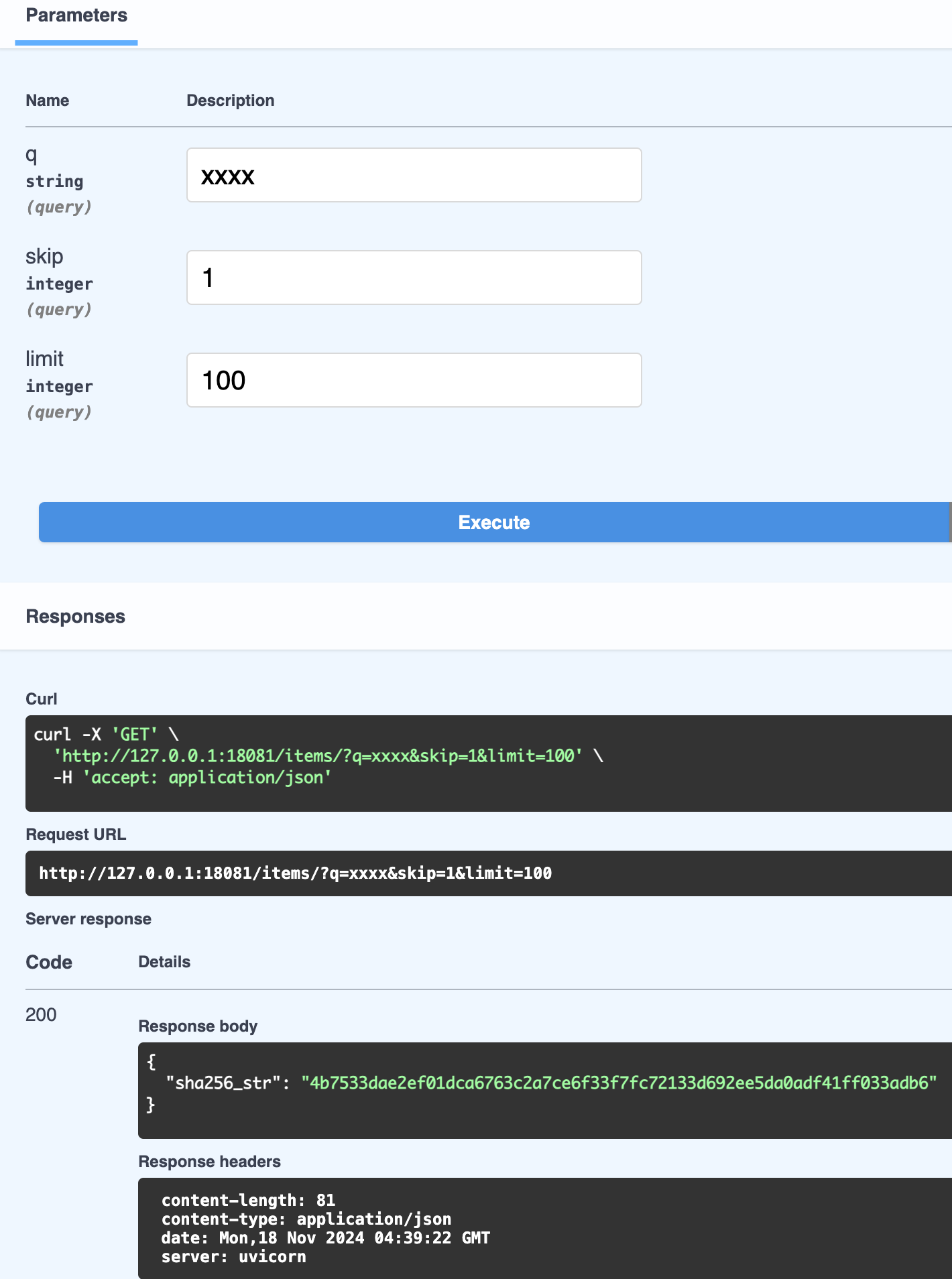
Class-Based Dependency Injection
路径操作中的多个依赖项
async def verify_token(x_token: Annotated[str, Header()]):
    if x_token != "fake-super-secret-token":
        raise HTTPException(status_code = 400, detail = "X-Token header invalid")


async def verify_key(x_key: Annotated[str, Header()]):
    if x_key != "fake-super-secret-key":
        raise HTTPException(status_code = 400, detail = "X-Key header invalid")
    return x_key


@app.get("/items/", dependencies = [Depends(verify_token), Depends(verify_key)])
async def read_items():
    """
    Header-Based Authentication using multiple dependencies
    """
    return [{"item": "Foo"}, {"item": "Bar"}]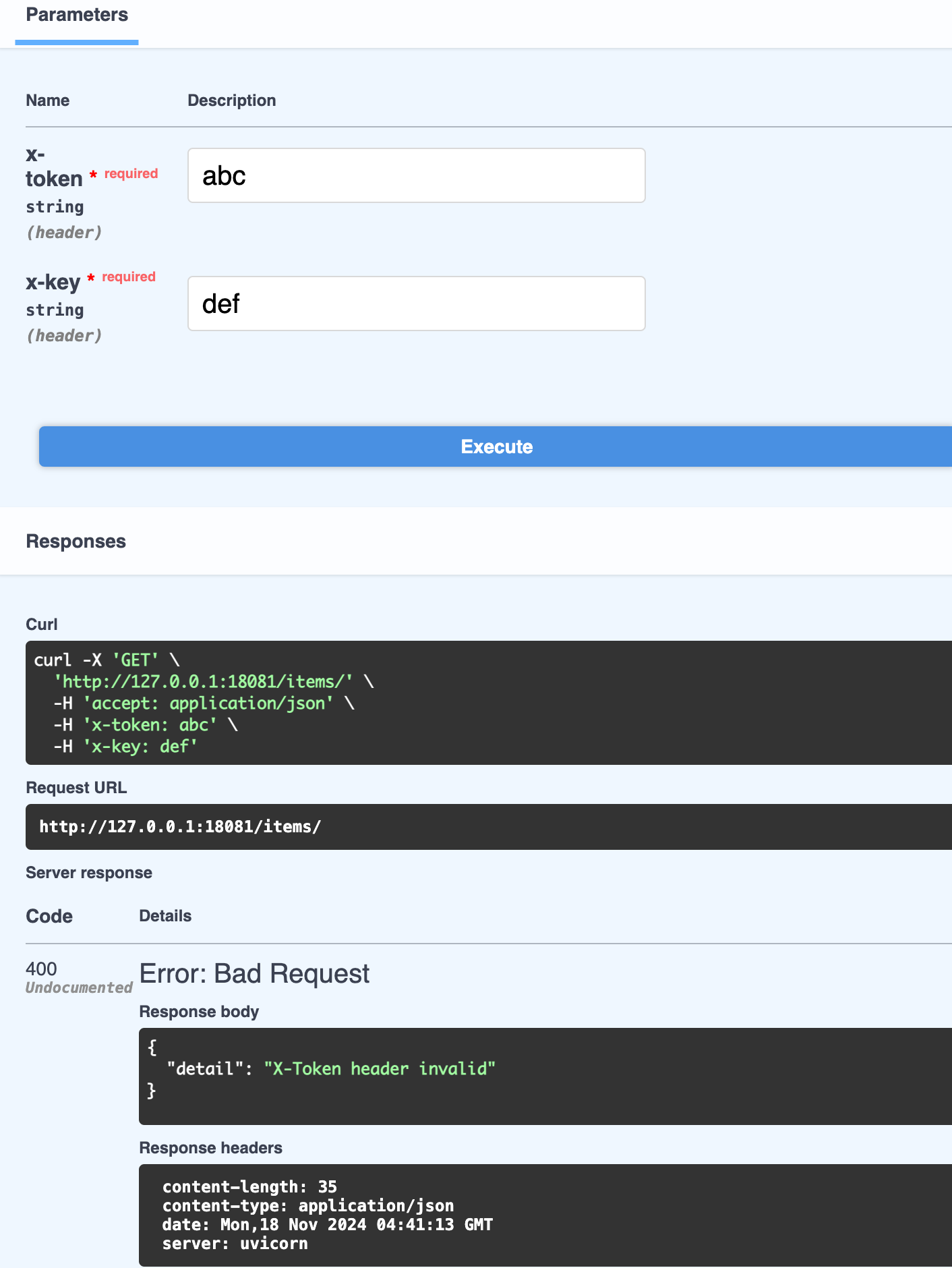
Header-Based Authentication using multiple dependencies
全局依赖注入
from __future__ import annotations

import uvicorn
from fastapi import Depends, FastAPI, Header, HTTPException
from typing_extensions import Annotated


async def verify_token(x_token: Annotated[str, Header()]):
    if x_token != "fake-super-secret-token":
        raise HTTPException(status_code = 400, detail = "X-Token header invalid")


async def verify_key(x_key: Annotated[str, Header()]):
    if x_key != "fake-super-secret-key":
        raise HTTPException(status_code = 400, detail = "X-Key header invalid")
    return x_key


"""
Global Dependencies
"""
app = FastAPI(dependencies = [Depends(verify_token), Depends(verify_key)])


@app.get("/items/")
async def read_items():
    return [{"item": "Portal Gun"}, {"item": "Plumbus"}]


@app.get("/users/")
async def read_users():
    return [{"username": "Rick"}, {"username": "Morty"}]


if __name__ == '__main__':
    uvicorn.run(app, host = '127.0.0.1', port = 18081)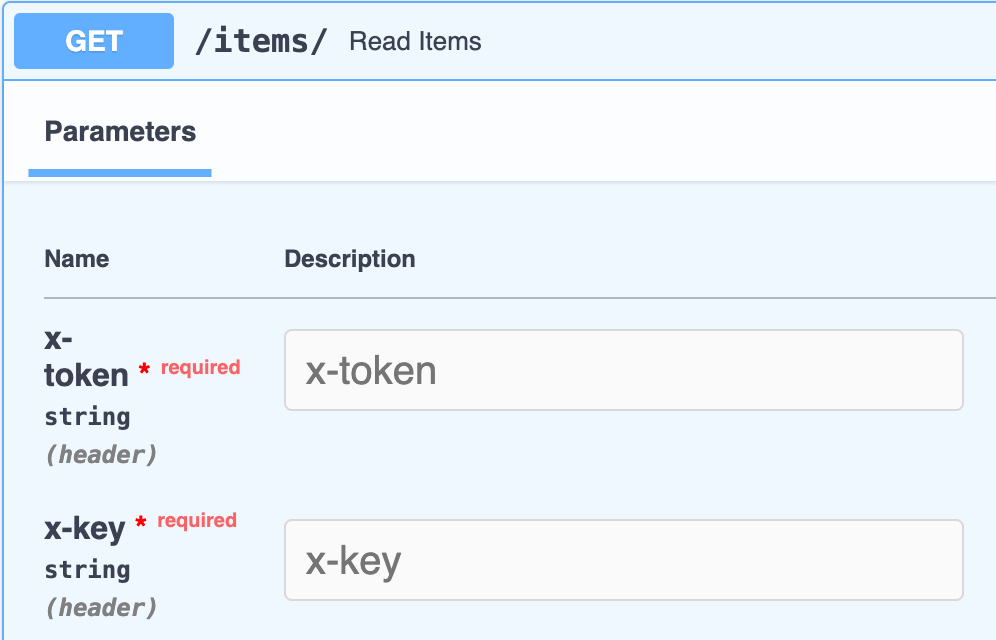
Global Dependencies
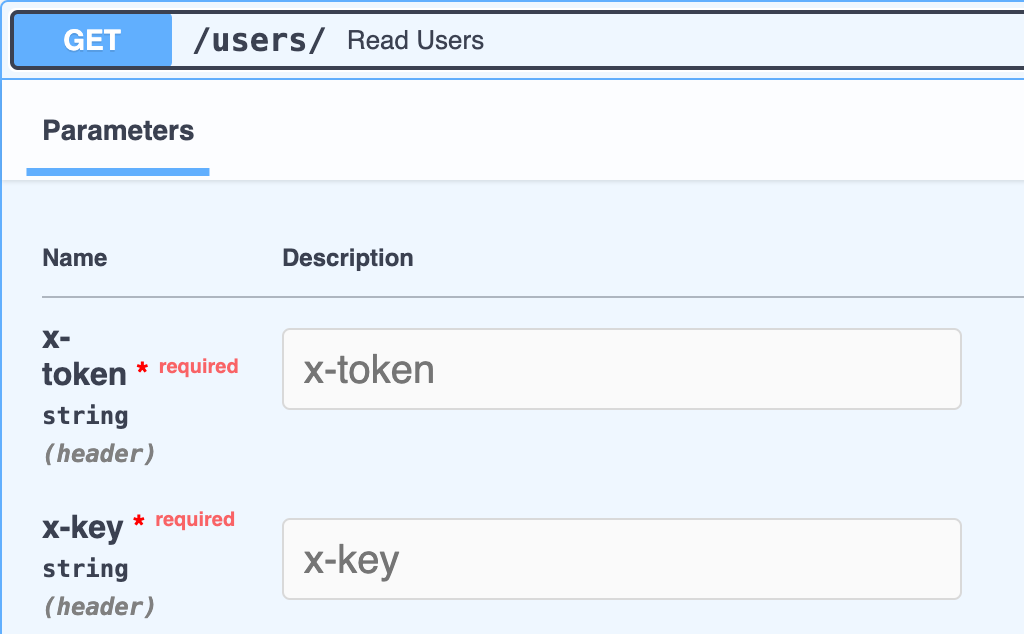
Global Dependencies
原创声明:本文系作者授权腾讯云开发者社区发表,未经许可,不得转载。
如有侵权,请联系 cloudcommunity@tencent.com 删除。
目录
腾讯云开发者

Copyright © 2013 - 2026 Tencent Cloud. All Rights Reserved. 腾讯云 版权所有
深圳市腾讯计算机系统有限公司 ICP备案/许可证号:粤B2-20090059  粤公网安备44030502008569号
腾讯云计算(北京)有限责任公司 京ICP证150476号 | 京ICP备11018762号