重学JS-2-数据类型和变量


通过下面的思维导图,我们先对JavaScript的数据类型和变量有一些基本的了解。
思维导图
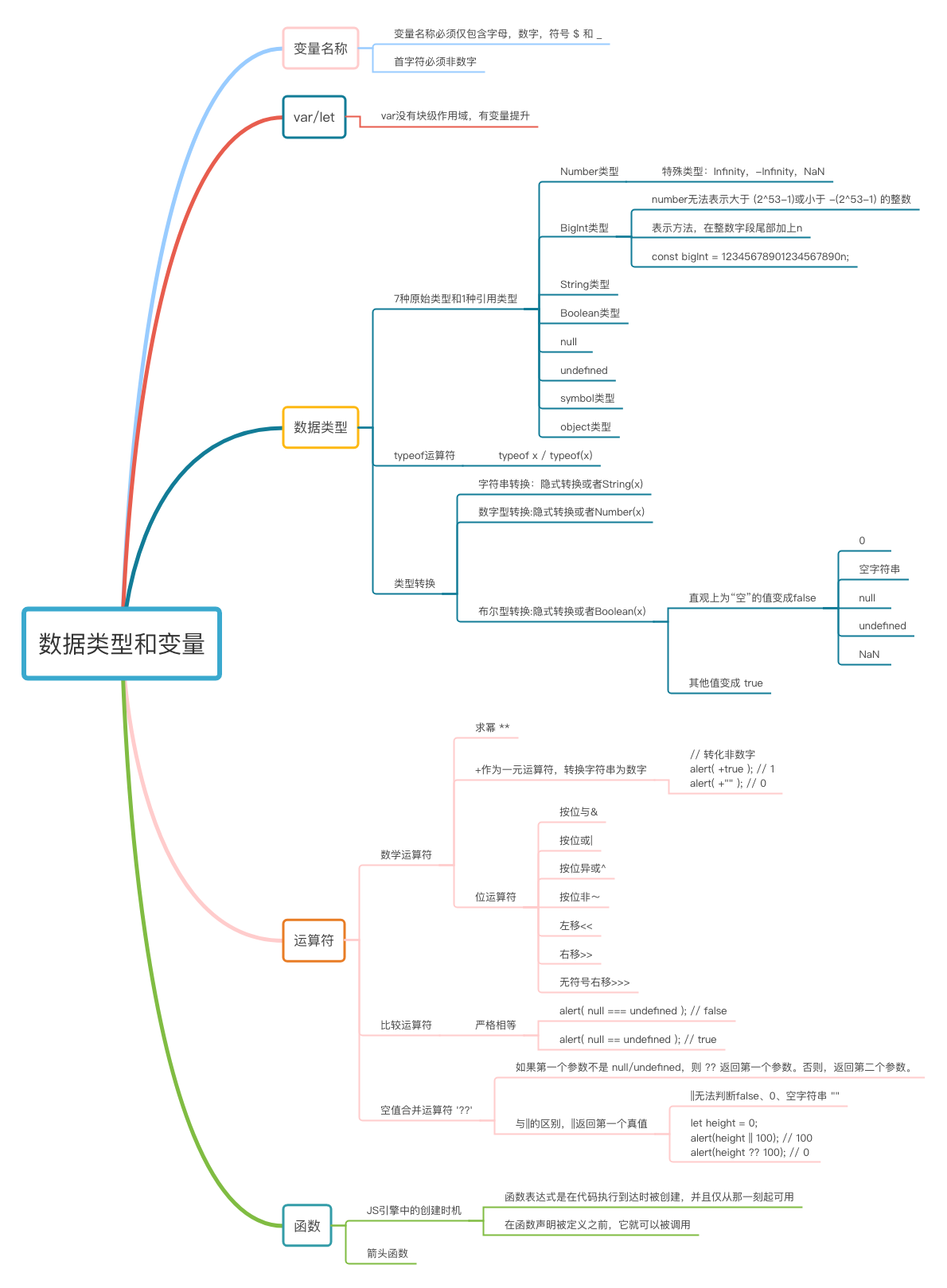
通过下文的扩展阅读,我们进一步去了解更进一步的知识。
var变量提升
var的变量提升
console.log(a) // undefined
var a = 12
let的暂时性死区
(function() {
  // let x 此时暂时性死区开始
  console.log(x); // Uncaught ReferenceError: x is not defined
  //暂时性死区结束
  let x = 'child value'
}())
IIFE旧时var创建块级作用域的方法
原理是:创建了一个函数表达式并立即调用
// 创建 IIFE 的方法

(function() {
  alert("Parentheses around the function");
})();

(function() {
  alert("Parentheses around the whole thing");
}());

!function() {
  alert("Bitwise NOT operator starts the expression");
}();

+function() {
  alert("Unary plus starts the expression");
}();
参考文章
深入理解箭头函数
箭头函数没有this
箭头函数没有this,如果访问this,会取到外层的this。
let group = {
  title: "Our Group",
  students: ["John", "Pete", "Alice"],

  showList() {
    this.students.forEach(
      student => alert(this.title + ': ' + student)
    );
  }
};

group.showList();
箭头函数没有arguments
在箭头函数内获取的arguments都是来自父作用域的。
例如下面的例子,defer(f, ms) 获得了一个函数,并返回一个包装器,该包装器将调用延迟 ms 毫秒,其中箭头函数的arguments是返回的函数的arguments。
function defer(f, ms) {
  return function() {
    setTimeout(() => f.apply(this, arguments), ms);
  };
}

function sayHi(who) {
  alert('Hello, ' + who);
}

let sayHiDeferred = defer(sayHi, 2000);
sayHiDeferred("John"); // 2 秒后显示:Hello, John
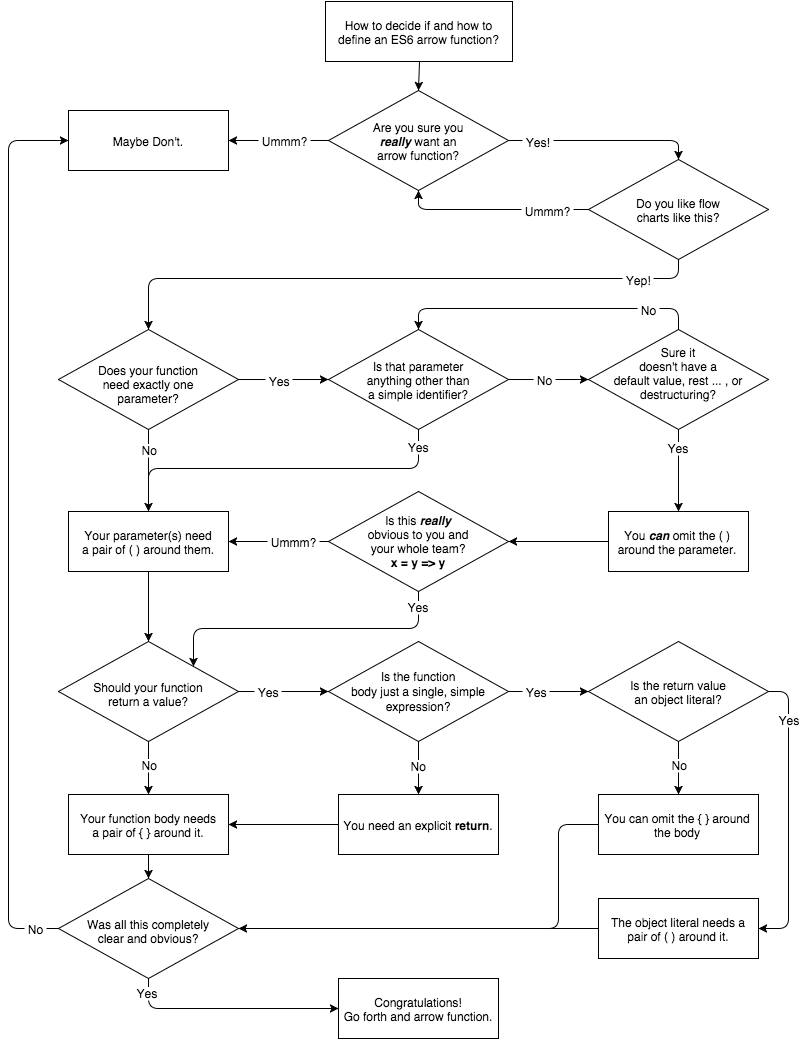
是否使用箭头函数,参考下面这个图,来自《You-Dont-Know-JS》
参考文章
JS的循环
常见的循环参考这篇讲的比较全的问题JS常用的循环遍历你会几种。
for-in为什么被ESLint告警
eslint有一条guard-for-in规则,这条规则要求for-in语句要包含一个if判断来判断object的key是否存在,以避免一些意外的错误。
此规则的错误代码示例:
/*eslint guard-for-in: "error"*/

for (key in foo) {
    doSomething(key);
}此规则的正确代码示例:
/*eslint guard-for-in: "error"*/

for (key in foo) {
    if (Object.prototype.hasOwnProperty.call(foo, key)) {
        doSomething(key);
    }
}

for (key in foo) {
    if ({}.hasOwnProperty.call(foo, key)) {
        doSomething(key);
    }
}当然除了加判断,也可以直接改用Object.keys和forEach。
currentValues= {hey:1212, git:1212, nmo:12121}

Object.keys(currentValues).forEach(function(key) {
  yield put(setCurrentValue(key, currentValues[key]));
})
参考文章
本文参与 腾讯云自媒体同步曝光计划,分享自作者个人站点/博客。
原始发表:2022-04-17,如有侵权请联系 cloudcommunity@tencent.com 删除
目录
腾讯云开发者

Copyright © 2013 - 2026 Tencent Cloud. All Rights Reserved. 腾讯云 版权所有
深圳市腾讯计算机系统有限公司 ICP备案/许可证号:粤B2-20090059  粤公网安备44030502008569号
腾讯云计算(北京)有限责任公司 京ICP证150476号 | 京ICP备11018762号